14 November, 2008

Dear President Elect Obama, Are We Screwed?


The Obama Transition Team for Transportation has been named and is now in business.
Perhaps I was just too afraid that something would go wrong, really wrong. But now with all of the names named, we don't have a worry - business as usual.


Seth Harris
Director of Labor & Employment
Law Programs at New York Law School.
United Cerebral Palsy Association
National Advisory Commission on Workplace Flexibility.
Clinton Administration, Counselor to the Secretary of Labor cting Assistant Secretary of Labor for Policy,
Before
law clerk to Judge William Canby of the U.S. Court of Appeals for the Ninth Circuit
Judge Gene Carter of the U.S. District Court for the District of Maine.
He was Editor-in-Chief of the Review of Law & Social Change at the New York University School of Law


Mortimer Downey
self-employed transportation consultant
Deputy Secretary of Transportation under President Clinton,
Assistant Secretary of Transportation, Carter Administration.
Executive Director and Chief Financial Officer of the NYMTA
various planning positions at the Port Authority of New York and New Jersey.


Jane Garvey
Head of the U.S. Public/Private Partnerships at JPMorgan.
Garvey was the 14th Administrator of the Federal Aviation Administration, nominated by President Clinton.
Deputy Administrator of the Federal Highway Administration.


Michael Huerta
Group President of ACS Transportation Solutions,
Huerta served as the Executive Director of the Port of San Francisco Commissioner of the City of New York Dept of Ports, Int'l Trade & Commerce.


John Cullather
Worked for House of Representatives for over 31 years, specializing in Coast Guard and maritime transportation policy


Carol Carmody
consultant in international aviation and aviation safety.
appointed by President Clinton to National Transportation Safety Board.


WHERE'S AMTRAK? WHERE ARE THE RAILROADERS? STREETCARS? COMMUTER RAIL? LIGHT RAIL TRANSIT? MONORAILS?

Was this just a dream too good to be true for this railroad starved land, or have we just elected another in a line of 36 leaderless years. What am I missing here?


11 November, 2008

BRT EVERYONE CAN LOVE!


FINALLY SOME COMMON SENSE

Bus Rapid Transit is on it's way, not the $26 Million Dollar a mile version either, rather a system called Light-Rail-Lite. Please understand that this whole project has been something short of a local war.


Initial route alignment had JTA building a "super-bus" freeway right along Interstate 95 (the main N-S route on the East Coast) from downtown to the Gateway Mall. At Gateway, the BRT line would meet regular city buses for the Northwest side of town. Northwest Jacksonville is by far the most transit dependent segment of the City. Yet NOBODY lives on I-95. So with all the money, concrete, steel and time involved, we were looking at one short leg of a 4 legged - BILLION DOLLAR BUS.

After thousands of articles, here and elsewhere, after explaining our need for rail as our primary trunk system, and BRT as our primary feeder, it would seem the message is finally sinking in. The system now proposed is a much less involved build. No 30 year wait to ride the buses either. Using surface streets - and better yet a main artery that is little used but connects the whole city, JTA has hit on the formula for BRT success. HOV lanes, Lem Turner Road, Shand's hospital and future commuter rail all out of the box on about the same date. Run Jacksonville RUN! Scott, Suraya, Please take a bow.

Here's the news:

JACKSONVILLE DAILY RECORD

11/11/2008
by Joe Wilhelm Jr.
Staff Writer


A vision for the future of Downtown transit including city buses feeding trolley routes to reduce congestion on city streets has moved another step closer to reality.
The Federal Transportation Administration (FTA) and Jacksonville Transportation Authority (JTA) are planning improvements to the local public system and Phase One of the Jacksonville Rapid Transit System has received approval from the U.S. Environmental Protection Agency. JTA will soon be requesting bids for the design of the improvements.
“It’s an important first step to get this rapid transit system started,” said Scott Clem, director of strategic planning for JTA. “It’s also a step toward having a multi-modal transportation system in Jacksonville and Northeast Florida.”
The JTA plans to have the final design for Phase One by the end of 2009 and complete construction by the end of 2010.
“Our goal is to have this phase and the Jacksonville Regional Transit Center (JRTC) opened at the same time,” said Clem.
The JRTC is planned to be built across the street from the Osborn Center on the north side of the exisitng Skyway terminal. The center will include Greyhound and JTA bus terminals, Skyway access and an Amtrak terminal.
The $15.5 million Phase One project will include dedicated bus lanes along Broad and Jefferson streets, installation of transit signal priority equipment on bus routes and real-time bus schedule information supplied through GPS systems.
Transit signal priority systems utilize equipment on buses and traffic signals that will detect when a bus is at a stop near a traffic signal and, if the light is green, will prolong the green light to allow the bus to get through the intersection. The GPS equipment will provide transit customers with arrival and departure times for buses at each stop.
Phase One moved into the design phase after receiving approval from the U.S. Environmental Protection Agency after the project underwent an environmental assessment, which is required by the National Environmental Policy Act of 1969. Factors analyzed during the assessment include social, economic, environmental and transportation issues.
Each analyzed factor was then further broken down. The social and economic factors considered included neighborhood/community impacts, cultural resources, economic impacts, environmental justice and property impacts. Environmental factors included air quality, noise and vibration, hazardous material sites, water resources, parks and historical sites.
Traffic, parking, transit operations and ridership and construction impacts were the transportation factors analyzed.
After all factors were reviewed, a finding of no significant impact was submitted to the EPA, reviewed and approved.
Just like the trolleys rolling through Downtown, the Jacksonville Rapid Transit System is moving right along and the next phase of the project is underway.
As the design phase on the Downtown project begins, a public hearing will be held to discuss the North Corridor project. An environmental assessment is being conducted by JTA to determine the type of transportation improvements needed north of Downtown.
The 10.5-mile corridor stretches from Downtown along Boulevard Street to Gateway Mall and continues north along Norwood Avenue/Lem Turner Road, ending south of Armsdale Road near I-295.
The first public meeting to discuss the project was held Monday. Another public meeting will be held from 6-7:30 p.m. on Nov. 17 at Florida Community College at Jacksonville North Campus in the room C-126 auditorium. The public meetings have helped JTA find out what the public thinks about the planned improvements.
“We’ve had a mixed response to the rapid transit system project,” said Suraya Teeple, JTA transportation planning manager. “Some people are concerned that some of the connections won’t be made, but this is the first phase, so right now we are working on educating the public on what they can expect from the new system.”


INTERNATIONAL SHIPPING GIANT LANDS AT JACKSONVILLE

Today we have more then one reason to celebrate in Jacksonville. FIRST HAPPY VETERANS DAY TO ALL COMPATRIOTS. Secondly, there is the new shipping line. Nothing big mind you, just one of the largest companies on earth! JAXPORT and the City of Jacksonville have inked the deal this morning. Hanjin with 50 worldwide terminals is building their first "home" in the USA in Jacksonville. Following right behind them will be COSCO, K-LINE, YING MING.


Here's the news release:

Hanjin Deal Done
By
Rich Jones, News Director

November 11, 2008 9:11 AM

An International company has sealed a deal with Jaxport today.
The board of directors at Hanjin approved the terms and conditions of the deal at their quarterly meeting today.

Here is the statement from Jaxport and Mayor John Peyton:
Mayor John Peyton and Jacksonville Port Authority officials are pleased to announce that the Board of Directors of Hanjin Shipping Company of Seoul, Korea today approved a 30-year lease agreement with JAXPORT. The lease calls for Hanjin to build an approximately 90-acre container facility at the Dames Point Marine Terminal in North Jacksonville with the option for further expansion. The $300 million Hanjin Container Terminal at Dames Point is expected to open for business in late 2011 and will be a key hub operation for Hanjin's east coast port activity. JAXPORT's Board of Directors approved the lease offer earlier this month.The new agreement is expected to create more than 5,600 new private sector jobs in Jacksonville and support operations such as trucking, distribution and related services. The new terminal will generate nearly $1 billion in annual economic impact."In this difficult economic time, I am tremendously proud that we are able to bring these well-paying jobs to our community," said Mayor Peyton. "As the United States continues to see increases in container traffic from Asia, Jacksonville is poised to play an even greater role in the global trade market. This commitment from Hanjin, one of the largest shipping companies in the world, illustrates Jacksonville's growing importance in the international marketplace. Companies such as Hanjin are taking note of the benefits of doing business at JAXPORT which will translate into even more job opportunities for our residents."Construction of JAXPORT's Hanjin Container Terminal is expected take approximately 24 months, following the permitting process. The new terminal will be located adjacent to the nearly completed TraPac Container Terminal at Dames Point being built for Tokyo-based Mitsui OSK Lines. The TraPac Container Terminal will open for business in January 2009."This is the one-two punch we have been working toward," said JAXPORT's Executive Director Rick Ferrin. "TraPac put us on the map. Hanjin makes JAXPORT a major player in Asian and European trade and together the new terminals help fulfill our mission of bringing jobs and opportunity to the region."Hanjin is Korea's largest, and one of the world's largest, container carriers, moving more than 100 million tons of cargo annually and operating in more than 50 countries. In the U.S., Hanjin's subsidiary, Total Terminal International, presently runs dedicated terminal operations in Seattle, Long Beach and Oakland. The proposed Hanjin Container Terminal will be Hanjin's first dedicated U.S. operation outside the west coast, a strategic move meant to capitalize on the expansion of the Panama Canal and the anticipated increase in container traffic along the east coast.

08 November, 2008

ODE to BRT - Our Savior

JTA - "The Dream", FILE PHOTO

Ode to BRT, the story of what will happen if the largest City in the South gets to murder it's railroad plan for a system of BRT buses. Why the previous story posted without it's title is any ones guess but read on down, and you'll find the poem of the BRT system - our be all - in all - save all - bus network.

We are NOT against BRT - just don't try and build a bus into a train and don't expect a train to be a bus. It just won't happen - won't work.

So please enjoy this light-hearted look ahead into some future nightmare in Jacksonville.


ODE TO THE JACKSONVILLE BRT PLAN

"There's a Hooker being cozy with a Jacksonville cop."

"Stepping off this dirty bus first time I understood..."


Imagine if we scrap our rail plans for the "super bus" BRT system. The newspaper is already running "hit" pieces on rail failures, lack of profit and imagined expenses. The CD player just ran the old piece "Greyhound" by the Late Great Harry Chapin, (who by the way was killed on a freeway when his car was crushed by a large over the road vehicle). So with apology's to Harry, here's my take on BRT as the sole system in the 3RD largest City in the East.
"I find a seat
And we move out in the lights."


"Everybody's looking half alive."
It's midnight at the bus stop
And I drag myself in line.
Travellin' light, I got to go
But the bus won't be on time.
Everybody's looking half alive.
Later on the bus arrives.

Got my prepaid ticket
I find a seat
And we move out in the lights.
Come on Driver, where's the heat?
It's cold this Jacksonville night.
I keep telling to myself that I don't care.
It's now tomorrow, I'll soon be there.

Using this BRT, It's a dog of a way to get around.
Riding around on BRT.
It's a dog gone easy way to get you down.
Tired of watching this City go by
So I look across the aisle.
The window's frosted, I can't see
But the girl returns my smile.
She reminds me of someone waiting at my home.
So I doze. So it goes.

I'm wrinkled on my seat at the transfer stop.
There's a Hooker being cozy with a Jacksonville cop.
My coffee's tasting tired.
My eyes roll over dead.
They should have built the rail, and got the gas out of our heads.
Oh, to be at home in bed.

You got me driving.
I'm on your JTA bus and you're driving.
But there's nothing new about JTA.
Nothing new about feeling grey.
Nothing new about putting off
Or putting myself on.

Looking for tomorrow is the way the commuter survives
I should have realized by now that all my life's a ride.
It's time to find some happy times and make myself some friends
I know there ain't no rainbows waiting when this journey ends.

Stepping off this dirty bus first time I understood
There's got to be an alternative that's good
That's a thought for keeping if I could.
There's got to be an alternative that's good.


Commuter Rail Will Require Big Bucks - "Dumb and Dumber".

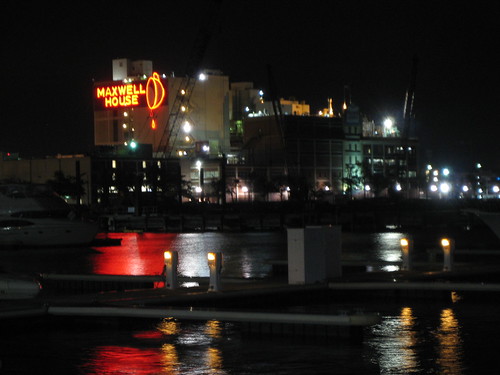
The Coffee is only about 1.5 miles from the newspaper tower in Jacksonville, a city where the old saying takes on new meaning

The Local Media should opens it's windows and "Smell the Coffee!"
The classic Rail Diesel Car, re manufactured at a cost of Penny's on the dollar to the DMU is still available in great numbers and custom re-made in our image.

Typical Re-manufactured RDC cars carry the flag for many agency's, nearly twice the mileage of the DMU units. Just imagine this could be SHAND'S station.

Billions of dollars of development have followed commuter rail and streetcars in every city that has invested in these systems. Why does the newspaper think we are unique? Why do they project failure? Can you spell P-A-R-R-O-T, if not, it's time to learn the highway lobby's crazy argument.

Our newspaper has failed us in this newest article. Completely missing are the hundreds of automobiles that would be removed from area highways. Missing are the fast connections to all sides of the City via a rail trunk line. Missing are the dozens of buses that could be redeployed to other neighborhoods within the city to close the headway's from 40 minutes to 20. The story is devoid of references to the cost of our highway system and to the fantastic profit we earned from the Arlington Expressway, Roosevelt or JTB last year. If your wondering "What profit?" you are correct, ZERO! Nothing but endless taxation and road building.

It should be remembered that though our City was the Queen of the Rails, for everything South of Washington D.C. - our people today don't remember it. Indeed some of the Amtrak rail expansion models show as many lines of trains serving Jacksonville as Chicago, St. Louis or Dallas. But this article is about commuter rail, and while that is true, the same track that carries an expanded Amtrak Florida network will serve to carry the Jacksonville Commuter Rail trains. Amtrak plans to bring corridor frequency to Florida with our intercity trains, but it is yet to be seen which project Amtrak, or Jax Commuter Rail, will piggyback on the other and thus get the most from this investment.

The news piece is the same old tired angle, The train will cost every citizen $21 dollars per ticket. Well how about letting us know the true costs of air service at Jacksonville? How about highways?

The Department of Transportation, which subsidizes scheduled air service to rural communities far from major airline hubs.These routes are the back roads of skies, serving unknown hamlets like Show Low, Arizona, Thief River Falls, Minnesota, and Greenbrier, West Virginia. They are generally poorly traveled, costing American taxpayers millions every year to subsidize. (Environmentalists would point out that the extra flights pump tons of carbon dioxide into the atmosphere.) The New York Times reported in October 2006 that some destinations, such as Brooking's, South Dakota, or Kingman, Nevada, serve less than ten passengers daily. Since EAS requires subsidized airlines to fly at least two daily round trips to each destination, that means that there can be as many crew members as passengers on the least-trafficked flights. The entire program cost over $110 million last year—$148 for every round trip outside Alaska, whose EAS subsidies are documented on a separate balance sheet. For example, at Manitowoc, Wisconsin when an average passenger boards a flight, the fare is $89, but the subsidy is $515! Closer to home, the recent Atlanta Airport expansion - one airport project - is NINE TIMES Amtrak's current appropriation for the entire nation. Just how twisted is this logic? If the airlines had to pay for the cost of the at traffic control system, as Amtrak now pays for the upkeep of the Northeast Corridor, they would soon be out of business. In 1989, it cost the federal government $3 billion to operate the system vs. the combined net profit of $1 billion for the airline industry. -Source: "Supertains: Solutions to America's Transportation Gridlock, Joe Vranich

$ 13,000,000,000
Boston
"Big Dig" freeway 20-year expansion project

$ 6,000,000,000
I-95
Wilson bridge project

$ 3,200,000
Alabama
Two-mile highway widening cost.


$ 3,000,000
Alabama
Cost to provide passenger train service to Montgomery, Mobile, Birmingham


For the same amount of money, the state of Alabama could fund a 200-mile passenger train route that would serve many more citizens than widening an EXISTING two-mile roadway. Such passenger train would serve Birmingham, Montgomery, Greenville and Mobile - half of the state!

Why not just build profitable highways and include bus systems? User fees only account for about 60% of highway spending by all levels of government. The rest comes from non-users and in 1990, non-highway users subsidized roads at the rate of $18 billion per year. -Source: Highway Statistics 1990, Tables HF-10 and SMT, Federal Highway Administration

----------------------------------------------------------------------------------------------------------------------------------------------------------------------------------------------------------------------------------
-Originally created 11080

Costly rail service for Jacksonville would lose money
Click-2-Listen

Advocates say millions could be found to build the commuter service.
By LARRY HANNAN, The Times-Union


A proposed commuter rail system in the Jacksonville area will cost $543 million to build and $40 million a year to run, and won't make money, according to a yet-to-be completed study by a Jacksonville Transportation Authority consultant.

It is not clear yet where, when or if the money will be found to build the system.
The JTA asked the consultant, Gannett Fleming Inc. of Pennsylvania a year ago to look into using the existing rail lines owned by CSX and Florida East Coast Railway to create a three-pronged commuter rail system that would help get cars off the road. It would be part of the transportation authority's long-range effort for commuter rail flow into the downtown area, where buses or the Skyway (Jacksonville monorail) would take people to their final destination.
A northbound line on CSX tracks would go to Yulee; a southwest line on CSX tracks to Green Cove Springs; and a southeast line on Florida East Coast tracks to St. Augustine.
The construction cost does not include a new transportation center at the Prime Osborn Convention Center, the starting point for all three commuter rail lines.
The study calculated how much it would cost to run the system, but not how much people would pay to ride it. That will be up to JTA to decide, said Thomas Hickey, national transit planning manager of Gannett Fleming. The company released the numbers midway through its $400,000 study due next year.
Hickey estimated that by 2015 there would be 2,974 trips a day for the southwest route, and it would cost $13.44 per passenger for the railway to break even in yearly operating costs. The southeast route would have 4,814 trips a day with a cost of $9.58 per passenger, and the north route would have 2,045 trips a day at $21.50 per trip.
But the JTA wouldn't charge that much.
James Boyle, the authority's regional transportation planner, said it wouldn't ask passengers to pay a fare that would allow the system to make money. As a result, he said, JTA would not expect to make a profit - or even break even. Most public transportation systems in the United State lose money, he said, and are operated because they benefit the public.
However, he said JTA didn't want the system to be sunk by cost, either.
The construction money would have to come from federal, state and local government sources, Boyle said, and that's feasible because the state and federal governments want more commuter rail systems built.
Congress also needs to pass a new transportation funding bill in 2009 because the current bill is expiring. Advocates are pushing for more rail funding in that bill.
JTA also might seek support from the private sector via sponsorships or public-private partnerships, Boyle said.
Denise Bunnewith of the First Coast Transportation Planning Organization said it is unlikely that the entire commuter rail line will be built at once because the cost is prohibitive. But, she said, it's important that the area move forward and build at least part of the system soon, because rail is an essential part of the region's long-term transportation plan.
Hickey said the study assumes a train can hit the southeast and southwest stations every 30 minutes during peak times and once an hour during off-peak times. The north route will have a train arrive every 15 minutes during peak times and every half hour during off-peak times. The north route would receive more runs because it is a more populated area, and there would be more train stops on this route.
For the north route, the study identified potential stations in locations, such as Shand's Jacksonville, Main Street in the Springfield warehouse district, U.S. 1 near Kings Road, Moncrief Road, and 64th Street near Main Street. With other potential stops, JTA has identified the basic areas but doesn't yet know the exact locations.
The completed study will be presented to the JTA board. If the board wants to move forward, Boyle said a more detailed analysis would be needed, at a cost of about $3 million. That study would take at least 18 months and involve community meetings and discussions with the rail companies, he said.
In the meantime, gas prices likely will rise again. So will traffic congestion. And that, Boyle said, will make the area more open to commuter rail.

===================================================================

Between 1971 and 1994, capital spending for Amtrak has never exceeded $220 million in any year...about the cost of a mile or two of urban freeway. On that, Amtrak is supposed to make the investments to become profitable. -Source: The Amtrak Story, by Frank Wilner

Between 1958 and 1971, the year of Amtrak's creation, the federal government spent more than $50 billion on highways and at the same time, the government subsidy to intercity bus operators grew to $50 million annually. -Source: USDOT, "Study of Federal aid to Transportation" and R.L. Banks and Associates, "Is Subsidy Unique to Amtrak?" When the Reagan Administration claimed that each rail passenger required a $35 subsidy, Amtrak President Graham Claytor countered that air passengers were subsidized at $42 each, including $9 for the air traffic control system. -Source: US News and World Report

------------------------------------------------------------------------------------------------------------------------------------------------------------------------------------------------------------------

Now the Times-Union wants to lay all these same stupid numbers on Commuter Rail.

So as the late president Ronald Reagan would have said to our own Times-Union and the missing Commuter Rail profit, "There they go again..." Times-Union? Wake the hell up and smell the coffee...-Maxwell House and General Foods Speciality Coffee's are a product of Jacksonville.


06 November, 2008

A VETERANS DAY MESSAGE TO ALL

This Veterans Day, November 11Th, whatever your views on war past or present take the time to thank a Veteran for their sacrifice. Happy Veterans Day Compatriots may God grant you a life time of peace both now and for eternity.
The First Flag raised over Iwo Jima

Iraq today


My war, Vietnam


BB 61 The USS IOWA in Korea


Pearl Harbour, My fathers war, and his ship the USS Utah as she rolled over and sunk


Americans in Action WWII with outdated weapons and equipment

The walking wounded in WWI, 2ND from the left appears to be a German POW.


Spanish American War and the battle cry went up "Remember the Maine".

Little Big Horn, Custer's last stand - both sides were AMERICANS


War of Yankee Aggression, General Lee at Bull Run, both sides were Americans.
---------------------------------------------------------------------------------
Being a transportation Blog it just wouldn't be fair not to mention the special services of The USAF Military Airlift Command, The US Army Railway Engineers, The US Military Railroads, The Naval Railroad at Pearl Harbour and beyond, The Naval and Marine Corps Transport Units and the thousands of Civilian Military Employees, who have served their country. Americans in harms way, in war and peace around the globe.

05 November, 2008

COMMUTER RAIL AND JAX PORT TOO CAUGHT IN OUR TIDAL WAVE OF GROWTH

COMMUTER RAIL STARTER LINES ARE CLOSER THEN EVER!


North Florida TPO holds B.I.G. roundtable discussion James Boyle, the enthusiastic, noble, dashing and handsome young project manager for the Jacksonville Transit Authority, points out a proposed commuter rail central hub at the Osborn Convention Center during his discussion of a commuter rail feasibility study to members of the North Florida TPO Business, Industry and Government Roundtable members Tuesday. (Smile James)


Two car SPV2000 train of Jacksonville Commuter Rail, as it would appear pulling into Gateway Mall station from the Southeast on a cold winter day.

Another scene, looking South toward the Arena, this Northbound Commuter Train of twin RDC units, is about to leave Springfield Yard, at the 21st Street Station for the Airport. Swisher International, Florida Rock Industries, and the Talleyrand Docks and Terminals are all just a few steps away.

An excellent piece appeared on our new Commuter Rail lines in this issue of the Jacksonville DAILY RECORD. It never ceases to amaze me how well our smaller newspapers do in reporting these events, while the regional paper seems to grope for details and accuracy.
Something not really addressed by the article is that a starter line such as downtown to the Airport or to Gateway Mall could be self financed by the City of Jacksonville. It would involve a change of rules for the Better Jacksonville Plan Transportation Set-Aside Monies, but it COULD be done with a bit of will power. If so we could have Commuter Rail up and running before any other Florida Metropolitan Area can get their paper work filed with the FTA.
Article reprints available.Find out more.
11/05/2008
by David Chapman
Staff Writer
The North Florida Transportation Planning Organization (TPO) held its quarterly Business, Industry and Government (B.I.G) roundtable discussion meeting Wednesday, highlighted by a presentation discussing commuter rail and how it’s on track to go to the next step.
James Boyle, project manager for the Jacksonville Transportation Authority, discussed the feasibility study and the process of what has been accomplished on the issue.
“People have been very responsive, very interested about commuter rail,” said Boyle.
Boyle and JTA began the $400,000 feasibility study by first looking at existing railroad lines within the nine county region, then reduced the area to 20–30 miles from Downtown Jacksonville, with the Osborn Convention Center turning into a central hub.
Whittled down into a Northern line (Downtown to Yulee), Southwest line (Downtown through Green Cove Springs) and Southeast line (Downtown to St. Augustine), the feasibility study then looked at preliminary operating plans of each.
The study showed how many miles of each track would need to be repaired in order to be operable, along with early three-corridor combined statistics including rail lengths (ranging from 22.8– 38.4 miles), stops (from 10–15), travel time (37–51 minutes), average speed (32–46 mph) and ridership (770– 4810 people a day), all 2015 target figures.
An early, “moving target” cost, according to Boyle, is $543 million for the 91.5 - mile, 3 - corridors system, but the estimate is preliminary and will be influenced by things such as potential agreements with the railroad companies, additional track building where only single lines exist, signal improvements and type of rail cars purchased.
The key to these particular corridors working, said Boyle, is the use of existing lines. Building completely new lines to areas such as the Beaches would be cost prohibitive at this point.
A central transportation hub being located Downtown is something Boyle believes will attract new business.
“Something like this I think could help attract people to Downtown a lot,” he said. “Especially for developers.”
Funding is the big issue, said Boyle, but further studies on each corridor will help. Additionally, each corridor can be built piece by piece, stop by stop – so the costs aren’t all needed up front.
After putting the final touches on the study, Boyle and JTA will begin making further rounds to different agencies to share continuing results until an alternative analysis study can be done.
“Every time it gets mentioned, people get excited,” said Boyle.
Also discussed during the North Florida TPO B.I.G. Roundtable on Tuesday:
• North Florida TPO’s Wanda Forrest gave the group an update on the organization’s efforts and steps to become part of the Clean Cities, a government-industry partnership designed to reduce petroleum consumption by promoting alternative fuels. Forrest said the hope is to have the first planned meeting on the topic in January, but the organization is still searching for more stakeholders in various fields who are needed to complete the stakeholder process. Currently, the local effort has resulted in 120–125 stakeholders, according to North Florida TPO, but more stakeholders are needed. Some fields include health and transportation departments, commercial fleets, transit agencies and nonprofit organizations. For more information on Clean Cities, go to www. northfloridatpo.com.
• Jeff Sheffield, North Florida TPO planning director, gave updates on Port infrastructure improvements on the Northside. “We’re trying to figure out what we can do now,” said Sheffield. “There is a lot going on.” Some of the discussed projects include Alta Drive improvements, changes to the Zoo Parkway at the Port entrance (near the future Hanjin Container Terminal) and improvements at State Road 9A and Pulaski Road. All are considered short-term improvement projects with a goal of 2011 completion. “There is still time to do all these,” said Sheffield.


TAKE A FREE TOUR OF THE JACKSONVILLE SKYWAY

The arguments rage to this date, "Should have never been built," "waste of taxpayer money," "Doesn't go anywhere," "Nobody rides it..." etc. Bottom line is we have it, and it is finally showing signs of life. Simple extensions to the Stadium, San Marco, and the area of Blue Cross in North Riverside would turn this little train around. Addition of Park and Ride garages and multimodal transit terminals at the end points would bring on the crowds. The video must have been shot on a Sunday Morning, as downtown is certainly as packed with life as any other major City on weekdays. Jacksonville is a city of Bikes, joggers, walkers, buses and cars, one almost wonders how the photographer managed to find this quiet moment.


Support the Skyway? Join the Monorail Society Today!

Subscribe to monorailsociety
Powered by groups.yahoo.com

WELCOME ABOARD

Sign by Danasoft - For Backgrounds and Layouts