03 December, 2008

Malarkey From The Mayor

Beware the Boy Mayor bearing gifts... Beware Indeed!

When it comes to progressive thought - go to Tampa. Jacksonville, been held hostage by a Mayor that is deeply rooted in both Oil and Concrete. The man is heir apparent to his fathers fortune as the head of Gate Petroleum and Gate Concrete Products. When he took office 6 years ago, he looked like the all American business man from the big city. What we got was 6 years of misguided leadership and an acute inability to capitalize on myriad opportunities.

When the news hit that Mayor John Peyton, wanted to finish the port expansion as a job inducing economic package, things didn't sound so bad. Then we all saw the details. Horrid.

Indeed Peyton and Company want to raid the City's Jacksonville Transportation Authority of it's sole dedicated funding source. Currently JTA enjoys the benefit of knowing that it will receive 1/2 cent from every sales dollar in the County-City.

Under the Peyton scheme, the Better Jacksonville Plan, a massive infrastructure improvement program started under previous mayor Delaney, would see some projects shelved until 2019. Worse, the BJP called for a $100 Million dollar set aside for mass transit right-of-way. Apparently it wasn't for anything more as no one in City Government understood there were far cheaper modes then a $26 Million dollar a mile BRT project. The "Just like rail only Cheaper," mantra had taken hold at the City Hall on Duval Street. Everyone just "knew" that rail or LRT would be far more expensive then our 25 odd mile BRT system.

Peyton shut down those voices of descent and is now after another $100 Million dollar set aside, this time, for massive highway projects in the Port of Gold. Refusal to meet with anyone with a more rail-centric point of view, he is now hard at work convincing the city council that the highway program is the quickest route to more jobs.

How this will effect our Light Rail/Streetcar and Commuter Rail Studies is yet to be seen, but it doesn't bode well for any transit at a time when JTA is all about becoming regional.

The end of the Peyton Plan will be to cut JTA back to beggar status. Bus improvements which are long overdue and sorely needed are going to be trashed. Schedules will be slashed and some runs will be discontinued. The stepchild of the City, our many-million-dollar monorail, called the Jacksonville Skyway, is going to linger and fade as promised extensions and betterment's are buried under the pavement. Their $100 Million will be spent on land deals that will cashier into collateral for BRT grants, for a bus system without funds.

Finally, the result will be a fist full of new roadways at JaxPort. Big, wide Florida type roads, to move trucks that burn lots of diesel fuel. The railroads are going to be left to fend for themselves to get Port access to the new Trans Pacific TRI-PAC terminals. Already the Zoo Parkway at JaxPort is perhaps the prettiest road in North Florida, and why not? It serves as an address for the Gate Corporation.

For the complete news article click:

Better Jacksonville Plan transportation projects to travel more slowly
Cash isn't coming in as quickly, so work can't move as quickly

By DAVID HUNT, The Times-Union
Better Jacksonville Plan transportation projects likely will be delayed as the city tries to make a legislative detour around a financial roadblock

A gasoline tax set to expire in eight years might be extended until 2039 to help drum up cash. Peyton also is asking Jacksonville Transportation Authority to restructure an agreement that has had the JTA collecting revenues from a half-cent sales tax that's been on the books for two decades.

City officials think both moves would help finance $50 million in ongoing Better Jacksonville projects. That announcement was coupled with Peyton's call for the city to finance another $50 million in new spending to help move heavy trucks in and out of Jacksonville's growing deepwater cargo ports.

Together, the projects were sold as a $100 million stimulus...

The city wants to restructure how much JTA gets from a half-cent sales tax that replaced Jacksonville's toll-booth revenue in 1988, money that has been used for the authority's operating expenses and road projects. The City Council also will be asked to extend through 2039 a 6-cents-a-gallon gasoline tax that was set to expire in 2016.
Peyton credited the Better Jacksonville Plan with generating more than $1 billion in regional economic impact since its inception. Around $250 million in road projects should finish on schedule, he said. Monday's issue was finding a way to get the remaining 17 road projects out of the conceptual phase.

Peyton said keeping the Better Jacksonville Plan moving is critical to the region's economy because the projects provide construction jobs. City Council President Ronnie Fussell agreed.
"We can't stop," Fussell said. "These jobs are tied to keeping the majority of households alive."
Too many original Better Jacksonville road projects were trimmed during a revisit of the plan in 2005 to think about further cuts, Peyton said.

The Executive Director of the Jacksonville Transportation Authority, Michael Blaylock, says he's on board to help the city. "Everybody is hunkering down", he said as many in the crowd wondered why he would sign off on the impending Transit crisis this will create.

Blaylock's dilemma is easy to understand when one recognises the folly of being one of a handful of cities on earth with a highway agency operating and planning our mass transit. Thus the name of this Blog, Jacksonville Transit, "as-if" we were smart enough to split off the highway boys from the strap hangers. Fat chance if this is rubber stamped by the City Council early next year. Peyton is marching our city into it's very own, modern day, Permian-Triassic extinction.


02 December, 2008

When BRT Brings On Bloodshed

Mass Transit Magazine has an article on the new BRT system planned in Cape Town, South Africa. It appears to be yet another case of the Transit Agency ignoring the will of the people in order to advance some ultra-highway agenda. For years Cape Town has buzzed along with a network of Jitney Buses in private hands, a mirror image of Santiago De Chile.

In Santiago the BRT system was rammed through right over the protests of the private Jitney companies. The new super-bus routes were designed as trunk lines and the Jitneys were expected to jump in line and carry the connections to their destination. That didn't happen. People used to getting door to door service were furious over the new bus system. The system itself quickly overloaded and became as gorged and slow as the Jitneys it was to replace. Proof enough that BRT DOES have a ceiling - and it's no where near rail.

The next step in Chile was rioting which included turning buses over and burning them for effect. Now to compound the mistake the Santiago Metro Subway System is being expanded as it offered the only viable alternative to BRT and was thus crushed in the process. Again, even rail has a ceiling, and when passengers are relegated to the position of a tuna-in-a-can, things will go over the top. The rioters didn't seem to blame the rail for the problem and saved their wrath for the BRT system itself.

One has to wonder if these projects had included the Jitneys and allowed them to be the operating arm of the new system, how things might shake out. Could the Jitney companies each be issued so many of the new buses? Could the Jitneys use the exclusive lanes? Why does BRT have to be exclusive of Taxi's? Rail? Subway?

If BRT is really the attractive alternative that it is billed to be, then why can't it hold it's own as a component of a much larger mix?

In Bogota, the highly praised system is a national joke, anyone that thinks otherwise has been listening to the prose written for you digestion by the BRT institutes. Sure Colombia would love to call it a great success, they would love to continue to pioneer this mode and sell it to you when the time comes. But when the truth gets out it's going to crash big time. No problem, the BRT camp will just point to some other "success".


Cape Town's Rapid Bus System Will Lead to Bloodshed
Peter Luhanga
Argus Weekend (South Africa)

SOUTH AFRICA - Taxi bosses have warned of a "taxi war" over the City of Cape Town's planned multi-billion-rand Bus Rapid Transit (BRT) system, which is set to change the face of public transport in the city.

While the city has stated its aim of completing phase one of the BRT by March 2010, three taxi associations operating in the greater Blaauwberg region released a joint statement last week saying the way city transport planners were implementing the system was "unacceptable".
The taxi owners - representing the Ysterplaat Taxi Association, Maitland Taxi Association and Du Noon Taxi Association (DTA) - said they had been invited to a meeting at the city civic centre offices on Tuesday where the BRT system was explained. But DTA spokesman Terrence Mhlangatshoba said they walked out of Tuesday's meeting as the BRT system undermined their business and did not take into account what they had invested over the years.
Itshaan Stanfield, appointed spokesman for the three taxi associations, said they would have no part of the BRT system.

He said the way the city was going about trying to gather support from the taxi industry for the BRT was dividing the taxi industry and would lead to violence.
"We know for a fact that this process will lead to bloodshed between permit holders and people without permits. The blame will be on the city, it will be held accountable.
"The city must stay away from us. We have come a long way with this business. They must rather invest their millions in building houses for millions of people who are living in shacks."
City director of transport Maddie Mazaza said the city had been engaging with the taxi industry "in detail and on different levels" and was "committed to pursuing this process of engagement".
Mazaza said all exchanges so far had been "frank and open".
She said the city was not aware of anyone walking out of meetings without excusing themselves and was confident a "real win-win" agreement between the city and taxi industry could be found, and engagement with the minibus taxi industry would be ongoing.

Phase one will cover the city's central business district, with a trunk route to Du Noon in the north and a link to Cape Town International Airport.
The BRT system is to be expanded to other parts of the city after 2010. - West Cape News


This battle has been fought in Santiago, and it's coming to Cape Town. One must now wonder how long until it hits our shores?

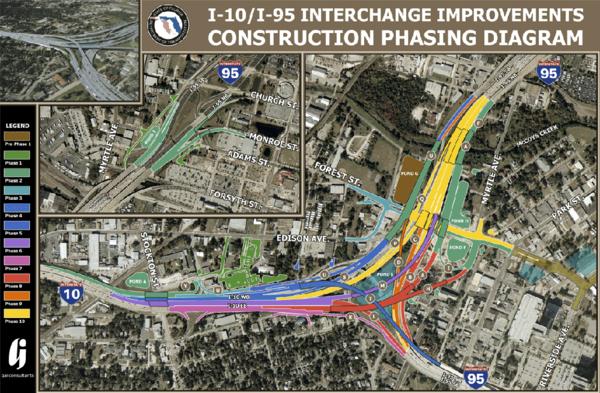
Jacksonville has had an ill advised highway based transit plan in place for about 10 years. The project includes $100 Million dollars which the City has in the bank for Mass Transit. Last night the Mayor announced that he wanted to take $100 Million of transit money and transfer it to new highway projects throughout the City. He is using the rabid port expansion as his excuse, yet 1/2 of all the many projects are no where near the port or remote warehousing.

So are we to have more highways and less Mass Transit? It sure looks like it, and what little we have will be tied up in a BRT scheme on the North side of Downtown. Something likely to eliminate local parallel routes.

This bears a close watch, shutting down our Mass Transit system, just as JTA has come to terms with some rail studies and re-planned it's North BRT line is insanity. As the news trickles in it appears to be the same $100 Million Transit set-aside that he is after. He has even pointed out the desire to cut JTA's funding and tie it to sales tax revenue. To do so will create an inability on
the part of JTA to do more then what we have seen from 30+ years of cash starved Amtrak.

The thousands of jobs the mayor is claiming will come from highway projects have not been borne out by facts. No where does highway development do anything more then create or add to sprawl. Sprawl? Yes, Jacksonville invented it - we are the largest City in the Western Hemisphere in size.

So what jobs? Those at the corner Big Lots? Mickey D's? How will those low income workers get to those new jobs without a stable bus system. The only high income jobs this will create are in road construction. With the Mayors father owning the largest concrete company on the coast this ought to be a cozy relationship.

Bloodshed? Try and pull the transit out of our urban core and watch what happens. I fear it won't be just Cape Town getting the headlines. No problem, the BRT camp will just point to some other "success", but it won't be Santiago, Cape Town, Bogota or Jacksonville.


26 November, 2008

OPERATION COLD FRONT

Millard Refrigeration
Millard Refrigeration is an multiphase industrial/office complex located in the City of Streetsboro, Ohio. Encompassing a total of 27.6 acres, improvements include 10.5 acres of warehouse, 2 story office building totaling 12,800 square feet, approximately 3.81 acres of parking lot infrastructure and fully engineered site utilities.


How funny is this report out of Charleston, South Carolina? As - if our city had a hit squad out on all other cities. Perhaps Charleston would swap some of that tourist money for a warehouse or two. Frankly Jacksonville has lots of warehouses, highways and railroad tracks, just how much is enough? Anyway, we are hearing the same story about Charleston, doing the same thing, from our end. Besides talking about Cold Fronts, Charleston is way colder. Now THAT is funny.


Chilling effect
Charleston apparently was one of at least two Southeast port cities to be frozen out of a possible $25.5 million investment by a refrigerated warehouse operator.
According to recent reports out of northern Florida, Jacksonville officials have set the wheels in motion to provide $230,000 in incentives to nail down the deal with Millard Refrigerated Services of Omaha, Neb. The first phase of the 185,000-square-foot warehouse project would create 92 jobs by 2010, paying an average salary of more than $37,000.
In addition to Jacksonville and Charleston, Millard, a 45-year-old family-owned international warehouse and distribution company, had Savannah on it short list. As with most economic-development deals that involve a stop at the taxpayer trough, this one was kept hush-hush and still hasn't been officially announced. Fittingly, the assigned code name is "Project Coldfront."

Amtrak Get's A New CEO


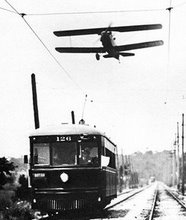
Will this photo mean anything to Amtrak now, or, are we still the dumping ground for left over equipment and tardy trains? After all, Florida is the number one tourist destination in the USA.

Amtrak got a new CEO yesterday as Kummant ran headlong into the Bush Transportation Nightmare. Meanwhile new Amtrak CEO while at the FRA has spent the last couple of years trying to bring down the Austin "Light Rail System" because they called it "Commuter Rail" which put them in his cross-hairs. Another George Bush clone? Time will tell, who knows, he might really turn out to be good for passenger rail. However if hindsight is anything, better bar the door y'all.
Progressive Railroading Magazine had this to say in a news release:

Amtrak names Boardman interim CEO
Yesterday, Amtrak announced it appointed Federal Railroad Administrator Joseph Boardman to serve a one-year term as president and chief executive officer.He succeeds Alex Kummant, who resigned earlier this month after serving in the top post for a little more than two years. William Crosbie, who had been appointed interim president and CEO following Kummant's departure, will return to his duties as senior vice president of operations. Boardman's interim appointment is unusual, says spokesperson Cliff Black, but the board believed that Crosbie needed to continue focusing on the "nuts and bolts" of the railroad, while another executive focuses on Amtrak's future direction. The one-year appointment is flexible and Boardman could be considered as a candidate for the permanent CEO position, says Black. The Amtrak board will conduct a search in the coming months. "Amtrak is at a critical juncture and needs a vigorous management vision and ability to take advantage of this unique time," said Amtrak Chairman Donna McLean in a prepared statement. Boardman has 34 years of transportation industry experience. During his tenure as FRA administrator, he served as the U.S. Department of Transportation designee on the Amtrak board. He also served stints as chairman of the Executive Committee of the Transportation Research Board, and the American Association of State Highway and Transportation Officials' Standing Committee on Rail Transportation. Prior to joining the FRA in 2005, Boardman served as commissioner of the New State DOT for eight years.


25 November, 2008

There Goes Savannah

There goes Savannah, our little sister to the north. Up and running with rail while Jacksonville fiddles - all the while sitting on a pile of cash for Transit from the BJP. "Oh I almost forgot, it's JUST for right-of-way, how many ways can you spell BRT? Running with skunks won't leave you smelling like Tri-Rail or MARTA or Tampa Streetcar, but that's alright, it's all MASS TRANSIT.

23 November, 2008

PRISONERS OF THE WHITE LINES ON THE FREEWAY


Well it's not much but it is a first effort at "Cyber-Art", with nothing more then "Paint" and a free Photobucket Account. What do you think? Look like anyone you know? Maybe a whole city full of prisoners? Yes, for those old enough to remember, the line came from the song "Coyote", by Joni Mitchell. While the song itself was about a whole different set of urban problems, either in lyrics or reality, yet the end result is the same. Somehow we are all "Prisoners of the white lines on the freeway..."


To paraphrase a fellow 60's radical to all of you in Computer Land, "STEAL THIS IMAGE!"


What Virginia Said...


Sometimes the Best Part of Jacksonville is Watching Others React

I'll never forget a dear friend who became an "adopted" Grandmother to me, on her first trip to Jacksonville from Boston. "Oh my, this is bigger then Boston, how many people live here?" We might just be the best kept secret in Urban America, but it looks like our little truths are starting to leak out from JaxPort.


Exporting jobs
November 23, 2008
Virginia's roads and bridges are falling apart. The General Assembly refuses to raise the 17.5-cent gas tax to pay for new roads, maintenance and transit that are needed. Check out all the potholes on Interstate 64 between the airport and the Hampton Roads Bridge-Tunnel and on Interstate 664 in Hampton and Newport News.

On the other hand, the Better Jacksonville program in our competitor region has had a half-cent regional sales tax that is funding new roads, bridges and port projects everywhere you look.

With the lack of investment in Virginia's infrastructure, expect more of Hampton Roads' port and business activity to move to Jacksonville and elsewhere where the transportation infrastructure is of good quality.

Al Riutort


14 November, 2008

Dear President Elect Obama, Are We Screwed?


The Obama Transition Team for Transportation has been named and is now in business.
Perhaps I was just too afraid that something would go wrong, really wrong. But now with all of the names named, we don't have a worry - business as usual.


Seth Harris
Director of Labor & Employment
Law Programs at New York Law School.
United Cerebral Palsy Association
National Advisory Commission on Workplace Flexibility.
Clinton Administration, Counselor to the Secretary of Labor cting Assistant Secretary of Labor for Policy,
Before
law clerk to Judge William Canby of the U.S. Court of Appeals for the Ninth Circuit
Judge Gene Carter of the U.S. District Court for the District of Maine.
He was Editor-in-Chief of the Review of Law & Social Change at the New York University School of Law


Mortimer Downey
self-employed transportation consultant
Deputy Secretary of Transportation under President Clinton,
Assistant Secretary of Transportation, Carter Administration.
Executive Director and Chief Financial Officer of the NYMTA
various planning positions at the Port Authority of New York and New Jersey.


Jane Garvey
Head of the U.S. Public/Private Partnerships at JPMorgan.
Garvey was the 14th Administrator of the Federal Aviation Administration, nominated by President Clinton.
Deputy Administrator of the Federal Highway Administration.


Michael Huerta
Group President of ACS Transportation Solutions,
Huerta served as the Executive Director of the Port of San Francisco Commissioner of the City of New York Dept of Ports, Int'l Trade & Commerce.


John Cullather
Worked for House of Representatives for over 31 years, specializing in Coast Guard and maritime transportation policy


Carol Carmody
consultant in international aviation and aviation safety.
appointed by President Clinton to National Transportation Safety Board.


WHERE'S AMTRAK? WHERE ARE THE RAILROADERS? STREETCARS? COMMUTER RAIL? LIGHT RAIL TRANSIT? MONORAILS?

Was this just a dream too good to be true for this railroad starved land, or have we just elected another in a line of 36 leaderless years. What am I missing here?


11 November, 2008

BRT EVERYONE CAN LOVE!


FINALLY SOME COMMON SENSE

Bus Rapid Transit is on it's way, not the $26 Million Dollar a mile version either, rather a system called Light-Rail-Lite. Please understand that this whole project has been something short of a local war.


Initial route alignment had JTA building a "super-bus" freeway right along Interstate 95 (the main N-S route on the East Coast) from downtown to the Gateway Mall. At Gateway, the BRT line would meet regular city buses for the Northwest side of town. Northwest Jacksonville is by far the most transit dependent segment of the City. Yet NOBODY lives on I-95. So with all the money, concrete, steel and time involved, we were looking at one short leg of a 4 legged - BILLION DOLLAR BUS.

After thousands of articles, here and elsewhere, after explaining our need for rail as our primary trunk system, and BRT as our primary feeder, it would seem the message is finally sinking in. The system now proposed is a much less involved build. No 30 year wait to ride the buses either. Using surface streets - and better yet a main artery that is little used but connects the whole city, JTA has hit on the formula for BRT success. HOV lanes, Lem Turner Road, Shand's hospital and future commuter rail all out of the box on about the same date. Run Jacksonville RUN! Scott, Suraya, Please take a bow.

Here's the news:

JACKSONVILLE DAILY RECORD

11/11/2008
by Joe Wilhelm Jr.
Staff Writer


A vision for the future of Downtown transit including city buses feeding trolley routes to reduce congestion on city streets has moved another step closer to reality.
The Federal Transportation Administration (FTA) and Jacksonville Transportation Authority (JTA) are planning improvements to the local public system and Phase One of the Jacksonville Rapid Transit System has received approval from the U.S. Environmental Protection Agency. JTA will soon be requesting bids for the design of the improvements.
“It’s an important first step to get this rapid transit system started,” said Scott Clem, director of strategic planning for JTA. “It’s also a step toward having a multi-modal transportation system in Jacksonville and Northeast Florida.”
The JTA plans to have the final design for Phase One by the end of 2009 and complete construction by the end of 2010.
“Our goal is to have this phase and the Jacksonville Regional Transit Center (JRTC) opened at the same time,” said Clem.
The JRTC is planned to be built across the street from the Osborn Center on the north side of the exisitng Skyway terminal. The center will include Greyhound and JTA bus terminals, Skyway access and an Amtrak terminal.
The $15.5 million Phase One project will include dedicated bus lanes along Broad and Jefferson streets, installation of transit signal priority equipment on bus routes and real-time bus schedule information supplied through GPS systems.
Transit signal priority systems utilize equipment on buses and traffic signals that will detect when a bus is at a stop near a traffic signal and, if the light is green, will prolong the green light to allow the bus to get through the intersection. The GPS equipment will provide transit customers with arrival and departure times for buses at each stop.
Phase One moved into the design phase after receiving approval from the U.S. Environmental Protection Agency after the project underwent an environmental assessment, which is required by the National Environmental Policy Act of 1969. Factors analyzed during the assessment include social, economic, environmental and transportation issues.
Each analyzed factor was then further broken down. The social and economic factors considered included neighborhood/community impacts, cultural resources, economic impacts, environmental justice and property impacts. Environmental factors included air quality, noise and vibration, hazardous material sites, water resources, parks and historical sites.
Traffic, parking, transit operations and ridership and construction impacts were the transportation factors analyzed.
After all factors were reviewed, a finding of no significant impact was submitted to the EPA, reviewed and approved.
Just like the trolleys rolling through Downtown, the Jacksonville Rapid Transit System is moving right along and the next phase of the project is underway.
As the design phase on the Downtown project begins, a public hearing will be held to discuss the North Corridor project. An environmental assessment is being conducted by JTA to determine the type of transportation improvements needed north of Downtown.
The 10.5-mile corridor stretches from Downtown along Boulevard Street to Gateway Mall and continues north along Norwood Avenue/Lem Turner Road, ending south of Armsdale Road near I-295.
The first public meeting to discuss the project was held Monday. Another public meeting will be held from 6-7:30 p.m. on Nov. 17 at Florida Community College at Jacksonville North Campus in the room C-126 auditorium. The public meetings have helped JTA find out what the public thinks about the planned improvements.
“We’ve had a mixed response to the rapid transit system project,” said Suraya Teeple, JTA transportation planning manager. “Some people are concerned that some of the connections won’t be made, but this is the first phase, so right now we are working on educating the public on what they can expect from the new system.”


INTERNATIONAL SHIPPING GIANT LANDS AT JACKSONVILLE

Today we have more then one reason to celebrate in Jacksonville. FIRST HAPPY VETERANS DAY TO ALL COMPATRIOTS. Secondly, there is the new shipping line. Nothing big mind you, just one of the largest companies on earth! JAXPORT and the City of Jacksonville have inked the deal this morning. Hanjin with 50 worldwide terminals is building their first "home" in the USA in Jacksonville. Following right behind them will be COSCO, K-LINE, YING MING.


Here's the news release:

Hanjin Deal Done
By
Rich Jones, News Director

November 11, 2008 9:11 AM

An International company has sealed a deal with Jaxport today.
The board of directors at Hanjin approved the terms and conditions of the deal at their quarterly meeting today.

Here is the statement from Jaxport and Mayor John Peyton:
Mayor John Peyton and Jacksonville Port Authority officials are pleased to announce that the Board of Directors of Hanjin Shipping Company of Seoul, Korea today approved a 30-year lease agreement with JAXPORT. The lease calls for Hanjin to build an approximately 90-acre container facility at the Dames Point Marine Terminal in North Jacksonville with the option for further expansion. The $300 million Hanjin Container Terminal at Dames Point is expected to open for business in late 2011 and will be a key hub operation for Hanjin's east coast port activity. JAXPORT's Board of Directors approved the lease offer earlier this month.The new agreement is expected to create more than 5,600 new private sector jobs in Jacksonville and support operations such as trucking, distribution and related services. The new terminal will generate nearly $1 billion in annual economic impact."In this difficult economic time, I am tremendously proud that we are able to bring these well-paying jobs to our community," said Mayor Peyton. "As the United States continues to see increases in container traffic from Asia, Jacksonville is poised to play an even greater role in the global trade market. This commitment from Hanjin, one of the largest shipping companies in the world, illustrates Jacksonville's growing importance in the international marketplace. Companies such as Hanjin are taking note of the benefits of doing business at JAXPORT which will translate into even more job opportunities for our residents."Construction of JAXPORT's Hanjin Container Terminal is expected take approximately 24 months, following the permitting process. The new terminal will be located adjacent to the nearly completed TraPac Container Terminal at Dames Point being built for Tokyo-based Mitsui OSK Lines. The TraPac Container Terminal will open for business in January 2009."This is the one-two punch we have been working toward," said JAXPORT's Executive Director Rick Ferrin. "TraPac put us on the map. Hanjin makes JAXPORT a major player in Asian and European trade and together the new terminals help fulfill our mission of bringing jobs and opportunity to the region."Hanjin is Korea's largest, and one of the world's largest, container carriers, moving more than 100 million tons of cargo annually and operating in more than 50 countries. In the U.S., Hanjin's subsidiary, Total Terminal International, presently runs dedicated terminal operations in Seattle, Long Beach and Oakland. The proposed Hanjin Container Terminal will be Hanjin's first dedicated U.S. operation outside the west coast, a strategic move meant to capitalize on the expansion of the Panama Canal and the anticipated increase in container traffic along the east coast.

08 November, 2008

ODE to BRT - Our Savior

JTA - "The Dream", FILE PHOTO

Ode to BRT, the story of what will happen if the largest City in the South gets to murder it's railroad plan for a system of BRT buses. Why the previous story posted without it's title is any ones guess but read on down, and you'll find the poem of the BRT system - our be all - in all - save all - bus network.

We are NOT against BRT - just don't try and build a bus into a train and don't expect a train to be a bus. It just won't happen - won't work.

So please enjoy this light-hearted look ahead into some future nightmare in Jacksonville.


ODE TO THE JACKSONVILLE BRT PLAN

"There's a Hooker being cozy with a Jacksonville cop."

"Stepping off this dirty bus first time I understood..."


Imagine if we scrap our rail plans for the "super bus" BRT system. The newspaper is already running "hit" pieces on rail failures, lack of profit and imagined expenses. The CD player just ran the old piece "Greyhound" by the Late Great Harry Chapin, (who by the way was killed on a freeway when his car was crushed by a large over the road vehicle). So with apology's to Harry, here's my take on BRT as the sole system in the 3RD largest City in the East.
"I find a seat
And we move out in the lights."


"Everybody's looking half alive."
It's midnight at the bus stop
And I drag myself in line.
Travellin' light, I got to go
But the bus won't be on time.
Everybody's looking half alive.
Later on the bus arrives.

Got my prepaid ticket
I find a seat
And we move out in the lights.
Come on Driver, where's the heat?
It's cold this Jacksonville night.
I keep telling to myself that I don't care.
It's now tomorrow, I'll soon be there.

Using this BRT, It's a dog of a way to get around.
Riding around on BRT.
It's a dog gone easy way to get you down.
Tired of watching this City go by
So I look across the aisle.
The window's frosted, I can't see
But the girl returns my smile.
She reminds me of someone waiting at my home.
So I doze. So it goes.

I'm wrinkled on my seat at the transfer stop.
There's a Hooker being cozy with a Jacksonville cop.
My coffee's tasting tired.
My eyes roll over dead.
They should have built the rail, and got the gas out of our heads.
Oh, to be at home in bed.

You got me driving.
I'm on your JTA bus and you're driving.
But there's nothing new about JTA.
Nothing new about feeling grey.
Nothing new about putting off
Or putting myself on.

Looking for tomorrow is the way the commuter survives
I should have realized by now that all my life's a ride.
It's time to find some happy times and make myself some friends
I know there ain't no rainbows waiting when this journey ends.

Stepping off this dirty bus first time I understood
There's got to be an alternative that's good
That's a thought for keeping if I could.
There's got to be an alternative that's good.


Commuter Rail Will Require Big Bucks - "Dumb and Dumber".

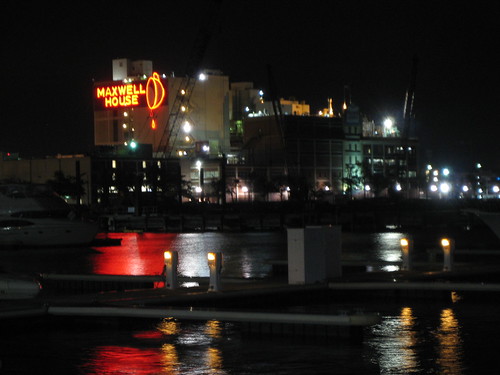
The Coffee is only about 1.5 miles from the newspaper tower in Jacksonville, a city where the old saying takes on new meaning

The Local Media should opens it's windows and "Smell the Coffee!"
The classic Rail Diesel Car, re manufactured at a cost of Penny's on the dollar to the DMU is still available in great numbers and custom re-made in our image.

Typical Re-manufactured RDC cars carry the flag for many agency's, nearly twice the mileage of the DMU units. Just imagine this could be SHAND'S station.

Billions of dollars of development have followed commuter rail and streetcars in every city that has invested in these systems. Why does the newspaper think we are unique? Why do they project failure? Can you spell P-A-R-R-O-T, if not, it's time to learn the highway lobby's crazy argument.

Our newspaper has failed us in this newest article. Completely missing are the hundreds of automobiles that would be removed from area highways. Missing are the fast connections to all sides of the City via a rail trunk line. Missing are the dozens of buses that could be redeployed to other neighborhoods within the city to close the headway's from 40 minutes to 20. The story is devoid of references to the cost of our highway system and to the fantastic profit we earned from the Arlington Expressway, Roosevelt or JTB last year. If your wondering "What profit?" you are correct, ZERO! Nothing but endless taxation and road building.

It should be remembered that though our City was the Queen of the Rails, for everything South of Washington D.C. - our people today don't remember it. Indeed some of the Amtrak rail expansion models show as many lines of trains serving Jacksonville as Chicago, St. Louis or Dallas. But this article is about commuter rail, and while that is true, the same track that carries an expanded Amtrak Florida network will serve to carry the Jacksonville Commuter Rail trains. Amtrak plans to bring corridor frequency to Florida with our intercity trains, but it is yet to be seen which project Amtrak, or Jax Commuter Rail, will piggyback on the other and thus get the most from this investment.

The news piece is the same old tired angle, The train will cost every citizen $21 dollars per ticket. Well how about letting us know the true costs of air service at Jacksonville? How about highways?

The Department of Transportation, which subsidizes scheduled air service to rural communities far from major airline hubs.These routes are the back roads of skies, serving unknown hamlets like Show Low, Arizona, Thief River Falls, Minnesota, and Greenbrier, West Virginia. They are generally poorly traveled, costing American taxpayers millions every year to subsidize. (Environmentalists would point out that the extra flights pump tons of carbon dioxide into the atmosphere.) The New York Times reported in October 2006 that some destinations, such as Brooking's, South Dakota, or Kingman, Nevada, serve less than ten passengers daily. Since EAS requires subsidized airlines to fly at least two daily round trips to each destination, that means that there can be as many crew members as passengers on the least-trafficked flights. The entire program cost over $110 million last year—$148 for every round trip outside Alaska, whose EAS subsidies are documented on a separate balance sheet. For example, at Manitowoc, Wisconsin when an average passenger boards a flight, the fare is $89, but the subsidy is $515! Closer to home, the recent Atlanta Airport expansion - one airport project - is NINE TIMES Amtrak's current appropriation for the entire nation. Just how twisted is this logic? If the airlines had to pay for the cost of the at traffic control system, as Amtrak now pays for the upkeep of the Northeast Corridor, they would soon be out of business. In 1989, it cost the federal government $3 billion to operate the system vs. the combined net profit of $1 billion for the airline industry. -Source: "Supertains: Solutions to America's Transportation Gridlock, Joe Vranich

$ 13,000,000,000
Boston
"Big Dig" freeway 20-year expansion project

$ 6,000,000,000
I-95
Wilson bridge project

$ 3,200,000
Alabama
Two-mile highway widening cost.


$ 3,000,000
Alabama
Cost to provide passenger train service to Montgomery, Mobile, Birmingham


For the same amount of money, the state of Alabama could fund a 200-mile passenger train route that would serve many more citizens than widening an EXISTING two-mile roadway. Such passenger train would serve Birmingham, Montgomery, Greenville and Mobile - half of the state!

Why not just build profitable highways and include bus systems? User fees only account for about 60% of highway spending by all levels of government. The rest comes from non-users and in 1990, non-highway users subsidized roads at the rate of $18 billion per year. -Source: Highway Statistics 1990, Tables HF-10 and SMT, Federal Highway Administration

----------------------------------------------------------------------------------------------------------------------------------------------------------------------------------------------------------------------------------
-Originally created 11080

Costly rail service for Jacksonville would lose money
Click-2-Listen

Advocates say millions could be found to build the commuter service.
By LARRY HANNAN, The Times-Union


A proposed commuter rail system in the Jacksonville area will cost $543 million to build and $40 million a year to run, and won't make money, according to a yet-to-be completed study by a Jacksonville Transportation Authority consultant.

It is not clear yet where, when or if the money will be found to build the system.
The JTA asked the consultant, Gannett Fleming Inc. of Pennsylvania a year ago to look into using the existing rail lines owned by CSX and Florida East Coast Railway to create a three-pronged commuter rail system that would help get cars off the road. It would be part of the transportation authority's long-range effort for commuter rail flow into the downtown area, where buses or the Skyway (Jacksonville monorail) would take people to their final destination.
A northbound line on CSX tracks would go to Yulee; a southwest line on CSX tracks to Green Cove Springs; and a southeast line on Florida East Coast tracks to St. Augustine.
The construction cost does not include a new transportation center at the Prime Osborn Convention Center, the starting point for all three commuter rail lines.
The study calculated how much it would cost to run the system, but not how much people would pay to ride it. That will be up to JTA to decide, said Thomas Hickey, national transit planning manager of Gannett Fleming. The company released the numbers midway through its $400,000 study due next year.
Hickey estimated that by 2015 there would be 2,974 trips a day for the southwest route, and it would cost $13.44 per passenger for the railway to break even in yearly operating costs. The southeast route would have 4,814 trips a day with a cost of $9.58 per passenger, and the north route would have 2,045 trips a day at $21.50 per trip.
But the JTA wouldn't charge that much.
James Boyle, the authority's regional transportation planner, said it wouldn't ask passengers to pay a fare that would allow the system to make money. As a result, he said, JTA would not expect to make a profit - or even break even. Most public transportation systems in the United State lose money, he said, and are operated because they benefit the public.
However, he said JTA didn't want the system to be sunk by cost, either.
The construction money would have to come from federal, state and local government sources, Boyle said, and that's feasible because the state and federal governments want more commuter rail systems built.
Congress also needs to pass a new transportation funding bill in 2009 because the current bill is expiring. Advocates are pushing for more rail funding in that bill.
JTA also might seek support from the private sector via sponsorships or public-private partnerships, Boyle said.
Denise Bunnewith of the First Coast Transportation Planning Organization said it is unlikely that the entire commuter rail line will be built at once because the cost is prohibitive. But, she said, it's important that the area move forward and build at least part of the system soon, because rail is an essential part of the region's long-term transportation plan.
Hickey said the study assumes a train can hit the southeast and southwest stations every 30 minutes during peak times and once an hour during off-peak times. The north route will have a train arrive every 15 minutes during peak times and every half hour during off-peak times. The north route would receive more runs because it is a more populated area, and there would be more train stops on this route.
For the north route, the study identified potential stations in locations, such as Shand's Jacksonville, Main Street in the Springfield warehouse district, U.S. 1 near Kings Road, Moncrief Road, and 64th Street near Main Street. With other potential stops, JTA has identified the basic areas but doesn't yet know the exact locations.
The completed study will be presented to the JTA board. If the board wants to move forward, Boyle said a more detailed analysis would be needed, at a cost of about $3 million. That study would take at least 18 months and involve community meetings and discussions with the rail companies, he said.
In the meantime, gas prices likely will rise again. So will traffic congestion. And that, Boyle said, will make the area more open to commuter rail.

===================================================================

Between 1971 and 1994, capital spending for Amtrak has never exceeded $220 million in any year...about the cost of a mile or two of urban freeway. On that, Amtrak is supposed to make the investments to become profitable. -Source: The Amtrak Story, by Frank Wilner

Between 1958 and 1971, the year of Amtrak's creation, the federal government spent more than $50 billion on highways and at the same time, the government subsidy to intercity bus operators grew to $50 million annually. -Source: USDOT, "Study of Federal aid to Transportation" and R.L. Banks and Associates, "Is Subsidy Unique to Amtrak?" When the Reagan Administration claimed that each rail passenger required a $35 subsidy, Amtrak President Graham Claytor countered that air passengers were subsidized at $42 each, including $9 for the air traffic control system. -Source: US News and World Report

------------------------------------------------------------------------------------------------------------------------------------------------------------------------------------------------------------------

Now the Times-Union wants to lay all these same stupid numbers on Commuter Rail.

So as the late president Ronald Reagan would have said to our own Times-Union and the missing Commuter Rail profit, "There they go again..." Times-Union? Wake the hell up and smell the coffee...-Maxwell House and General Foods Speciality Coffee's are a product of Jacksonville.


TAKE A FREE TOUR OF THE JACKSONVILLE SKYWAY

The arguments rage to this date, "Should have never been built," "waste of taxpayer money," "Doesn't go anywhere," "Nobody rides it..." etc. Bottom line is we have it, and it is finally showing signs of life. Simple extensions to the Stadium, San Marco, and the area of Blue Cross in North Riverside would turn this little train around. Addition of Park and Ride garages and multimodal transit terminals at the end points would bring on the crowds. The video must have been shot on a Sunday Morning, as downtown is certainly as packed with life as any other major City on weekdays. Jacksonville is a city of Bikes, joggers, walkers, buses and cars, one almost wonders how the photographer managed to find this quiet moment.


Support the Skyway? Join the Monorail Society Today!

Subscribe to monorailsociety
Powered by groups.yahoo.com

WELCOME ABOARD

Sign by Danasoft - For Backgrounds and Layouts