08 November, 2008

ODE TO THE JACKSONVILLE BRT PLAN

"There's a Hooker being cozy with a Jacksonville cop."

"Stepping off this dirty bus first time I understood..."


Imagine if we scrap our rail plans for the "super bus" BRT system. The newspaper is already running "hit" pieces on rail failures, lack of profit and imagined expenses. The CD player just ran the old piece "Greyhound" by the Late Great Harry Chapin, (who by the way was killed on a freeway when his car was crushed by a large over the road vehicle). So with apology's to Harry, here's my take on BRT as the sole system in the 3RD largest City in the East.
"I find a seat
And we move out in the lights."


"Everybody's looking half alive."
It's midnight at the bus stop
And I drag myself in line.
Travellin' light, I got to go
But the bus won't be on time.
Everybody's looking half alive.
Later on the bus arrives.

Got my prepaid ticket
I find a seat
And we move out in the lights.
Come on Driver, where's the heat?
It's cold this Jacksonville night.
I keep telling to myself that I don't care.
It's now tomorrow, I'll soon be there.

Using this BRT, It's a dog of a way to get around.
Riding around on BRT.
It's a dog gone easy way to get you down.
Tired of watching this City go by
So I look across the aisle.
The window's frosted, I can't see
But the girl returns my smile.
She reminds me of someone waiting at my home.
So I doze. So it goes.

I'm wrinkled on my seat at the transfer stop.
There's a Hooker being cozy with a Jacksonville cop.
My coffee's tasting tired.
My eyes roll over dead.
They should have built the rail, and got the gas out of our heads.
Oh, to be at home in bed.

You got me driving.
I'm on your JTA bus and you're driving.
But there's nothing new about JTA.
Nothing new about feeling grey.
Nothing new about putting off
Or putting myself on.

Looking for tomorrow is the way the commuter survives
I should have realized by now that all my life's a ride.
It's time to find some happy times and make myself some friends
I know there ain't no rainbows waiting when this journey ends.

Stepping off this dirty bus first time I understood
There's got to be an alternative that's good
That's a thought for keeping if I could.
There's got to be an alternative that's good.


Commuter Rail Will Require Big Bucks - "Dumb and Dumber".

The Coffee is only about 1.5 miles from the newspaper tower in Jacksonville, a city where the old saying takes on new meaning

The Local Media should opens it's windows and "Smell the Coffee!"
The classic Rail Diesel Car, re manufactured at a cost of Penny's on the dollar to the DMU is still available in great numbers and custom re-made in our image.

Typical Re-manufactured RDC cars carry the flag for many agency's, nearly twice the mileage of the DMU units. Just imagine this could be SHAND'S station.

Billions of dollars of development have followed commuter rail and streetcars in every city that has invested in these systems. Why does the newspaper think we are unique? Why do they project failure? Can you spell P-A-R-R-O-T, if not, it's time to learn the highway lobby's crazy argument.

Our newspaper has failed us in this newest article. Completely missing are the hundreds of automobiles that would be removed from area highways. Missing are the fast connections to all sides of the City via a rail trunk line. Missing are the dozens of buses that could be redeployed to other neighborhoods within the city to close the headway's from 40 minutes to 20. The story is devoid of references to the cost of our highway system and to the fantastic profit we earned from the Arlington Expressway, Roosevelt or JTB last year. If your wondering "What profit?" you are correct, ZERO! Nothing but endless taxation and road building.

It should be remembered that though our City was the Queen of the Rails, for everything South of Washington D.C. - our people today don't remember it. Indeed some of the Amtrak rail expansion models show as many lines of trains serving Jacksonville as Chicago, St. Louis or Dallas. But this article is about commuter rail, and while that is true, the same track that carries an expanded Amtrak Florida network will serve to carry the Jacksonville Commuter Rail trains. Amtrak plans to bring corridor frequency to Florida with our intercity trains, but it is yet to be seen which project Amtrak, or Jax Commuter Rail, will piggyback on the other and thus get the most from this investment.

The news piece is the same old tired angle, The train will cost every citizen $21 dollars per ticket. Well how about letting us know the true costs of air service at Jacksonville? How about highways?

The Department of Transportation, which subsidizes scheduled air service to rural communities far from major airline hubs.These routes are the back roads of skies, serving unknown hamlets like Show Low, Arizona, Thief River Falls, Minnesota, and Greenbrier, West Virginia. They are generally poorly traveled, costing American taxpayers millions every year to subsidize. (Environmentalists would point out that the extra flights pump tons of carbon dioxide into the atmosphere.) The New York Times reported in October 2006 that some destinations, such as Brooking's, South Dakota, or Kingman, Nevada, serve less than ten passengers daily. Since EAS requires subsidized airlines to fly at least two daily round trips to each destination, that means that there can be as many crew members as passengers on the least-trafficked flights. The entire program cost over $110 million last year—$148 for every round trip outside Alaska, whose EAS subsidies are documented on a separate balance sheet. For example, at Manitowoc, Wisconsin when an average passenger boards a flight, the fare is $89, but the subsidy is $515! Closer to home, the recent Atlanta Airport expansion - one airport project - is NINE TIMES Amtrak's current appropriation for the entire nation. Just how twisted is this logic? If the airlines had to pay for the cost of the at traffic control system, as Amtrak now pays for the upkeep of the Northeast Corridor, they would soon be out of business. In 1989, it cost the federal government $3 billion to operate the system vs. the combined net profit of $1 billion for the airline industry. -Source: "Supertains: Solutions to America's Transportation Gridlock, Joe Vranich

$ 13,000,000,000
Boston
"Big Dig" freeway 20-year expansion project

$ 6,000,000,000
I-95
Wilson bridge project

$ 3,200,000
Alabama
Two-mile highway widening cost.


$ 3,000,000
Alabama
Cost to provide passenger train service to Montgomery, Mobile, Birmingham


For the same amount of money, the state of Alabama could fund a 200-mile passenger train route that would serve many more citizens than widening an EXISTING two-mile roadway. Such passenger train would serve Birmingham, Montgomery, Greenville and Mobile - half of the state!

Why not just build profitable highways and include bus systems? User fees only account for about 60% of highway spending by all levels of government. The rest comes from non-users and in 1990, non-highway users subsidized roads at the rate of $18 billion per year. -Source: Highway Statistics 1990, Tables HF-10 and SMT, Federal Highway Administration

----------------------------------------------------------------------------------------------------------------------------------------------------------------------------------------------------------------------------------
-Originally created 11080

Costly rail service for Jacksonville would lose money
Click-2-Listen

Advocates say millions could be found to build the commuter service.
By LARRY HANNAN, The Times-Union


A proposed commuter rail system in the Jacksonville area will cost $543 million to build and $40 million a year to run, and won't make money, according to a yet-to-be completed study by a Jacksonville Transportation Authority consultant.

It is not clear yet where, when or if the money will be found to build the system.
The JTA asked the consultant, Gannett Fleming Inc. of Pennsylvania a year ago to look into using the existing rail lines owned by CSX and Florida East Coast Railway to create a three-pronged commuter rail system that would help get cars off the road. It would be part of the transportation authority's long-range effort for commuter rail flow into the downtown area, where buses or the Skyway (Jacksonville monorail) would take people to their final destination.
A northbound line on CSX tracks would go to Yulee; a southwest line on CSX tracks to Green Cove Springs; and a southeast line on Florida East Coast tracks to St. Augustine.
The construction cost does not include a new transportation center at the Prime Osborn Convention Center, the starting point for all three commuter rail lines.
The study calculated how much it would cost to run the system, but not how much people would pay to ride it. That will be up to JTA to decide, said Thomas Hickey, national transit planning manager of Gannett Fleming. The company released the numbers midway through its $400,000 study due next year.
Hickey estimated that by 2015 there would be 2,974 trips a day for the southwest route, and it would cost $13.44 per passenger for the railway to break even in yearly operating costs. The southeast route would have 4,814 trips a day with a cost of $9.58 per passenger, and the north route would have 2,045 trips a day at $21.50 per trip.
But the JTA wouldn't charge that much.
James Boyle, the authority's regional transportation planner, said it wouldn't ask passengers to pay a fare that would allow the system to make money. As a result, he said, JTA would not expect to make a profit - or even break even. Most public transportation systems in the United State lose money, he said, and are operated because they benefit the public.
However, he said JTA didn't want the system to be sunk by cost, either.
The construction money would have to come from federal, state and local government sources, Boyle said, and that's feasible because the state and federal governments want more commuter rail systems built.
Congress also needs to pass a new transportation funding bill in 2009 because the current bill is expiring. Advocates are pushing for more rail funding in that bill.
JTA also might seek support from the private sector via sponsorships or public-private partnerships, Boyle said.
Denise Bunnewith of the First Coast Transportation Planning Organization said it is unlikely that the entire commuter rail line will be built at once because the cost is prohibitive. But, she said, it's important that the area move forward and build at least part of the system soon, because rail is an essential part of the region's long-term transportation plan.
Hickey said the study assumes a train can hit the southeast and southwest stations every 30 minutes during peak times and once an hour during off-peak times. The north route will have a train arrive every 15 minutes during peak times and every half hour during off-peak times. The north route would receive more runs because it is a more populated area, and there would be more train stops on this route.
For the north route, the study identified potential stations in locations, such as Shand's Jacksonville, Main Street in the Springfield warehouse district, U.S. 1 near Kings Road, Moncrief Road, and 64th Street near Main Street. With other potential stops, JTA has identified the basic areas but doesn't yet know the exact locations.
The completed study will be presented to the JTA board. If the board wants to move forward, Boyle said a more detailed analysis would be needed, at a cost of about $3 million. That study would take at least 18 months and involve community meetings and discussions with the rail companies, he said.
In the meantime, gas prices likely will rise again. So will traffic congestion. And that, Boyle said, will make the area more open to commuter rail.

===================================================================

Between 1971 and 1994, capital spending for Amtrak has never exceeded $220 million in any year...about the cost of a mile or two of urban freeway. On that, Amtrak is supposed to make the investments to become profitable. -Source: The Amtrak Story, by Frank Wilner

Between 1958 and 1971, the year of Amtrak's creation, the federal government spent more than $50 billion on highways and at the same time, the government subsidy to intercity bus operators grew to $50 million annually. -Source: USDOT, "Study of Federal aid to Transportation" and R.L. Banks and Associates, "Is Subsidy Unique to Amtrak?" When the Reagan Administration claimed that each rail passenger required a $35 subsidy, Amtrak President Graham Claytor countered that air passengers were subsidized at $42 each, including $9 for the air traffic control system. -Source: US News and World Report

------------------------------------------------------------------------------------------------------------------------------------------------------------------------------------------------------------------

Now the Times-Union wants to lay all these same stupid numbers on Commuter Rail.

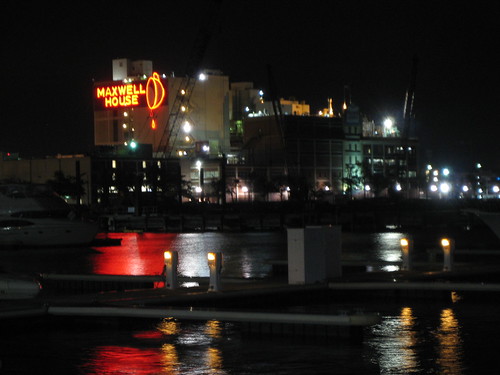
So as the late president Ronald Reagan would have said to our own Times-Union and the missing Commuter Rail profit, "There they go again..." Times-Union? Wake the hell up and smell the coffee...-Maxwell House and General Foods Speciality Coffee's are a product of Jacksonville.


06 November, 2008

A VETERANS DAY MESSAGE TO ALL

This Veterans Day, November 11Th, whatever your views on war past or present take the time to thank a Veteran for their sacrifice. Happy Veterans Day Compatriots may God grant you a life time of peace both now and for eternity.
The First Flag raised over Iwo Jima

Iraq today


My war, Vietnam


BB 61 The USS IOWA in Korea


Pearl Harbour, My fathers war, and his ship the USS Utah as she rolled over and sunk


Americans in Action WWII with outdated weapons and equipment

The walking wounded in WWI, 2ND from the left appears to be a German POW.


Spanish American War and the battle cry went up "Remember the Maine".

Little Big Horn, Custer's last stand - both sides were AMERICANS


War of Yankee Aggression, General Lee at Bull Run, both sides were Americans.
---------------------------------------------------------------------------------
Being a transportation Blog it just wouldn't be fair not to mention the special services of The USAF Military Airlift Command, The US Army Railway Engineers, The US Military Railroads, The Naval Railroad at Pearl Harbour and beyond, The Naval and Marine Corps Transport Units and the thousands of Civilian Military Employees, who have served their country. Americans in harms way, in war and peace around the globe.

05 November, 2008

COMMUTER RAIL AND JAX PORT TOO CAUGHT IN OUR TIDAL WAVE OF GROWTH

COMMUTER RAIL STARTER LINES ARE CLOSER THEN EVER!


North Florida TPO holds B.I.G. roundtable discussion James Boyle, the enthusiastic, noble, dashing and handsome young project manager for the Jacksonville Transit Authority, points out a proposed commuter rail central hub at the Osborn Convention Center during his discussion of a commuter rail feasibility study to members of the North Florida TPO Business, Industry and Government Roundtable members Tuesday. (Smile James)


Two car SPV2000 train of Jacksonville Commuter Rail, as it would appear pulling into Gateway Mall station from the Southeast on a cold winter day.

Another scene, looking South toward the Arena, this Northbound Commuter Train of twin RDC units, is about to leave Springfield Yard, at the 21st Street Station for the Airport. Swisher International, Florida Rock Industries, and the Talleyrand Docks and Terminals are all just a few steps away.

An excellent piece appeared on our new Commuter Rail lines in this issue of the Jacksonville DAILY RECORD. It never ceases to amaze me how well our smaller newspapers do in reporting these events, while the regional paper seems to grope for details and accuracy.
Something not really addressed by the article is that a starter line such as downtown to the Airport or to Gateway Mall could be self financed by the City of Jacksonville. It would involve a change of rules for the Better Jacksonville Plan Transportation Set-Aside Monies, but it COULD be done with a bit of will power. If so we could have Commuter Rail up and running before any other Florida Metropolitan Area can get their paper work filed with the FTA.
Article reprints available.Find out more.
11/05/2008
by David Chapman
Staff Writer
The North Florida Transportation Planning Organization (TPO) held its quarterly Business, Industry and Government (B.I.G) roundtable discussion meeting Wednesday, highlighted by a presentation discussing commuter rail and how it’s on track to go to the next step.
James Boyle, project manager for the Jacksonville Transportation Authority, discussed the feasibility study and the process of what has been accomplished on the issue.
“People have been very responsive, very interested about commuter rail,” said Boyle.
Boyle and JTA began the $400,000 feasibility study by first looking at existing railroad lines within the nine county region, then reduced the area to 20–30 miles from Downtown Jacksonville, with the Osborn Convention Center turning into a central hub.
Whittled down into a Northern line (Downtown to Yulee), Southwest line (Downtown through Green Cove Springs) and Southeast line (Downtown to St. Augustine), the feasibility study then looked at preliminary operating plans of each.
The study showed how many miles of each track would need to be repaired in order to be operable, along with early three-corridor combined statistics including rail lengths (ranging from 22.8– 38.4 miles), stops (from 10–15), travel time (37–51 minutes), average speed (32–46 mph) and ridership (770– 4810 people a day), all 2015 target figures.
An early, “moving target” cost, according to Boyle, is $543 million for the 91.5 - mile, 3 - corridors system, but the estimate is preliminary and will be influenced by things such as potential agreements with the railroad companies, additional track building where only single lines exist, signal improvements and type of rail cars purchased.
The key to these particular corridors working, said Boyle, is the use of existing lines. Building completely new lines to areas such as the Beaches would be cost prohibitive at this point.
A central transportation hub being located Downtown is something Boyle believes will attract new business.
“Something like this I think could help attract people to Downtown a lot,” he said. “Especially for developers.”
Funding is the big issue, said Boyle, but further studies on each corridor will help. Additionally, each corridor can be built piece by piece, stop by stop – so the costs aren’t all needed up front.
After putting the final touches on the study, Boyle and JTA will begin making further rounds to different agencies to share continuing results until an alternative analysis study can be done.
“Every time it gets mentioned, people get excited,” said Boyle.
Also discussed during the North Florida TPO B.I.G. Roundtable on Tuesday:
• North Florida TPO’s Wanda Forrest gave the group an update on the organization’s efforts and steps to become part of the Clean Cities, a government-industry partnership designed to reduce petroleum consumption by promoting alternative fuels. Forrest said the hope is to have the first planned meeting on the topic in January, but the organization is still searching for more stakeholders in various fields who are needed to complete the stakeholder process. Currently, the local effort has resulted in 120–125 stakeholders, according to North Florida TPO, but more stakeholders are needed. Some fields include health and transportation departments, commercial fleets, transit agencies and nonprofit organizations. For more information on Clean Cities, go to www. northfloridatpo.com.
• Jeff Sheffield, North Florida TPO planning director, gave updates on Port infrastructure improvements on the Northside. “We’re trying to figure out what we can do now,” said Sheffield. “There is a lot going on.” Some of the discussed projects include Alta Drive improvements, changes to the Zoo Parkway at the Port entrance (near the future Hanjin Container Terminal) and improvements at State Road 9A and Pulaski Road. All are considered short-term improvement projects with a goal of 2011 completion. “There is still time to do all these,” said Sheffield.


04 November, 2008

The Trolley Song Dissected Analyzed

Was THE TROLLEY SONG a secret Light Rail cheer?
Was this about St. Louis or Yosemite? A case could be built for the later.
No where near St. Louis, but there are hints of this story in the song
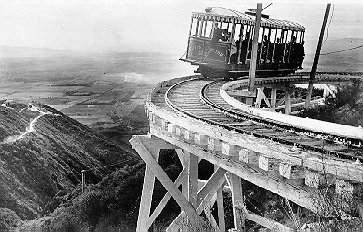
The stage presentation features a trolley similar to the Pacific Electric Mount Lowe - Echo Park excursion line. Certainly from the lower photo we know the PE engineering department could finish the YV RR into the national park. Perhaps the song writer was a member of the Pacific Railroaders Association.


THE TROLLEY SONG
as sung by the Late Great Judy Garland

Hidden within the words to a song set in Saint Louis, Missouri, comes an interesting reference to the high alpine country around Yosemite National Park, in California. You have to make your own conclusions on why this entered into a song about a Trolley-Interurban ride in St. Louis. But here is a fascinating theory. The play was released just as the famous Yosemite Valley Railroad was facing abandonment. The railroad a long-time favorite of the rich and famous was used to effortlessly reach the remote park, forests, falls and lakes.

Just as the railroad was about to be sold for scrap, a young railroader named John Mc Fadden, of Los Angeles, stepped forward and examined the property. He was said to represent The Pacific Coast Railroading Association. The case could be brushed away except that the Southern Pacific, owners of the Pacific Electric Railroad, had their legal department file Mc Fadden's attempt to delay the abandonment. Nationwide announcements went out of a "Great new electric line to the park", would be built on the lines of the YV. California, saw this as a god-sent attempt by the Southern Pacific for a sub rosa buy out. As quickly as it was dreamed up, the concept and the backers vanished. The Yosemite Valley was scrapped in 1945, and California - indeed the nation, has been trying to put it back as a LRT line, ever since. coincidence? I don't think so.

The Yosemite Valley Railroad was on in it's last hours when the movie was released in 1944. The YV died in 1945, and within 20 years the electric railroad industry would pass into the history books and sleep for 40 years.

Clang ,clang, clang went the trolley
Ding, ding, ding went the bell
Zing, zing, zing went my heartstrings as we started for Huntington Dell.
Chug, chug, chug went the motor
Bump, bump, bump went the brake
Thump, thump, thump went my heartstrings as we glided for Huntington Lake.


We're off on a "trolley" which is more likely an interurban car from the description in the song. The Clang, Clang, Clang, is from the "trolley gong" mounted under the floor or on the roof and usually operated with a small foot peddle. Contrary to Hollywood the Trolley would not sound the gong constantly and it is reserved for busy intersections or any area of caution. The Ding of the bell here represents the signal bell or buzzer to the motorman and conductor that someone wishes to stop at the next station.

Note that this is a young romance and her heartstrings are tense, and though the movie is set in St. Louis, Missouri, the Hollywood producers of that era thought that all the world was California. So in reality we have her headed for a mythical recreation place called Huntington Park. While the real Huntington Park name paid tribute to the massive Pacific Electric Railroad builder Henry Huntington.So there is a direct relation in the song to Southern California's great electric system.

Note that the Trolley doesn't bounce, rock or roll, it "glides" to Huntington Lake.
Once again the producers used the romance of California to impact the songs listeners. Anyone that has spent time near Yosemite, may indeed have spent some time at the 7,000 foot high Huntington Lake. This is an alpine paradise of unprecedented proportions. It's implication to the Trolley Song is that Trolleys deliver us to a place where the dreams we dare to dream, really do come true.

The day was bright, the air was sweet
The smell of honeysuckle charmed me off my feet
I tried to sing, but couldn't squeak
In fact I felt so good I couldn't even speak
Buzz, buzz, buzz went the buzzer
Time to all disembark,
Time to fall went my heartstrings as we got off at Huntington Park
As we got off at Huntington Park.

In the era of the electric streetcar, smog in all but the worst steel producing cities was all but unheard of. The air was clean and sweet, there is often a distinct smell of ozone around the electric motors and wires as well. This Trolley terminal wasn't even on a street, but somewhere where the honeysuckle grows. No doubt she found the lake, the alpine wilderness, the snow capped peaks and the electric way to the mountain as breathtaking. So much so she says she couldn't sing, squeak or speak. I've had that happen in the Yosemite Valley floor - the feeling that one can reach out and touch the face of God.

As she arrives in the mythical Lake garden, she rings the buzzer or bell and the big interurban pulls to a stop. Spotting her heartthrob, she can't speak, taken back by the beauty of this electric world, all she can think to do is fall - Maybe he'll pick her up?


With my high-starched collar, and my high-topped shoes
And my hair piled high upon my head
I went to lose a jolly hour on the Trolley and lost my heart instead.
With his light brown derby and his bright green tie
He was quite the handsomest of men
I started to yen, so I counted to ten the I counted to ten again

Here we get a glimpse of the romance in her head already set to this perfectly clean, pristine environment of electric railway - a celestial backdrop - and a beautiful young couple with springtime in their eyes. She certainly dressed for the occasion to knock the men off their feet with her high-starched collar and high topped shoes. She also dressed to do some manner of hiking, such as it was in those days. High topped shoes protect the delicate ankles from rocks and accidental twists and injury on mountain trails. Her hair was up and out of the way.

But note that she deliberately went just to spend a "Jolly Hour on the Trolley". Trolley excursions are a lost American past-time. Sadly, we are too much in a hurry to follow Judy and just go out and kill an hour for the sake of the wonderful ride. Frankly, most of us have never seen a Trolley much less ridden on one. I find this part of the song a bit modern-tragic.

Note the man of her yen was wearing a derby hat, and a tie, certainly the standard outdoor suit of the day. A time when self respecting men considered the them selves naked without a coat and tie. As recently as WWII, General Patton wrote up dozens of allied soldiers who would "dare to fight a war without a tie!" So we see from this they both boarded the trolley for a frolic.

Clang, clang, clang went the trolley
Ding, ding, ding went the bell
Zing, zing, zing went my heartstrings
From the moment I saw him I fell
Chug, chug, chug went the motor
Bump, bump, bump went the brake
Thump, thump, thump went my heartstrings
When he smiled I could feel the car shake

Mostly a repeat of the first verses, this chorus changes the meaning somewhat, here we see that the trolley has reached the destination. The buzzer is going off constantly and the gong is clanging to clear the way of picnic basket carrying tourists.

She See's herself behaving as a trolley, certainly high on love she feels the electric surge as her heartstrings go zing, zing, zing. This time when she saw him she fell - but it was a fall of love at first sight. The motors are slowing the car as she feels a slight chug motion, the brakes are applied in a smooth rhythmic bump, bump motion. Her heart is again identified with the trolley as the air compressors kick in and she hears the rapid ka-thump - ka-thump - ka-thump under the floor. Just as the gentleman smiled the car shook to a stop.

He tipped his hat, and took a seat
He said he hoped he hadn't stepped upon my feet
He asked my name, I held my breath
I couldn't speak because he scared me half to death
Chug, chug, chug went the motor
Plop, plop, plop went the wheels
Stop, stop, stop went my heartstrings
As he started to go then I started to know how it feels
When the universe reels

Here the scene seems to change again, I believe the writer now was considering the tiny narrow gauge cars of the old Mount Lowe Railway. The Pacific Electrics narrow gauge alpine streetcars to Echo Park. Note the words he tipped his had, and said, "I hope I didn't step upon your feet." This was because the narrow gauge cars were a tight fit inside. Too young to know how to respond in words she felt she had arrived at the gates of the universe, but the Trolley is moving again and she didn't get off.


The day was bright, the air was sweet
The smell of honeysuckle charmed you off your feet
You tried to sing, but couldn't squeaks
In fact, you loved him so you couldn't even speak

The other passengers get caught up in the moment - Trolley - Young Love - Beautiful Girl - Handsome Man - Incredible scenery and sweet air.


Buzz, buzz, buzz went the buzzer
Plop, plop, plop went the wheels
Stop, stop, stop went my heartstrings
As he started to leave I took hold of his sleeve with my hand
And as if it were planned he stay on with me
And it was grand just to stand with his hand holding mine
To the end of the line.

The journey continues on forever, though neither planned it that way. It was just a lark on the trolley and a day in the park. It ended up being the quintessential Trolley Romance of all time. The two lovers now hand in hand decide they will take the car to the end of the line - where ever that may be.

And may it be that Judy and her love truly are spending the rest of time - to the end of the line - Somewhere over the rainbow.


ANOTHER DAY - ANOTHER AIRLINE

AIRLINE MERGERS SIGN OF SUCCESS OR DISASTER?


Southern Airways 1952

We have lost another airline folks, this time it's the "mighty Northwest" that was eaten by Delta. While I had much rather fly a number of smaller regional carriers then throw my loyalty to a single giant, we have to hope the employees of both will be well cared for. For the nostalgic about air travel, you may recall the worlds largest airline merger when NORTHWEST took control of REPUBLIC. Republic it's self was a product of the old lovable SOUTHERN AIRWAYS and NORTH CENTRAL merger, a sad day in Dixie indeed.

Here is the news release, and lets all hope that the employees and their families are well cared for in every aspect of this newest "Worlds Largest Airline".

Officials surprised at ease of airline merger
Times News Service

Officials at MBS International Airport say they're a bit surprised Delta Air Lines completed its $2.8 billion acquisition of Northwest Airlines without much turbulence.
Now, they're hoping for a smooth transition, including no decreased flights at the Freeland airstrip.
"I was just talking with (Northwest Manager of Customer Service) Rich Bostwick about how I thought the merger would become final by December," said Jeff Nagel, MBS manager.
"I'm very impressed with how Delta went about the whole process."
Two of America's most well-known carriers became the world's biggest last week. The Justice Department said it had no antitrust objections.
The company will keep Delta's name, Atlanta headquarters and Chief Executive Richard Anderson, who once ran Northwest.
Delta executives said travelers will see no differences right away. New uniforms will appear in the next year, and Northwest fleet's signature red tails will get a new logo over the next two years.
Consumer advocates believe the proposed merger won't bode well for travelers in the long run.
Antitrust regulators are downplaying those worries and in a statement wrote "the proposed merger between Delta and Northwest is likely to produce substantial and credible efficiencies that will benefit U.S. consumers and is not likely to substantially lessen competition."
Rick Seaney, chief executive of Dallas-based FareCompare.com, which tracks changes in airline ticket prices, disagrees.
While it's true that Delta and Northwest flights didn't directly go head to head with each other, "the reality is you have one less airline across the U.S. to drive down prices and that's never a good thing for consumers," he said.
"Prices are going to take a hit and in the northbound direction," Seaney said.
Nagel, meanwhile, said it's too soon to determine what to expect by way of the number of flights at MBS as Delta absorbs Northwest.
"We don't know what's going to happen," he said.
For the past five years, Northwest has maintained seven daily flights in and out of Freeland.
MBS' other carrier, United Express, has planes leaving four times daily.
"As the two airlines become fully integrated, we'll learn more," Nagel said.
Much is at stake: The travel hub handles 400,000 passengers annually. This year's head count of 237,412 through September is a 10-percent drop compared to the same period last year.
In September, MBS leaders unveiled designs for a proposed $48 million terminal that stresses conservation and Saginaw Valley's heritage.
Jacksonville, Fla., aviation architectural firm Reynolds Smith & Hills Inc. will handle the work.
The 75,000-square-foot terminal will feature a steel-and-glass construction that relies heavily on natural lighting to reduce the need for electricity. White pine accents and other wood trim are meant to pay homage to Saginaw's lumbering lore.


03 November, 2008

JAXPORT REACHES FOR THE STARS

WHAT IF A NEW COMPANY COMES TO TOWN AND BRINGS IT'S FRIENDS?


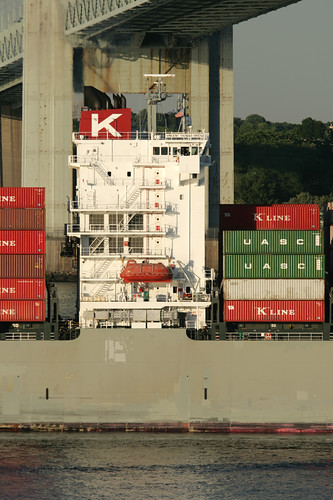
It's been no secret that JAXPORT with it's western location on the Atlantic, not under New York or Boston mind you, rather South of Cincinnati, is well positioned to take flight. Already the 14Th in the Nation, this port is headed for number 3 and maybe number 2 on the Atlantic. We've all known something huge was about to take place right under our noses and we for the most part knew 3 of the carriers. But today's news article blows away the whispers and names names, COSCO, YANG LING and K-LINE have been added to our mix. Holy "Made in China" Batman, while the rest of the nation staggers we seem to be soaring. Incredible! Thanks JBJ...THANKS.

Monday, November 3, 2008 - 3:01 PM
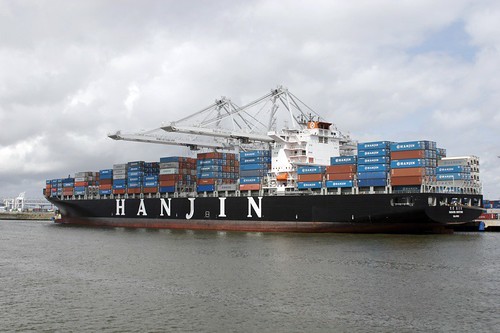
Hanjin could call on Jaxport by January
Jacksonville Business Journal
Hanjin Shipping Co. Ltd. could begin calling on Jacksonville as soon as January, but it’s more likely it will be another year before the South Korean company adds shipping service to the port.

Jacksonville Port Authority Executive Director Rick Ferrin said Hanjin could call on the TraPac Terminal when it’s completed in January. The good news made the Jacksonville Port Authority Board’s approval of a contract with Hanjin that much sweeter.

If, as expected, Hanjin’s board approves the contract on Nov. 11, then the authority’s board will have a signing ceremony Dec. 10. Hanjin’s board’s signing of the contract will added their shipping line and three others through their alliance with China Ocean Shipping Co., “K Line,” and Yang Ming Line.

With Hanjin coming aboard, the port would double its service to Asia, adding incentive for distributors to ramp up service through Jacksonville.

“This makes a great case for them to get off the fence and go to Jacksonville,” sad Roy Schleicher, the authority’s senior director of trade development and global marketing.

The soonest Hanjin’s $207 million terminal at Dames Point is expected to be completed is July 2011, and the latest is June 2012. The 88-acre terminal will have a 2,500-foot berth that will allow it to handle two post-Panamax ships simultaneously.

Ferrin said Mitsui will handle about 800,000 containers each year. The company will pay $4 million in rent annually for the first seven years, after which the rent will go up to $5 million per year and include U.S. consumer price index increases.

Mitsui will pay the authority $80 per box for 170,000 boxes and will be charged at that annual rate for the first seven years even if it doesn’t handle the full amount, Ferrin said. About 90 percent of the time there are two TEUs (twenty-foot equivalent, a container measurement standard) in a box.

The minimum rate jumps up to 220,000 boxes between the eighth and the 15th year, and then to 250,000 boxes in the 16th year. The 30-year contract has a 10-year potential extension.

The incentive for Mitsui and its alliance partners to handle more cargo is that the charge per box drops to $5 after the minimum amount is reached.

Ferrin acknowledged that the slumping international container traffic and the credit crunch could affect Mitsui, but said the company was strong enough to come through it. Hanjin has an “A” bond rating by a South Korean equivalent to the U.S.’s Fitch and Moody’s, said Michael Poole, the authority’s chief financial officer.

Ferrin said Hanjin’s use of rail-mounted gantry cranes, which are automated container handling machines that work around the clock, will allow it to handle nearly as much freight on the current site as the originally intended site known as the Zion property owned by Zion Jacksonville Limited Partnership.

He said Mitsui’s rail-mounted gantries will likely handle the larger Asian ships, and its rubber-tired gantries will handle the smaller South and Central American ships.

The terminal is expected to create 1,600 direct jobs and 4,000 jobs indirectly. The addition of new Asian shipping service by Mitsui O.S.K. Lines Ltd. and Hanjin are projected to triple the port's container traffic.

01 November, 2008

Florida and Colorado Railcar

IS THE DMU DEAD?
Dallas - Fort Worth uses the rebuilt RDC's.

I wasn't impressed by either the looks or the feel of the Colorado Railcar. Some may recall that I took a "test drive" at 80 mph and the thing sounded like it was leaving parts scattered along the tracks as we flew past. Doors rattled and banged, plastic everywhere not unlike an airliner but with obvious beat-up look and these were new. Perhaps the bugs just haven't been worked out yet. The original Budd RDC car, had some bugs when they were first delivered along with "trailer" cars. While not as powerful as the DMU, the Budd car operators quickly found that in pulling the trailer (basically a ultra-light but other wise standard railroad passenger coach) the RDC's transmission fell apart. But the Budd RDC has stood the test of time and those 1950's era stainless steel beauties are still clicking off the miles in commuter services throughout the country and beyond. Several firms are offering a rebuilt RDC at a fraction of the cost of the DMU, with the added benefit of getting almost double the diesel fuel mileage. Florida needs to use caution when it makes the purchases of these DMU vehicles, I tend to like the well tested path of the old faithful RDC.
Here's Why:

Another ugly possibility is that Colorado Railcar is on shaky ground. The lead Rader family member running the company got the ax not too long ago. Seems like this "sign" has happened three or four times already? The DMU is not getting any orders, and especially after TriMet's Portland, Oregon order is now three-four months overdue. The Vermont deal collapsed and Florida is sitting on Orlando - Jacksonville - Tampa commuter rail projects paralyzed by legislative inaction, so no orders are coming from here either. I wonder how many more transit agencies will cut a deal with them?


Railway Age magazine had this to say:

Less than a decade ago, when all but the last few passenger services operated with aging Budd Rail Diesel Car (RDC) equipment were phased out, the day of the diesel multiple-unit, or DMU, appeared to be about over on North American railroads. But hardly had the diesel railcar been declared dead when it came back to life in a flurry of proposals for new passenger rail starts with DMU equipment, together with supplier proposals for a variety of new designs for the North American market. Lying behind this new interest were the same potential cost advantages and operational flexibility over conventional locomotive-hauled equipment-particularly in applications for which the required passenger capacity is relatively low-that had made such a success of the RDC almost a half century earlier.

This was manifested first in a modest revival of rehabilitated RDCs in new-starts at Syracuse, N.Y., and Cape May, N.J., during 1994 and 1996. A far more significant example came on line at the beginning of 1997, when Trinity Railway Express began operating regional passenger service over a 10-mile route between Dallas Union Station and South Irving with a fleet of 13 Alstom Canada-remanufactured RDCs. Well satisfied with their operating performance, flexibility, and reliability, and anticipating a growing role for RDCs as full Dallas-Fort Worth operation grows and other planned services develop, TRE is now looking for another six RDCs for eventual rehabilitation.

The revival of interest in the DMU, however, is owed in large part to a variety of new designs, most of them based upon successful recent European equipment. Siemens Transportation, for example, is marketing three options, all based upon successful German designs. For short-haul "diesel light rail" services, Siemens is marketing the Regio Sprinter, an articulated diesel-hydraulic design, while the larger VT-642 diesel-electric railcar is being offered for commuter and short intercity markets. Neither of these vehicles complies with FRA Tier 1 crash worthiness standards, and can be used only in services separated from other railroad operations. The third Siemens option, however, is an FRA-compliant version of the VT-605, a diesel-electric vehicle available in tilting or non-tilting versions and capable of 125 mph maximum speed for extended commuter or intercity services.
Adtranz is offering an FRA-compliant version of the Flexliner DMU for both commuter and intercity services, and a diesel LRT design based upon the firm's GTW vehicle developed in Switzerland. Bombardier and Alstom are jointly marketing a modified version of Alstom's 125-mph XTER diesel-hydraulic trains built for the French National Railways. Bombardier is also marketing the Talent, a European articulated diesel light rail vehicle design


Progressive Railroading has announced:

Colorado Railcar Manufacturing L.L.C. recently named Larry Salci president and chief executive officer. He succeeds company founder Tom Rader, who will remain the company’s sole shareholder, but focus on other business interests, such as his role as GrandLuxe Rail Journey’s president.Salci has 37 years’ experience in the transportation industry, including stints as president of The Budd Transit Group, Bombardier Corp., and Morrison Knudsen Transit Group and its successor company American Passenger Rail Car Co. He most recently was president and CEO of St. Louis Metro. Salci previously served as general manager and CEO of the Southeastern Michigan Transportation Authority.


The final piece of the puzzle in our state might be the Bio-Diesel fuel. Miami has converted the Tri-Rail locomotives to Bio-Diesel, a mix of homegrown cooking and other oils. But they just announced the DMU's can't be converted or their warranties will expire.


We can only hope the former Budd Executive will spin the company around and get it back on track. The competition is tough, the new Flexliner is a thing of beauty and the Siemens vehicle is no slouch either. We're hoping the American Made - Colorado Company will survive, but as we say in Florida; "when your up to your neck in alligators, it's difficult to remember the original objective was to drain the swamp."


RSS FEED IS FIXED

JACKSONVILLE TRANSIT RSS FEED IS FIXED!

For those who have been trying to subscribe to the RSS feeds for this blog, we have finally found the problem. So go for it and come along for the ride.

Bob

Jacksonville Traction Company


MONORAIL SUBWAY COMING SOON


Las Vegas is pointing the way for Jacksonville. The downtown monorail is going to the airport, which in the case of Vegas, is "where the people are". Jacksonville is much larger and many miles more scattered, but could they be onto a novel idea? In Jacksonville, "the people" are in San Marco, 5-Points/Riverside Ave, Shands, (the "new" courthouse) or the Stadium district. Who in Jacksonville would have thought of taking our Skyway, "where the people are?" Note that this Vegas job might end up being the most expensive monorail ever built. Not because the technology is THAT expensive, but because they are going to build a monorail SUBWAY! Now please don't jump to the conclusion that I would EVER support such an idea in Jacksonville, we simply don't need it. But we do need to make the Skyway viable, so we look on jealously and "wish" we had leaders that were not idea challenged invertebrates. So my beloved City, read it and weep:


Edward Lawrence, Reporter

Monorail Looks to Expand to McCarran Airport

Imagine getting off a plane and onto a train to get to your hotel on the Las Vegas Strip. The Las Vegas Monorail announced plans to do just that by expanding to the airport.
The monorail runs behind the casinos on the east side of Las Vegas Boulevard in a four mile stretch.
Las Vegas Convention and Visitor Authority board members say this will be the only way to save the project. The monorail opened four years ago to fewer than expected passengers. To increase the riders, they want to go where the people are.
The monorail impressed visitor Jim Norbury, "I think the monorail is brilliant, absolutely brilliant."
Take a look at the Las Vegas Monorail's proposal
He and his wife Lee are visiting from England. They say the monorail looks new and clean.
To survive, monorail executives told the LVCVA it needs to go to the airport. Monorail President and CEO Curtis Myles says it's a necessary next step to generate the needed riders and revenue.
"Certainly that is where the people are in this town. 70-percent of the people who visit Las Vegas through the airport are going to the resort corridor where our system is," he said.
Myles put together a team to identify creative financing for the project, "There is a lot of money out there today that is chasing infrastructure projects and this is an infrastructure project. Oddly enough, the best time to do a project is in a down economy. It puts a lot of people to work. It invests in the community."

He refused to say how much it will cost. Myles made his presentation for a blessing from the elected leaders on the convention board, which he got, with strings.
"They have given us reassurance that our taxpayers will not be on the hook. We are going to take them up on that," said Clark County Commission Chairman Rory Reid.
Commissioner Tom Collins put it best, "County will not be on the bite for this thing."
Once the money is settled and expansion is finished, the Norbury's look forward to using it for a cool trip to their hotel, "We had a 10 hour flight, we were pretty tired. Then to stand in the heat. We arrived at 1 o'clock. It was maybe five minutes, but it seemed a long time when you have done a 10 hour flight."
Curtis Myles says he doesn't expect any resistance from cab drivers for the monorail expansion.
If all goes according to schedule the first train will run to the airport in 2012. It will go from MGM Grand, east on Tropicana, then turn south on Swenson into the airport.
There will be two more stations, one at terminal one and another that will be inside the airport expansion for a terminal three.
Part of the trip for the monorail will also be underground to give the monorail space and avoid moving roads. The final design work is being finished now.

27 October, 2008

WHEN AMTRAK GOES SOUTH


Amtrak test train on the Florida East Coast was led by an FEC locomotive that was equipped for the railroads high tech ATC signals. (automatic train control)


Typical Florida commuter train in Fort Lauderdale. Journalists might want to note the pronounced different look from the Amtrak trains. This one is on the CSX railroad.


This little article appeared in the Jacksonville Florida Times-Union Newspaper. It didn't appear on my blog as I was in the meeting and besides Amtrak's desires on the Florida East Coast and the story or "how important" the Southeast is to Amtrak. We were then told the company would do nothing unless the State sponsored the trains.

Never mind that the Amtrak Representative said that they calculate that a 5 train grid, running:

Jacksonville-Miami (FEC Route)

Jacksonville-Miami (former Seaboard "S" line or I-75 route)

Jacksonville-Miami (former ACL or CSX "A" line)

Orlando-Miami

Orlando-Tampa

Apparently it matters little if a route in Florida will cover it's own expenses from the fare box. Either our State Representatives are asleep on this issue or somebody needs a good butt kicking.

The Times-Union writer did a good job on his railroad subject matter. I've spotted only a couple of small errors. The worst is the service from Jacksonville to Miami WOULD NOT be commuter train service. A 368 mile commuter train would be quite a sight to behold. This would drop in place as part of the New York - Miami long distance trains we already have. When the trains arrive or depart from Jacksonville, they would split apart southbound, or rejoin northbound. Just as they have done since the 1800's. Jacksonville Terminal would again be a bee hive of train activity, and the City would stand to gain hundreds of high paying jobs. As engine servicing, dining car commissary, baggage facilities and other support is added that will only grow. The point the representative was trying to make is "IF" Florida would pay the bill, Amtrak would be along for the ride. Meanwhile, those "Amtrak" improvements to the Florida East Coast could then be used by Jacksonville Commuter Rail, between Jacksonville and St. Augustine, a rail distance station to station of 35.0 miles.

The second and lesser error was the statement that the FEC shut down passenger service in 1968, due to a labor dispute. Truth is, the 1963 strike of non-operating unions on the Florida East Coast Railway resulted in the abrupt end of all passenger services on that railroad. While after a long absence, passenger trains would return in two short E9-powered consists that operated due to a requirement in FEC's charter to provide such trains. The two short trains Locals # 1 and #2, only lasted until 1968, and provided connections at Jacksonville with all of the major railroads and trains remaining. But the era of through service from distant cities to the FEC was over. It only took a couple of years before the railroad successfully petitioned to the State Public Utilities Commission to end all passenger service. Almost overnight every sign of a passenger had vanished from the FEC, the stations, with only a couple of exceptions were razed, and for many years the railroad was openly hostile to anyone but the freight shipping public.

Today we have a completely different Florida East Coast Railway, one that has gone through two major changes in management in just a handful of years. The company is still a maverick but now welcomes the attention of Amtrak, railfan's and the general public. With the current mess in Tallahassee and our lack-luster leadership in anything but expressways, Amtrak will continue to "Go South in Florida." But as far as the citizens of this state are concerned, Amtrak only "Goes North or West."

Amtrak weighs return of direct route to Miami

It would use Florida East Coast Railway tracks paralleling I-95.


By LARRY HANNAN, The Times-Union
It's a little early to get nostalgic for 2001, but Amtrak officials have begun talking about turning back the clock and taking a second crack at a passenger train route from Jacksonville to Miami.
Amtrak offers passenger service from Jacksonville to Miami on its Silver Star and Silver Meteor trains, but the Silver Meteor takes nine hours and goes to Orlando, while the Silver Star takes almost 11 hours and goes to Tampa on tracks owned by CSX.
Using the Florida East Coast tracks would create a quicker route down the east coast of Florida while also allowing stops in cities like St. Augustine, Daytona Beach, Fort Pierce, West Palm Beach and Fort Lauderdale.
Speaking at a meeting of the Jacksonville Transportation Authority Commuter Rail Task Force last week, Jay McArthur, officer for state contracts with Amtrak, said the government-subsidized rail company wants to offer commuter rail on the Florida East Coast rail lines that parallel Interstate 95 from Jacksonville to Miami.
"Amtrak thinks the corridor between Jacksonville and Miami is very viable," McArthur said. "The Southeast is one of the most underserved regions in the country when it comes to rail, and Amtrak wants to change that situation."
The federal government recently authorized a new bill that will give Amtrak $15 billion over five years. Increased interest in rail has led Amtrak to consider expanding services.
The rail company set a record for number of riders in 2007 with 25.8 million.
A Miami-Jacksonville route would require a partnership among Amtrak, the Florida Department of Transportation and the Florida East Coast Railway. It also would require millions of dollars, although the cost is unknown.
Officials with Amtrak and the transportation department both expressed interest in the project but said the other government entity would have to take the lead to get the project done.
While Amtrak wants to pursue this route, it won't do it unless the state supports it and partners with Amtrak by putting state funds into the route.
Florida hasn't done that yet, McArthur said.
Nazih Haddad, manager for passenger rail development at the Florida Department of Transportation, said the state remains interested in rail service on Florida East Coast lines, but there has been no recent discussion on the issue.
Amtrak previously discussed the possibility of using the lines in 2001-02. But that plan fell apart because Amtrak was having financial problems and the state was unwilling to allocate as much money to the project as Amtrak wanted.
Passenger service on the Florida East Coast lines occurred until 1968. The Florida East Coast Railway, founded in the late 19th century by Henry Flagler, ended service that year during a labor dispute.
Florida East Coast officials are aware of Amtrak's renewed interest but said there have been no substantial discussions about offering service.
There would need to be some rail improvements made to the existing lines before Amtrak could offer service, said Scott Williams, general counsel for Florida East Coast.
Those improvements would allow Florida East Coast Railway to continue shipping freight on the lines while Amtrak also operated.
That would guarantee passenger and freight rail could both use the tracks without delays.
It would also be essential that the state partner with Amtrak, said Ken Charron, commercial counsel for Florida East Coast and the company's representative with the Jacksonville Transportation Authority. They are not aware of any effort to do that, he said.


TAKE A FREE TOUR OF THE JACKSONVILLE SKYWAY

The arguments rage to this date, "Should have never been built," "waste of taxpayer money," "Doesn't go anywhere," "Nobody rides it..." etc. Bottom line is we have it, and it is finally showing signs of life. Simple extensions to the Stadium, San Marco, and the area of Blue Cross in North Riverside would turn this little train around. Addition of Park and Ride garages and multimodal transit terminals at the end points would bring on the crowds. The video must have been shot on a Sunday Morning, as downtown is certainly as packed with life as any other major City on weekdays. Jacksonville is a city of Bikes, joggers, walkers, buses and cars, one almost wonders how the photographer managed to find this quiet moment.


Support the Skyway? Join the Monorail Society Today!

Subscribe to monorailsociety
Powered by groups.yahoo.com

WELCOME ABOARD

Sign by Danasoft - For Backgrounds and Layouts