31 May, 2008

What is and What isn't a Trolley?


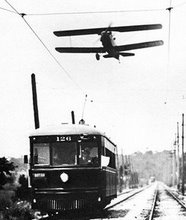
Photo 1: THIS IS NOT A TROLLEY
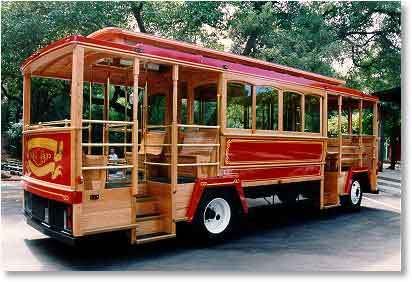
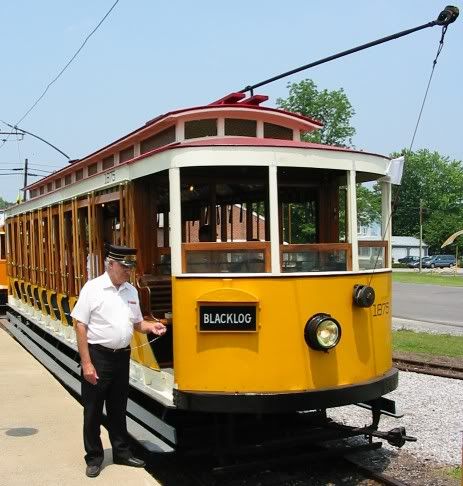
Photo 2: THIS IS A TROLLEY

What is...and isn't...a trolley?
This (Revision) from the Sacramento Bee Newspaper - Oct 2007


On the ongoing plans to build a streetcar line between Sacramento and West Sacramento prompted quite a few comments. One thing I notice is that, for many people, it isn't at all what a streetcar, or a trolley, is.

The term "streetcar" refers to fixed-rail transit that is run on city streets, rather than on separated grades like a railroad. The term was originally used to describe horse-drawn cars operating on rails, but can also cover cable cars, steam dummies (small steam locomotives intended to pull cars on city streets) and electric trolleys. Because horse cars, cable cars and steam dummies were all supplanted by electric trolley cars, the terms "streetcar" and "trolley" are pretty much identical.

The term "trolley" comes from the pole used to connect an elevated high-voltage power line to an electric vehicle. One of the earliest prototype electric streetcars had a four-wheel device that hung from the overhead wire, connected via a cable to the car, referred to as a "troller," is probably the origin of the term. Trolley poles came in various forms, using either a wheel or a shoe at the end of the pole to ensure good connection to the wire.Trolley vehicles normally run between 24 to 50 feet: about the size of a LARGE modern bus, but generally wider. Speeds vary, but for the most part trolleys run at 20-40 miles per hour.That being said, what ISN'T a trolley?

What about Jacksonville's new Riverside Trolley? The problem is, this ISN'T A TROLLEY. It is intended to look like a certan type of trolley, if you kind of squint, but it fails for several reasons. For starters, it's still a smoky, noisy bus. Second, it runs on wheels instead of rails, and therefore doesn't run as smoothly. Third, because it has no fixed path, its schedule and route can change at the whim of the operating company, thus it gives little security to land developers who want to encourage transit-oriented growth that the transit won't vanish in the next fiscal wind.

Finally, this isn't a trolley because "quaintness" is not a required feature of a streetcar. Modern streetcars (and even some historic ones) aren't necessarily long on charm, wood paneling or quaint design (even though many of them are.) They're a vehicle built for a purpose, and the purpose isn't to look cute (even though many of them do): they exist to move people.


Many people assume that LRVs (light rail vehicles) were the modern version of trolleys/streetcars. While it could be said they evolved from the Trolley roots, they are wrong. LRVs are intended to run primarily on private right-of-way rather than city streets, are typically 60-80 feet long and intended to run as multi-unit vehicles, are capable of higher speeds (up to 50-70 mph) and are intended for inter-city and suburban service. They are the historical replacement for the interurban, which is a type of transportation virtually unknown in modern society. Interurbans operated like LRVs do now: they run on streets in cities, but their real strength is in open country and private ROW where their larger size and faster speeds aid commuters. But a city trolley isn't usually intended to do that.


The classic example people think of when you refer to trolleys is the Pacific Electric (aka the "Red Car") of Los Angeles and Orange County,(See the movie "Who Framed Roger Rabbit" for the sad-comic-true story) but that was an interurban system. Streetcar service in Los Angeles was covered by the Los Angeles Railway (aka the "Yellow Car"), a physically separate system (originally a cable car system, they operated on 3'6" cable car gauge instead of standard 4'8/5" gauge) owned by the same person (Henry Huntington.) Why would Huntington, a financial wizard on a par with his uncle Collis P., operate two "redundant" electric railroad systems in the same area? Because he realized that they served two distinct and separate roles! LARY streetcars moved people around in downtown Los Angeles and adjacent neighborhoods: PE interurbans moved people around throughout the greater Los Angeles area, in between cities.
In some parts of the country, the line between Trolley and Interurban blurred. Often the Trolley served as something of a rural or regional Interurban. In the Southeast, lines such as the massive Jacksonville Traction Companys, Camp Johnston (NAS JAX) and Ortega, routes even called for heavier more Interurban like Trolley cars. In fact Jacksonville had a fleet of restroom equipped, bar and lounge section, "Observation-Lounge" Trolleys. Also a common practice in the American South was to use grade separation on the Trolley lines themselves, often in the downtown area's. These routes were laid with treated hardwood cross-ties and then covered in lush landscape and grasses. Jacksonville's Main Street, Palmetto Avenue and Pearl Street lines are just three example of this construction that was billed as "The most beautiful Trolley Line in the World."

Vision for Jacksonville Traction Company, Inc.

VISION FOR THE JACKSONVILLE TRACTION COMPANY, INC.

Imagine a string of pearls illuminating one of the greatest downtown waterfronts in the world. Each pearl is a world-class destination: culinary, cultural, historical, recreational. Now, imagine that the string is a destination in itself—attractive vintage vehicles from around the world, each with its own rich history, each representing a great city or country. That string of pearls is Jacksonville Traction Companys vision for the proposed Water Street-Downtown historic streetcar line.

The idea of the revival of the original JTCO is decades old. But a comprehensive vision for the line is especially timely now, in the wake of soaring fuel costs, vacations close to home and the rebirth of Jacksonville's core. This measure would return the question of downtown urban Transit to the private sector and allow for rapid construction and completion along our booming transportation corridors. Among these improvements is a major streetcar and transportation museum, as well as a Trolley based Theme Park. The JTCO-line, as proposed would serve as a primary landside distributor of bus, Skyway and any BRT passengers and well as the anchor for all downtown tourism.
President JTCO

Hello Jacksonville wer're back

24 May, 2008

Commuter Rail in Jacksonville Past? You Bet! Number One In The State!


JACKSONVILLE TRACTION COMPANY, INC.


Since 1912 - Reactivated in 2008


This is the massive system we junked in favor of more "flexible modern buses." Shortly after the buy out by National City Lines, Motor Transit Company, the City was "gifted" with becoming the hub of a new General Motors Distribution Center. While the buses might have seemed like a great idea at the time, they added fuel to our sprawl. No longer would development be confined to easy commuter rail routes (Yes, streetcars and light rail are "Forms" of commuter rail but NOT what is usually ment by the term). The routes could be altered on a whim, and thus the heavy investment of livable spaces never developed along them. Autos took control and suddenly as if by magic, all of the National City Properties went bankrupt one by one to be pawned off on the Cities and taxpayers. Amazing that today, we are fighting those same agencys to see the error of their ways. Sadly, many efforts have fallen on deaf ears, "Skyways" and "BRT" or "Hovercraft" would save us. Did you know the Automobile and it's sister vehicles were NOT AMERICAN by invention and neither was the ship or the monorail? FACT! The Streetcar and Interurban train are our own unique creation and gift to the world. Won't you join me in leading the charge in bringing them home again!
TRAVEL? or TRIP?
A Series of Micro-Posts on a Lost Art


DO YOU KNOW HOW TO TRAVEL?

Do you Travel or do you make trips "swiftly?"

trav?el ?? (trvl) KEY ?VERB: trav?eled or trav?elled , trav?el?ing or trav?el?ling , trav?els

VERB: intr.
To go from one place to another, as on a trip; journey.
To go about in the company of a particular group; associate: travels in wealthy circles.
To move along a course, as in a groove, (or track?).
To admit of being transported without loss of quality; Some wines travel poorly.


Informal To move swiftly. (Note: there is no formal meaning that equates travel with moving swiftly).

VERB: tr.
To pass or journey over or through; traverse: travel the roads of Europe.


NOUN:
The act or process of traveling; movement or passage from one place to another.
travels
A series of journeys.
An account of one's journeys.
Activity or traffic along a route or through a given point.
The activity or business of arranging trips or providing services for travelers.

ETYMOLOGY: Middle English travelen, alteration of travailen, to toil, from Old French travailler ; see travail

Where's the Bar? Got drink? Sandwich? Chips? Salsa? Music? Conversation? Care to Dance?


I always thought it important to have just a bit more room, a place to kick back, maybe take in some music, read a good book, or watch some video, hey, there's an open card game in the corner... can't you see it? Of course you won't on this crowded aircraft, but then we're in a rush remember? 2 hours to get to the airport ahead of the flight to get through security, 1 hour to fly and 1 more hour to get your bags and get out of security = 5 hours and we only went from Jacksonville to Tampa. Sorry but my train is arriving downtown in about 5 minutes and you
won't feel any pain on landing.
Here are 3 meals, only one is from an aircraft and two are onboard a train, can you decide which you'd rather eat?


Ever meet anyone that loved airplane food? I'm not talking about keeping it down, or someone that considers it edible or even good, I mean in the sense that they'd fly just to eat the stuff? Yet I've known dozens, maybe even 100 people that would ride the Hiawatha to have the baked Salmon, or the Silver Meteor to eat the Peanut Soup. Unlike airline or bus terminal food, each railroad dinning car has it's own chef, and each train it's own idenity, so no one just eats, they bask in a long tradition of excellence as they dine with ever changing views.

*(The one wrapped in plastic and paper is the airplane meal)

"OH MONTANA! HOW STUNNING YOU WERE..."
When you travel have you seen the great cities, farms, towns, mountains and rivers of America?

The view from 15 feet is so much better then the one from 30,000 feet. As you can get up and walk around anytime, visit the lounge or dinning car on a train, you'll arrive bathed in a new sense of the earths beauty.

Did you enjoy my views of Montana? Which one talked to you the most... come on... be honest!

23 May, 2008

How is you leg room? Can you stretch out, converse with or make friends, or "move about the cabin"

Travel is more then where we sit for 2 - 5 hours, it should be a destination or experience in and of itself. Perhaps we have lost something with the Victorian era or the Industrial Age? Would a beaver hatted nabob be seen in one of todays flying commuter buses? You might be surprised to know that just this past month, when modern Americans were offered a REAL choice, they left the sky for the rails. All Air Shuttle Service between Harrisburg, PA. and New York City just ended as NJ and PA funded extensive train improvements and the air traffic vanished.

22 May, 2008


Norfolk Southern
Florida East Coast
CSX
Imagine if you will, world shipping lines wanting to locate as near to the Panama Canal as possible and still maintain several railroads to move their containers to market. So where do you go? Houston or New Orleans? Maybe, or somewhere in between, Pensacola? Mobile? All of the above? They all suffer from distance to the East Coast Mega Markets. Some from space problems, depth, or lack of rail connections. So what about Tampa? No, locked into one railroad, our own CSX. Miami? Locked into two railroads FEC and CSX with little space to expand, ditto the other South Florida Ports. So why not Jacksonville? The next nearest large City with only minor depth problems, 3 major East Coast Railroads, 2 terminal companies, and miles on miles to expand. Don't believe it? Well my friend when the really big money starts to roll in you better believe that built out St. Johns waterfront will creep up the Broward River, Trout River or Clapboard Creek. Right up to the edge of the National Wetlands. We really do stand at the door of a gold mine of jobs, employment, industry and a ever booming economy. So where's the rub?

Well the gods of the JPA seem content to leave the network of CSX branchlines that reach across the Trout river and turn east to Blount Island as our sole port access. They even want to help CSX build a container yard and maybe a cut-off to their massive Waycross Junction. The Norfolk Southern, while not as big a player in Jacksonville, as CSX, certainly as big and as healthy elsewhere in the Eastern USA... and guess what? Aside from Lake City, we are their only contact in Florida. The end of a Chicago, Detroit, Cleveland, St. Louis, Cincinnati-Atlanta- Macon-- Valdosta-Jacksonville race track. But the entry on the far Northwest side of the City does little to help with traffic to and from Blount Island. They built a multi-million dollar container terminal in Simpson Yard, but it's already crowded and far from the action. Their favorite partner the Florida East Coast with their signature downtown bridge over the St. Johns River, rolls in from South Florida, crosses the river and moves freight to and from CSX and NS.

So Mr. Big Shipper, how do you get a container to say Daytona Beach? or Valdosta? You could insist on all rail but since CSX says it "could" take them 4 days to move your load from Blount Island to the other railroads, that won't happen. So how about we unload them at early evening, and by midnight we flood every interstate in Jacksonville with a parade of big rigs headed for Simpson Yard or FEC's own Bowden Yard on the Southside. This seems to set well with JPA, A single thought that could be a DEAL BREAKER!

So while hands are wring over our tears "there's just no way to get to ________ " I suspect someone is all smiles in the CSX palace. Does JPA know about JTA? Have they ever thought about JAA? Could we just once, THINK beyond the obvious? What about a City buy out of all CSX and NS track Northeast of Moncrief Yard or Union Station? Sure it would cost millions, but that's where federal bucks come in. We then work through JAA grants, and JTA funds and grants with FDOT to turn our new freight terminal into a true "UNIVERSAL ACCESS" switching road. We pull ALL the big trucks off the highways and save ourselves even more $$$ in the long haul. Further? Okay, then we rebuild the old downtown "S" line or Seaboard Air Line Route from Union Station - Beaver Street - Shands - Springfield Yard, where it connects with track still in place to the North. We turn this into an early AM to late PM mass transit line with JAA kicking in funds to hook into the airport itself. Freights not trucks run all night and to ALL carriers. Can you imagine the attention we would attract then? I'd tell CSX to their face, they will shoot themselves in the foot if they don't push for this. To twist a bible quote... "We must be fishers of international shipping - NOT keepers of private boat ponds."

Failing to attain the attention of the big dogs CSX, JPA, JAA, JTA we still have a chance for one last terminal line, and it could well develop thousands of acres of untouched Jacksonville. Did you know that JEA maintains a string of 240 KV high power lines from the Norfolk Southern (remember the FEC rolls right into their yards), near Westlake, to NW Moncrief, Garden City (Just South of the Airport), Ritter Park/Oceanway, Northside Generators, Blount Island? You can't build under those lines, a highway can only run under them in passing, but a railroad, better yet electric railroads can and do run under them all over the USA and the World too. How buying old railroads or building new ones is easy math to see how it could save and enhance our port, jobs and economy. It may not be as easy to see why it would save us money. That answer comes from the Oklahoma Department of Transportation, who state that one fully loaded semi-tractor and trailer, does as much damage/wear and tear on a highway or bridge in a single pass as do 86,000 automobiles. That's an answer we could take to the bank, or pass the bill to our childrens, children. Time for us to wake someone up at City Hall and ask of our authority's, "Who are these guys".


01 May, 2008


THE ROSA PARKS TRANSIT CENTER


A MODEL FOR OUR FUTURE?


Over the years Jacksonville has certainly had it's share of bad mass transit decisions. Building Union Station as a back-in stub or "head" Terminal, with some through tracks pretty much restricted to Florida East Coast and switching access. Not following the desires of the railroads to build it just west of the Current I-95 overpass, which would have had the effect of extending La villa and enlarging the Central Business District westward. The eternal flooding of the Myrtle Avenue underpass, rather then a man-made cavern, may well have become the front door of the City. Imagine a broad, bright and busy Myrtle bounding a vibrant downtown. But beyond this 1919 error, came the shady deals of the National City Lines and their "Motor Transit Company," a firm that bought out the sprawling Jacksonville Traction Company, our streetcar or light rail system. By 1936 it was cashiered for an all bus, all road, typical small town America transit system. It is interesting to note, about the same time, Miami and Tampa passed us by in population in national focus...they retained their rail transit much longer. Finally in this survey, enter the Skyway. The little airport shuttles built downtown in 3 American Cities as distributor's. Once again, we dove right over the waterfall of excitement and at the time some officials were even projecting this horizontal elevator to reach the Beaches, Airport and Orange Park. Hardly. A reality check entered the picture when the ridership failed to materialize, the system built to end dirty diesel buses downtown would be converted to a true monorail. Extension to a couple of large parking facilities fell short of station or contact. Buses kept right on rolling, right below the little railway in the sky.

Finally one project jumps out of this sad tale. The "FCCJ Station" which is located on the East - West State and Union Streets, nearly freeways themselves. All buses from downtown and the North and northwest side, as well as the beach and Arlington runs could now hub out of the Skyway Facility. In that location it would be hard to improve on the design. We could greatly improve current and unfinished Skyway system with a few more Rosa Parks type centers. Couple this with dropping the Skyway fares and balance that with parking fees and bus fare. With fewer buses running parallel and under the Skyway things would quickly turn around.

Here is the official designers word on the Rosa Parks Station:


Really Move Transportation Stations That

Jacksonville, Florida, is the largest city in the United States, in square miles that is. The long-term effects of congestion and a growing need for public transportation led to the development of a master plan and the design of a series of public transportation stations throughout the city. The Jacksonville Transportation Authority challenged project architects and engineers with developing a solution for public access to and from the automobile parking areas and the surrounding sidewalks, as well as to and between the buses and elevated skyway express system of the various stations. Covering the FCCJ Station is a self-supporting 12,000-square-foot, 180o vault Kalwall KalcurveTM skylight. There are 18 Kalwall pyramid skylights utilized in bus loading canopies attached to the station. As a true structural sandwich panel system, Kalwall panels weigh only 1-1/2 pounds per square foot. This reduces the size - and therefore the cost - of the supporting structure. It also makes erection much easier, simpler and faster.
"For these open-air, multi-story stations, we chose Kalwall for its indirect diffused-light properties that reduce glare," says Kim Rinaman, AIA, of VRL Architects.

"A quality storm-resistant structure was demanded for this hurricane-prone area. Kalwall creates an open, friendly, safe and inviting atmosphere, while providing shelter from the elements. It allows natural light in without creating dark shadows."

"Cost was a major factor in designing the FCCJ Station. We wanted reasonable initial cost with long-term maintenance return. With over 150,000 passenger bus trips per week, we chose sturdy materials to minimize effects of public use and resist vandalism."

Kalwall eliminates the cost and time of extensive maintenance. Unlike heat- strengthened, tempered or even reinforced glass, the Kalwall system is shatterproof and maintenance-free. Kalwall also stands up well to the diesel fume laden air common to an area with a high concentration of diesel engine traffic. Normal rainfall literally washes the panels clean, leaving the surface free of streaks and smudges.

Kalwall is the most highly insulating, diffused light-transmitting technology in the world. The primary element of Kalwall is a structural composite sandwich panel formed by permanently bonding specially formulated, fiberglass-reinforced translucent faces to a grid core constructed of interlocked, extruded structural aluminum or composite I- beams. At night, Kalwall glows as the inside light helps to illuminate the outside area. The Hemming and FCCJ Stations stand-out in the darkness like a beacon, as do all the others clad with Kalwall.

Adds Rinaman, "The interior has warm earth-colored textured masonry and paver units with painted steel structure and railings." Add to the diffused lighting a splash of color to complement the interior design and a warm, inviting atmosphere is created. "The tinted Kalwall skylights are the final touches to the look we wanted." The skylights feature color combinations of aqua/white, ice blue/white and crystal/crystal.


As the final urban touch de jour, we then lease out kiosks within these multi-modal centers for all sorts of executive attractive institutions. News stands, food vendors, flowers, candy, T-Shirts and gifts. With the investment we already have in this little train we would be fools NOT to push it on to a model of urban transit success.

18 January, 2008

BIG PLANS FOR BIG TRAIN STATION


Day's of the Future Past... As Past Becomes Present Again!


JACKSONVILLE TERMINAL

The Florida Department of Transportation has announced the latest edition of the JACKSONVILLE TRANSPORTATION CENTER. A huge complex centered around the historic 1919, Jacksonville Terminal.

This huge station, is the largest railroad station in the USA, south of Washington, DC.. It was even the busiest train terminal in the World for a short time during the Great Florida Boom of the 1920's. When Amtrak took over the private passenger trains in 1971, it was still a busy place, at least until the day AFTER Amtrak took charge, and wiped out 3/4 of all trains remaining in the USA. By 1974, the last passenger train departed. Amtrak cried that Union Terminal was too big for their needs, they had new Airline managers who "KNEW how to attract passengers". So they built a tiny depot, nicknamed an Amshack, far out in the Northwest side of town, almost under a highway, and between two junk yards. Welcome to Jacksonville. It has always been my opinion that the new Amtrak Managers didn't want anyone to complain about the noise from all the trains landing, and that is REALLY why they moved out. They also cited the short back in move, to the old station as a waste of time, and money... funny, nobody complains when my aircraft is backed away from the gate. Further, they boxed themselves in at the new location on ONE railroad out of a maze of possible future train routes in Florida. BINGO, soon the State had the Sunset Limited running to Jacksonville, and guess what? Yes, it had to pull right into the old Terminal, then back 3 miles out to the new station, then pull forward to leave.

Well today the story has reached full circle, today we are coming back to downtown. Amtrak is serious, Greyhound is serious and JTA is very serious about the move and the new center. My complaint is they turned the old Terminal into a convention center and now they want a depot there that won't mess with conventions. This has caused us to move the bus and other functions of the Transportation Center all over LaVilla. Meanwhile the City is looking for a new home for the very small convention center, someplace where it could grow.

Before they destroy the rest of the moonscape that has become of LaVilla, let's hope they move that convention center and use the space for a smart Union Terminal. One that once again becomes the temple of transport that it was designed to be. In it's hey day, it was one fun place to be. Not just a station but a destination, with shops, arcades, snacks and restaurants... With proper planning, it can become that colorful World leader again.

30 December, 2007

Completed Skyway for $150 Million? What's Missing Here?

The Evil Incomplete Skyway To Nowhere

As I've said more then once, I was the worst enemy of the Skyway before it's construction. Long hard hours were spent with the Jacksonville Journal Editors, Television, Times-Union and City Hall. Then as now, I was encouraging the development of Light Rail in Jacksonville. We could have built 30 miles of Light Rail for what the Skyway cost back in the 1980's. But keep in mind the Skyway was a "Free Gift," from Uncle Sam's UMTA. I was never intended to be more then a downtown distributor, a horizontal elevator if you will. Somewhere either Uncle or JTA got way off track and talk started flying about it becoming a regional mass transit. It wasn't even a monorail, but more like an airport shuttle car. By the year 2,000, Detroit and Miami, had completed their "Gift" systems. Our own was mired in 30 feet of muck. The preservation districts raised holy hell about it coming their way. No agency was going to blow this giant elevated "thing" through Confederate Park, on the way to Shand's Hospital. When the new Acosta Bridge came about the City received grants to lay the Skyway over the center of it. Once again the pulse quickened, "if it just reaches Southbank, it WILL work..." we even took a step toward making it more regional by conversion of the whole thing to true Monorail. At this point the Federal Government pulled the plug, and the new FTA or Federal Transit Administration issued a statement on ABC news that "We have NEVER supported it..." Uh Huh? UMTA supported it and funded it, simply change the agency name in Washington DC and disclaim Jacksonville? As you can see it's failures were not all JTA's fault.


Somewhere along the road, JTA and my own train must have passed going in different directions.

Today, the from the Transportation Authority to the Mayors Office, mention the "Skyway" and red faces and shushing gestures with single fingers sprout all over the room. One aide recently told me, "It's DEAD, forget it, it will NEVER happen..." This from a failed system that was touted by our experts to carry 56,000 persons a day? This from the same experts that pulled the plug on the beast when it hadn't reached any of it's stated terminals? This from the State Agency that dumped a truck load of historic Traction Company files, photos and artifacts in the Northside landfill? Why the sudden cold feet? Does the 1,500 daily riders from no-where to no-where make us think it would stay that way if it actually went someplace? I would hope professional logic would say we can do better.

I took the liberty of "shopping" for our Skyway. Talking with the Monorail Society and looking at some equipment to make the trains bigger, and the track and buildings less costly. I figured the following system extensions into my plan:


  • A. 14,063 feet from Hogan and Bay, to Bay and Randolph, to Randolph and Arlington Expy.
  • B. 5,252 feet from Kings Avenue to Atlantic Blvd at the West Side of the FEC tracks.
  • C. 9,057 feet from Brooklyn Maintenance South to Roselle, West to come in behind Francis Lytle
  • D. 3,258 feet from the Prime Osbourne, looping behind the facility and coming back up alongside the railroad platforms South of the Station and West of Park St.

Total system additions (5.9 Mi) was right at 6 miles. Based on a high bid of $25 Million a mile
the total cost for new track and stations would be about $150 Million. If the costs were closer to $10 Million a mile, then only $60 Million would be needed to complete the system. Considering that the project would qualify for 50% federal funds plus other grants, we would have a small investment in it's expansion. What is very curious indeed is the cost numbers of hundreds of millions of dollars to do the least of these extensions... I want to know why? It's not just logic, but the numbers on the graph speak volumes. Time to re-think the Skyway and get-R-done.


29 December, 2007

St. Augustine leads Intermodal Way

Photo: Skybus Airlines at St. Augustine Airport
Will the Nations Oldest City Lead the Way?


Those familiar with St. Augustine's Airport location north of the ancient city, realize there is scant room to expand. Now that it has gone commercial with the Skybus Airlines, which came and went, being the first of what might become a community of carriers. St. Augustine is trying to figure out how to expand and build a terminal worthy of America's FIRST tourist destination. In the background is the State of Florida and Amtrak's long efforts to move one of the Florida trains back onto the Florida East Coast Railway between Jacksonville and Miami. Those tracks are just across the big 4-lane spread of US Highway 1, between downtown Jacksonville and St. Augustine. Toss in the long delays in full system funding for Amtrak, (something every administration has refused to do since the company was started in 1971) suddenly looking like they may finally get those long needed dollars. To this add the efforts of the Jacksonville Transportation Authority (JTA) and plans for a BRT bus system to the County line, and the statement, "We'd like to do rail, someday..."
Suddenly the little old City down the road had a vision right out of a good Sci-Fi "Space" movie with NASA at the center of the plot. They went to work on a plan to span the giant road with a multi-modal terminal of their own, one that would serve as Airport Terminal, Amtrak Station, JTA buses, Commuter Rail and anything else that can roll, fly or float... Yes, there is a river right behind the property. I thought you might like a look at a tiny piece of what the St. Augustine Airport Authority is saying about their plans.

Multi-Modal transportation Facility - the physical limitations surrounding the development of the airport precludes easy expansion of landside facilities support of unprecedented growth. Community and Airport planners have advocated the development of a multi-use transportation facility to address demand. The proposed 50,000 sq. ft. facility would accommodate aviation, rail and all surface vehicle demands in a facility that would eliminate the costly duplication of infrastructure otherwise required for each transportation mode. Estimated total cost is projected to approach $20 million. The lead community agency (the Airport Authority) is pursuing State grants to start the facility. The likelihood of a federal funding requirement is significant if the innovative approach to regional transportation is to be realized.

My hat is off to St. Augustine for showing the way to big sister Jacksonville, and the rest of Florida. But then, being first is not new here, they have been doing it since that first European Flag came ashore.

It really isn't the matter that Skybus chose a time of high flying fuel prices to start up an airline. What got the industrys attention is that little airport that filled nearly every seat on every flight. With Skybus gone, you can bet someone else is already watching.


TAKE A FREE TOUR OF THE JACKSONVILLE SKYWAY

The arguments rage to this date, "Should have never been built," "waste of taxpayer money," "Doesn't go anywhere," "Nobody rides it..." etc. Bottom line is we have it, and it is finally showing signs of life. Simple extensions to the Stadium, San Marco, and the area of Blue Cross in North Riverside would turn this little train around. Addition of Park and Ride garages and multimodal transit terminals at the end points would bring on the crowds. The video must have been shot on a Sunday Morning, as downtown is certainly as packed with life as any other major City on weekdays. Jacksonville is a city of Bikes, joggers, walkers, buses and cars, one almost wonders how the photographer managed to find this quiet moment.


Support the Skyway? Join the Monorail Society Today!

Subscribe to monorailsociety
Powered by groups.yahoo.com

WELCOME ABOARD

Sign by Danasoft - For Backgrounds and Layouts