04 October, 2008

PASSENGER TRAINS A COMING!

Amtrak is ready to roll from Jacksonville, and just awaiting the Presidents pen.


Key Provisions of Passenger Rail Investment and Improvement Act of 2008
* Increases Capital and Operating Grants to Amtrak. The bill authorizes $4.2 billion (an average of $840 million per year) to Amtrak for capital grants and $3.0 billion (an average of $606 million per year) for operating grants. Past inconsistent Federal support has hampered Amtrak's ability to replace catenaries, passenger cars, bridges, ties, and other equipment necessary for Amtrak to provide service. These capital grants will help Amtrak bring the Northeast Corridor to a state-of-good-repair, procure new rolling stock, rehabilitate existing bridges, as well as make additional capital improvements and maintenance over its entire network. In addition, the operating grants authorized under the bill will help Amtrak pay salaries, health costs, overtime pay, fuel costs, facilities, and train maintenance and operations. These operating grants will also ensure that Amtrak can meet its obligations under its recently negotiated labor contract.

* Develops State Passenger Corridors. In an effort to encourage the development of new and improved intercity passenger rail services, the bill creates a new State Capital Grant program for intercity passenger rail capital projects, and based on the New Starts transit capital program administered by the Federal Transit Administration. The bill provides $2.5 billion ($500 million per year) for grants to States to pay for the capital costs of facilities and equipment necessary to provide new or improved intercity passenger rail. The Federal share of the grants is up to 80 percent. The Secretary of Transportation would award these grants on a competitive basis for projects based on economic performance, expected ridership, and other factors.

* Provides Funding for High-Speed Rail Corridors. The National Surface Transportation Policy and Revenue Study Commission, established to develop a national transportation vision to address surface transportation needs for the next 50 years, recommends that the United States establish a high-speed rail network that spans the entire country. The bill authorizes $1.75 billion ($350 million per year) for grants to States and/or Amtrak to finance the construction and equipment for 11 authorized high-speed rail corridors. The Federal share of the grants is up to 80 percent. The Secretary of Transportation would award these grants on a competitive basis for projects based on economic performance, expected ridership, and other factors.


COMMENT FROM THE NATIONAL ASSOCIATION OF RAILROAD PASSENGERS?


Four Ways to Consider Intercity Passenger Train Expansion
Wednesday, May 28, 2008
(1) Provide service to the largest metro areas currently without it. The eight largest, in descending order of population are:
*Las Vegas, NV
*Columbus, OH
*Nashville, TN
*Louisville, KY
Tulsa, OK
Allentown-Bethlehem, PA
Baton Rouge, LA
McAllen-Edinberg, TX
* Indicates Amtrak formerly provided service. Las Vegas service lasted through May 10, 1997; Columbus, Nashville and Louisville lost service at the end of October, 1979, although Louisville briefly regained service with a painfully slow train to Chicago. That train ran Chicago-Jeffersonville, IN starting December 17, 1999, was extended across the river to Louisville December 4, 2001, and discontinued July 8, 2003.
(2) Route study requests in S. 294 (which passed the Senate in October):
restore Amtrak’s Pioneer that linked Seattle-Portland with eastern Oregon, Boise and Salt Lake City. (Towards the end, its financial viability was compromised by running as a separate train all the way across Wyoming to Denver, rather than serving SLC and connecting there with the California Zephyr.)
restore Amtrak’s North Coast Hiawatha in southern Montana and southern North Dakota – well used train until its demise in 1979.
(3) Maps in the National Surface Transportation Policy & Revenue Study Commission report,
at chapter four:
The 2015 vision is at page 4-22 and notably includes
Cleveland-Columbus-Cincinnati
a long-discussed Meridian-Jackson-Dallas link among existing Amtrak routes, and
closing the Bakersfield-Los Angeles gap.
The 2030 vision is on the next page and adds several routes including
Atlanta-Jacksonville Florida,
Dallas-Houston,
Oklahoma City to both Newton/Kansas City and Tulsa/St. Louis,
Cheyenne-Denver-Trinidad-Albuquerque-El Paso
the above-referenced Pioneer, and
service to Las Vegas from both east and west.
The 2050 vision is on page 4-24 and adds many more routes including Chicago-Atlanta.
The Commission recommends annual capital expenditure of $9 billion, much of which would support “genuine” high speed rail projects such that planned in California.
(4) NARP’s 40-year vision, which is more aggressive than the Commission’s although North Carolina DOT’s vision is more aggressive than ours!
Read more about our Grow Trains Campaign and Vision Plan including regional “zoom-in” maps.

JACKSONVILLE STREETCAR IS POSSIBLE!


Two fantastic "HOW TO" articles appear today in the Jacksonville Transit Blog. The first is from Michigan, and the "Overhead Wire" news. This gives us a step by step way to build or rebuild our streetcar system using public private partnerships. The only missing element is the old rule that utility companies can't also own the streetcar network. In todays world, this law is long outdated and even though it is/or once was federal, it needs to be dumped. We need all the electric transit we can get. So think JACKSONVILLE TRACTION and think, we CAN!


Friday, October 3, 2008

Street Railway Resurrection
Michigan lawmakers are
looking at a bill that would allow street railway companies to form in the state and use recently passed tax increment financing laws and other mechanisms to fund new lines. I don't imagine the line is completely private, but its an interesting step away from the public transit agency model. It seems similar to Portland Streetcar Inc, but I haven't looked deep enough yet to see the similarities. There are some interesting provisions though:
As envisioned in one set of bill drafts, for which state Rep. Bert Johnson, D-Detroit, is the lead sponsor, the street railway company could build, own and operate the system. The company could acquire property, including through gift, purchase or condemnation, and could borrow money and issue bonds.It's a fascinating idea and the point is to have it replicated all over the state, from Grand Rapids, to Ann Arbor, to Detroit.


Allen also said a goal is “to come up with a replicable plan, which means that we can work it in Detroit, or Grand Rapids. We’re open to input from anyone. If this tool can work in a variety of communities in the state, that is one of our objectives.”

THE OVERHEAD WIRE

CSXT AGREES - A BLUEPRINT FOR JACKSONVILLE

THE DAY THE CITY COMES OF AGE

From Progressive Railroading E:News comes this wonderful bit of reporting, is anyone in Tallahassee awake and reading the handwriting on the wall?

Partnership 10/3/2008Massachusetts, CSXT agree on commuter- and freight-rail pactYesterday, Massachusetts officials and CSX Transportation execs announced they reached an agreement to improve and expand commuter- and freight-rail service in the commonwealth. Under the agreement — which took about four years to hammer out — service on five trains the Massachusetts Bay Transportation Authority (MBTA) operates between Framingham and Boston will be extended to Worcester by Oct. 27. The commonwealth plans to eventually purchase CSXT's rights on the Boston-to-Worcester line, increasing the potential to add even more commuter-rail service and gain control of the line's dispatching and maintenance. By 2009, the commonwealth plans to purchase from CSXT the New Bedford-Fall River Line, helping facilitate a plan to extend commuter-rail service to the two cities. Massachusetts also plans to purchase CSXT's rights in the Boston Terminal Running Track and West First Street Yard in South Boston, and the Grand Junction secondary line that extends from Beacon Park Yard through Cambridge. In addition, Massachusetts and CSXT soon will begin increasing vertical clearance of bridges along the railroad's mainline between Interstate 495 and the New York state line to accommodate double-stack freight trains. The commonwealth will assume responsibility for raising highway bridges while CSXT will lower tracks. Massachusetts also is determining whether to help CSXT relocate its locomotive service facility outside of Boston. The Class I plans to eventually move its operations out of Beacon Park.


Now that you've read the article, lets translate that into JACKSONVILLE speak, sure this is a fantasy at this point, but it's not like it can't happen.

Partnership (just imagine)Florida, JTA and CSXT agree on commuter- and freight-rail pactYesterday, JTA officials and CSX Transportation execs announced they reached an agreement to improve and expand commuter- and freight-rail service in North Florida. Under the agreement — which took about four one year to hammer out — service on five lines the CSX operates between Jacksonville and surrounding communities will be extended. Service to Yulee by the end of the year all along North Main Street. The state plans to eventually purchase CSXT's rights on the former Seaboard Main Line from Springfield to Yulee and Blount Island, increasing the potential to add even more commuter-rail service and gain control of the line's dispatching and maintenance. By 2011, the state plans to purchase from CSXT the former Seaboard Main Line from Downtown to Baldwin, helping facilitate a plan to extend commuter-rail service between Jacksonville and the west side as well as set the stage for regional rail to Tallahassee and Gainesville-Ocala. Florida also plans to purchase CSXT's rights in the Jacksonville Terminal Running Tracks and the former Jacksonville Terminal Coach Yard in downtown just west of the Union Terminal, and the Grand Crossing secondary line that extends from Panama Park through Marietta. In addition, JTA and CSXT soon will begin increasing vertical clearance of Trout River bridge along the railroad's mainline along North Main Street and the Blount Island ship Terminals to accommodate trains without delay at the drawbridge. The state will assume responsibility for raising highway overpasses while CSXT will perform the trackwork. Florida and JTA also is determining whether to help CSXT relocate its new export yard and intermodal facilities within Jacksonville. The Class I and JTA look forward to a long relationship that also includes the North Florida Portion of the so called "A" line, along Roosevelt Blvd. south to Green Cove Springs and Palatka.

30 September, 2008

THEY'RE AT IT AGAIN IN HIGHWAY LAND

"The Dirty Little Coward That Shot Mr. Howard, Laid Poor Jessie James In His Grave"

Okay, this isn't about Jessie James, but it might as well be. In this case "Jessie" is the Robin Hood of Oklahoma City (as he once was) and those cowards? The same back shooters that have been lurking in the saloon slime and road tar since 1930. This is a long story, but I'm going to post it so all can see the dangers to our own Union Terminal here in Jacksonville. I want you to see how the highway lobby thinks and works in conjunction with State DOT's. OPEN YOUR EYES JACKSONVILLE, this is our fight too.
"A beautiful, centralized, multi-modal transportation hub, just South of Downtown OKC, got in the way, go figure?"

Looks like a dandy place to splat down a 10 lane freeway doesn't it?

THE FIGHT TO SAVE OKC UNION STATION MOVES AHEAD: BALANCED TRANSPORT PROPONENTS WIN STUNNING VICTORY BEFORE THE FEDERAL SURFACE TRANSPORTATION BOARD


Board rules railroad company falsified Crosstown Expressway documents Wednesday, June 18, 2008 OKLAHOMA GAZETTE By Ben Fenwick


On Aug. 30, 2005, the Burlington Northern Santa Fe railroad signed an agreement with the Oklahoma Department of Transportation that ODOT, at taxpayer’s expense, would haul lumber in trucks for the Mid-States Wholesale Lumber Co., 101 S.E. Fourth. The estimated cost was $22,800.
“FALSE” MEANING “PREMATURE SPECULATION”
The reason? BNSF was to abandon nearly three miles of track so that ODOT could build the new Crosstown Expressway, also known as the Interstate 40 Relocation Project, through a section of that rail line — and, incidentally, wipe out the rail yard for Oklahoma City’s Union Station.
However, when BNSF officials filed for permission with the U.S. Surface Transportation Board, they told a different story. The paperwork the company filed to give the track to ODOT claimed it had not been used for the previous two years — about 23 days after the railroad agreed to let trucks instead of trains haul the lumber.
When metro-area activists opposed to the Crosstown project presented the discrepancy to the board, the board ruled that BNSF falsified its application and threw out the paperwork.
“This means that its certification in September 2005 was false or misleading. As a result, we will reopen the January 2007 decision and reject BNSF’s notice of exemption as void,” the board ruled this month.
State transportation officials said the ruling might stop some construction on the Crosstown — for now.
“We are still pretty confident they will work it out,” said ODOT spokeswoman Brenda Perry. “We are not directly involved, but it affects us.”
A spokesman for BNSF refused an interview, instead issuing a statement prepared by the company.
“The ‘false or misleading information’ referenced in the STB decision dated June 3, 2008, was the result of a technicality that resulted in BNSF retaining and using less than 100 feet (the length of about one rail car) at the eastern end of this trackage near Shields Boulevard to serve a large shipper located nearby,” the release said.
Opponents to the Crosstown have a different view: The BNSF decision is proof that Oklahomans are being misled about the whole project, including its cost, its purpose and its would-be benefits for the city. With gas projected at $5 a gallon and beyond, does Oklahoma City need another highway, or a citywide commuter rail?
“Are they going to build a 10-lane highway across a rail line that is part of the national rail system and has jurisdiction?” asked Norman attorney Micheal Salem, who is working on the case. “Should ODOT continue to commit hundreds of millions of dollars to build a highway for which they have no authority, over the land that they’ve chosen already? Can they build a highway over an existing railroad without the authority of the federal government to do that?”
“FALSE” MEANING
For Common Cause community activist Edwin Kessler, a retired meteorologist who filed the protest, the very first action of the Crosstown Expressway was a deliberate attempt to mislead Oklahomans.
“There have been some lines cut and there is a controversy about that indicated in the STB ruling,” Kessler said. “It means they are not authorized to abandon the line, and if they want to abandon it, they will have to reapply.”
To others on the opposition, Kessler’s work — which includes photographing BNSF’s actions on-site, developing the legal angles and other behind-the-scenes actions — the victory before the STB is a stunning upset.
“He accomplished a most significant task,” said Washington, D.C., attorney Fritz Kahn, who represented Common Cause to the board. “To get the STB to reopen a proceeding almost never happens. Moreover, to get the STB to rule against one of the Class I railroads as it did in ruling against Burlington Northern is something quite extraordinary.”
In its ruling, the board noted Kessler’s work as instrumental to the outcome of the case, and gave a scathing rebuke to BNSF, saying the company appeared to obfuscate the truth about the rail usage and the Crosstown construction.
“BNSF’s own evidence shows that it operated over a portion of the line during the (two)-year period prior to Sept. 23, 2005, confirming Mr. Kessler’s allegation that BNSF’s certification in its notice (that no local traffic had moved over the line for at least (two) years prior to the filing date) was false or misleading,” the board stated in its ruling. “Furthermore, despite multiple opportunities, BNSF has failed to provide an adequate explanation for the 2005 letters, in which BNSF seems to indicate that it provided rail service to Mid-States via the line within the (two)-year period prior to Sept. 23, 2005.”
Because of the misleading information, the board stated, it is reopening the proceedings. BNSF will have to reapply. This filing will be more involved, with proceedings on why removing the rail line is in the public’s interest.
“First of all, one of the questions that will have to be answered in additional proceedings, is what will be the purpose of rail use in Oklahoma City — that will be part of the ‘public interest, convenience and necessity’ that will be decided in a new abandonment proceeding,” Salem said.
Kahn agreed that BNSF’s task is likely to be widened considerably.
“The environmental-assessment report will be much more complex than BNSF had to file with this notice,” Kahn said. “The environment process will give citizens who are not shippers but have an interest in that line an opportunity to come in and testify. Before they file either a petition or an application, they have to consult with the specified Oklahoma and federal agencies to get their reaction on the environmental and historic effects on the proposed abandonment.”
‘PREMATURE’ SPECULATION
Among those watching it closely will be Tom Elmore, executive director of North American Transportation Institute, whose work against the Crosstown and for light-rail contributed to the recent decision. Former Oklahoma City U.S. Rep. Ernest Istook shepherded funding for the Crosstown project through Congress in 2004. The federal funding favored many of Istook’s political donors, who received contracts for the highway. Istook, however, did the opposite for political donors in Utah, Elmore said, earmarking funding for a light-rail and commuter rail system that serves an Air Force logistics base considered to be a competitor to Tinker Air Force Base.
“Istook provided the startup funding for commuter trains between Provo and Ogden linked to Hill Air Force Base,” Elmore said. “They will soon have 60 commuter trains a day between those communities in full operation. It is such a high-tech corridor that the trains don’t even have to whistle at crossings — the crossings have their own whistles. Hill is now the only air logistics center in the nation with oil-crisis-proof workforce mobility.”
But not Oklahoma, he said.
“The same guy, while he was funding that, was funding the Crosstown so Union Station would be destroyed — and don’t ever believe that he had anything other than that in mind,” Elmore said.
Istook did not return calls for comment.
Union Station — its rail yard slated for destruction because it lies in the path of the proposed Crosstown — was once the center of a massive commuter rail system in Oklahoma City that provided passenger service to Tinker, Norman, Edmond, Bethany and other surrounding communities. The easements and even lines for these still exist, but Elmore said the rail hub at Union Station will be wiped out by the Crosstown if it is allowed to proceed. However, ODOT’s Perry said a single rail line will be brought into Union Station should commuters wish to use it as a rail stop.
But now, Elmore said, there is a chance to reverse the destruction of the Union Station rail yard. Elmore said the ruling concerning the rail line has an effect similar to that of the movement to save the Walnut Avenue Bridge. That bridge, from Deep Deuce to Bricktown, was slated for destruction until civic activists opposed it in hearings at the Oklahoma Corporation Commission. Now, the bridge is considered a vital link between new, upscale loft apartments and Bricktown’s establishments.
“Remember the Walnut Bridge? We didn’t fight it before the council, we didn’t fight it before the planning commission — we took it to the Corporation Commission because that’s where the fight was,” Elmore said. “Well, same thing here. We quit arguing with them, we took it to the STB, because that’s where the fight was, and that is where the fight’s been won.”
As for BNSF, the company’s release states that it intends to continue seeking to destroy the rail line in question so the Crosstown can go through.
“BNSF will be following up with the Surface Transportation Board to ensure the highway project’s objectives are met,” the company wrote. “BNSF emphasizes that service to area shippers has been and will continue to be uninterrupted by this or any subsequent trackage removal activity associated with the I-40 relocation project.”
John Bowman, ODOT Crosstown development engineer, said the ruling affects little work so far.
“There isn’t any work that is ongoing at the moment that is really predicated on that hearing,” Bowman said. “We have a number of projects ongoing and we are working with those contractors. … We are working at the east end, and the west end and those projects are out of the way.”
Might there be a way to bypass the rail yard, or perhaps bridge it, so the rail hub for Union Station is still usable? Bowman said ODOT will wait and see if it has to.
“I think it would be premature to speculate on that at this point in time until we see what the ruling will be,” he said. —Ben Fenwick
From Tulsa city council, 2008/06/27

If it came to a choice Rail or Air?

WHAT WE OFFER FLORIDA - MIAMI - ORLANDO - TAMPA - CAN'T TOUCH THIS!
Myrtle Street Interlocking Tower in the "throat" of the old Jacksonville Terminal, under I-95, note the metal cantilevered multi-tracked signal bridge visible just under the deck of the freeway. These 12 or so tracks fanned out into more then 29 making this the largest depot South of Washington D.C.


Would Jacksonville benefit greatly from a rail comeback? Wouldn't our natural location as the "Gateway City of Florida" and our grand old Terminal downtown put us in position to take the top roll in RAIL-FLORIDA? As airlines fail around us in this economy, and fuel and flight prices are soaring, only a renewed interest in Amtrak or Rail Passenger Services will make economic sense.


But beyond fuel and costs, just how green is rail? Would an Orlando-Like JIA make us a world leader in a failing industry? Certainly we'll pick up some international flights, and perhaps some long distance air routes in the future. That might require some runway stretching. Moreover our local airline service is likely to all but vanish, surrendered to land transportation. So just for the sake of environment here, lets look at a "blind" expansion of JIA/JAX and also a great rebuilding of the old Union Terminal downtown for Commuter Rail, Regional Rail, High Speed Rail and Amtrak.


From the UK comes this comparison based on the same question which is now facing London:


"Comparing air with rail it would seem at first glance that aircraft have smaller fixed installation requirements - after all, they just need an airport at each end. One has to consider the vast quantity of land - and buildings - required for airports, however. Runway 26L/08R at Vancouver International Airport is 9940 x 200 feet x 1.5 feet (runway depth estimated) - 3 million cubic feet - and cost $100 million. The volume of a concrete railway sleeper is about 0.1 m3, or about 3 cubic feet. Thus the volume of concrete in one runway is equal to the volume of concrete in a million concrete railway sleepers (cross ties), which are normally spaced at 650 to 760 mm intervals. A million sleepers would thus support 650 km of railway track. Interestingly, with the railway there is an alternative: composite ties, which can be (and are) made of recycled post-consumer waste plastic. I don't think that's an option for aircraft runways. "


Lastly, in Florida we should keep in mind our fragile water aquifer, all pavement, including runways repel water and prevent it from recharging through the ground. Railroads by their nature, on a bed of rock, allow the rain to re-enter the soils.


Just a couple more reasons to keep our focus on Jacksonville Union Terminal, it's Tunnels, Tracks and getting the Prime Osbourne Convention Center moved somewhere else.

26 September, 2008

Transit Wisdom? ...and Toledo Too?

Neil Reid, director of the University of Toledo Urban Affairs Center, warned transit officials to consider the American comfort level with buses.


Along for the ride? Wisdom from Ohio...

While bus ridership in both Toledo and Cleveland has grown in recent months, diesel costs have ballooned. And those fuel bills threaten the revenue and viability of busing systems across the country. “Many systems around the state, instead of adding service when demand is at an all-time high, are probably going to be cutting service,” Mr. Calabrese said.“My diesel bill went from $5 million in 2003, to $12 million last year, to $21 million this year, and it should be about $24 million next year.”In Toledo, TARTA will cut its bus service by 7 percent on Aug. 24, a decision that has caused outcries from local riders.Aside from rising fuel prices affecting expansion possibilities, Neil Reid, director of the University of Toledo Urban Affairs Center, warned transit officials to consider the American comfort level with buses.“Most people in Toledo, people say under 50, probably have never ridden a bus before or only on sporadic occasion,” he said. “People probably just don’t consider that an option.”The issues may cut deeper than simple unfamiliarity.Busing systems in many cities have been painted as ferries for the poor. Alan Plattus, director of the Yale Urban Design Center in New Haven, Conn., said dismantling a classist attitude — as has been done in many European countries — may be as important to the success of buses in America as the routes they follow.“The bus system has gotten to be a class system,” he said. “Middle class people who might use the bus instead of taking a car trip don’t do it.”For many urban planners, busing systems also have become the figurative poor man’s light rail, a shot below the mark for cities focusing on asphalt instead of track and relying on tenuous data promising real estate development around buses.John Norquist, president of the Congress for the New Urbanism in Chicago, agreed developers are more likely to be attracted to areas along rail stations or lines where the city has signaled its intention to make large, nearly indelible investments.“Light rail is good because it’s permanent,” he said. “People say with buses they’re good because they’re flexible, but they could disappear at any moment.”Light rail — the term applied to streetcar systems such as trolleys — is nothing new.The Richmond Union Passenger Railway came online as the first large electric street railway system in 1888, displacing horse drawn buggies. Many cities, including Toledo, decommissioned their streetcar systems in the 1950s as the country began its migration to the suburbs and the automobile industry flourished.Finding the right pathJames Seney, former executive director of the Ohio Rail Development Commission, said old streetcar lines in Toledo fit the layout of the community and may be a guide for rail revampment.“What makes urban rail work is when you create transit routes that have clusters of neighborhoods on them,” said Mr. Seney, the former mayor of Sylvania. “You should design [routes] based on your existing neighborhoods and tie that into the growth of downtown businesses, rather than trying to capture a larger area.”Though Mr. Seney said new tracks would be needed if Toledo decided to move forward with a rail plan, he admitted “the old guys logistically were correct.” The push toward rail is being seen in other U.S. cities.About 100 years after its invention, light rail experienced a heavy resurgence. Most of the United States’ busiest light rail systems today were built or intensely renovated in the last two decades, including lines in Los Angeles; Portland, Ore.; St. Louis; Denver, and Dallas. Even smaller cities such as Little Rock, Tacoma, and Galveston, Texas, have invested in light rail systems since the turn of the century.The Massachusetts Bay Transportation Authority in Boston shuttles over a quarter million people per day on its green and red lines, making it by far the largest light-rail operation in the country.

25 September, 2008

THE GREAT STREETCAR HOLOCAUST CONSPIRACY CASES:


Jacksonville - Minneapolis - St. Paul - Los Angeles - Tampa - St. Petersburg, what does it matter?

The last streetcars in Minneapolis were burned in 1954. James Towley (left) presenting check to Fred Ossanna (right) with a burning streetcar behind them (1954).Minneapolis Collection.


Streetcar Holocaust Conspiracy Case


For so many years Jacksonville has depended on the automobile for 95% of it's transportation needs, with about 5% using the JTA bus system, that we don't have many living citizens who remember a more balanced time. Ask the average Jaxson why we don't have streetcars and your likely to get one or more of the following answers:

"Oh we do, JTA has a Trolley," (refers to the potato-chip-truck-thinks-its-a-trolley-bus).
"Well streetcars were tiny and slow, so we put in modern buses and freeways."
"We're not big enough or dense enough for streetcars, we don't need them."
"Streetcars block traffic and buses run with traffic."


All of these "facts" are false on one point or another. The FACT is the streetcars were bought out and destroyed one by one by one of the first giant Transit Monopoly's in the United States. Owned by General Motors - Firestone - Standard Oil and Phillips Petroleum, through a maze of smaller holding companies, the trail usually leads to the highway groups "National City Lines Corporation." Just as no one transit system today could compete on Wall Street with any of the above giants, the rail transit companies, mostly local, were helpless to fight off the unwanted attention. Standing alone, one by one, the streetcars were bought out one by one and converted to bus. By the time the industry realized they faced certain extinction, the depression had dried up the loan money holding back expansion or modernization. When the few survivors finally banded together with help from the large electric industries such as GE, St. Louis Car Company or Westinghouse, World War II material rationing stopped them cold. All of this played into the highway group and National City's hands. Each story is unique, but all have a similar tone of high finance and smoke filled back room deals.

So read on from this little story first published in "The Overhead Wire" Blog, by "Pantograph Trolley Pole", and see how the deal went down in the Twin Cities, and I'll finish with comment on Jacksonville Traction:

Well part of the story I had never heard before was told on one of my list services by transit expert and former Deputy Secretary of Transportation for Pennsylvania Ed Tennyson. He states that at one point TCRT had saved up $10 million dollars to buy new streetcars and repair the tracks but got destroyed by Wall Street speculators. Well, I'll let his words tell the story.

The Twin City street car to bus conversion was ironically caused by a pro-street car management, a man named Strouse, I think he was. During gasoline rationing he saved up ten million dollars ($ 160 million at today's prices) to buy more PCC cars, re-lay more track, modernize the rail system.

A shrewd vulture on Wall Street named Green saw all that money in the bank and solicited the stockholder votes to throw out the street car management so Green could disburse all that money to stockholders including himself. His first attempt failed as the stockholder had pride in the company but inflation hit them (and everyone else) so Green prevailed on his second take over attempt. Strouse was fired and the money was paid out to stockholders leaving nothing for renewals.Wall Street neophytes saw those big dividends and sent the stock price soaring. Green sold his. Buy low and sell high. Local politicians took Green's place, one named Fred Osanna (In the picture above), a political lawyer. He got a promise from General Motors to loan him all the money he needed to rid the city of street cars and they had National City Lines send him their Barney Larrick to manage the job. Since there would be no more profits, Osanna and Larrick sold all of the copper wires, car barn property and salvage from scrapping cars to their wives or other relatives at a rock bottom price. Their relatives waited a few weeks then sold all the junk on the market for far more than they paid Twin City Rapid Transit for it. Roy Chalk did the same thing in Washington but was careful not to go to jail. Osanna and Larrick both went to jail, for defrauding the other stockholders.


Sad Story, but the Twin Cities are now back on track and breaking records with their new Light Rail System. Meanwhile here in Jacksonville, we have our own sad closing to talk about.

Jacksonville Traction was the largest streetcar line in the state of Florida topping out at some 60+ odd route miles. In 1926, the system was beloved by the City, in fact City Commissioner St. Elmo Acosta (yes, the Acosta Bridge with the Skyway track is named for his transit savvy memory) floated a bill before the Commission to buy the entire Florida East Coast Railway line from San Marco, along Beach Blvd. to Jacksonville Beach and Mayport. He wanted to convert it to Interurban operation, what we would call today, Light Rail Transit. At the same time 3 other Companies proposed to link Jacksonville with: St. Augustine, another between St. Augustine and Jacksonville Beach, and yet another between Jacksonville and Ocala along today's highway 21.

Acosta's plan was put off and vanishes off the books. The collapse of the great Florida Boom took out the other 3 companies. Jacksonville Traction itself skidded into bankruptcy, as the city increased the pavement requirements, forcing the company to pave it's tracks or roads along the tracks, then refused a fare increase of 2 or 3 cents.

In 1929-31 it was no secret that the company would be issued a new franchise soon as the old one had expired. On the block a group of Southeastern "investors" came into town and talked about building a modern bus system. When the City and the Jacksonville Traction Company failed to reach an agreement with the buyers the deal fell through. Bad press dogged the Streetcars as they were now labeled as "old fashioned," and "bankrupt". Needless to say the deepening depression didn't do anything to help with the company's solvency.

Finally a new entry came to town with plenty of money to toss around. Motor Transit Corporation, stepped into the void and offered a package deal. The Streetcar Company would be sold, a new franchise issued, and Jacksonville would become the home of a new type of General Motors distribution center for the entire southeast. In the fine print the contract stipulated that the rails, poles, and wires had to come down, that all streets would be repaved, and all streetcars sold for scrap. Duly signed in 1932, the last car ran from the Courthouse, up Bay to the Brooklyn Car Barns in Riverside, on a cold wet December day in 1936. Motor Transit had pulled off what is perhaps the first big system purchase, and Motor Transit was owned by National City Lines.

National City Lines, was owned by General Motors - Firestone - Standard Oil and Phillips Petroleum.

In Tampa and St. Petersburg the streetcars lasted another dozen years, when the same suitor came calling. But already on the run from an increasing load of legal suits, the deal fell through. National City never fully got Tampa's and St. Petersburg's system, but the City Councilmen all got brand new GM LaSalle automobiles as it closed down.

So in the end, Jacksonville was big enough, dense enough, and advanced enough for streetcars. In fact so much so that we had the leading system in the state and nearly had the largest system in the South had the interurban's been built. Blanding Blvd. wouldn't be the mess it is today and sidewalk cafes in Riverside or San Marco wouldn't gag on the sulfur and carbon from the stream of buses that blow past every few minutes. More then that, these recent discovery's demonstrate that our system, built largely on private track, was just the sort of thing GM knew they couldn't combat without the use of back room - pool hall deals. Freeways as it turned out were never free. Jacksonville Traction is exactly what we need to get back, it's a shame our new system can't be paid for by certain auto makers, tire and oil companies.

JACKSONVILLE IS STREETCAR SERIOUS NOW


Amazing new photo that surfaced in "Roots Web" of Jacksonville Traction 113 on the Kings Avenue Line. We were so far ahead of our time, using in the street tracks only in downtown and medians or private tracks elsewhere. Then we jumped the gun and shot ourselves in the foot, converting the whole thing in a giant dirty General Motors-Firestone-Standard Oil-Phillips Petro buy out. With fuel prices soaring, and highway funds on zero, congestion is not going away, it's time to think streetcars again. The following is a reprint of a Florida Times-Union Story.


Photo credit Metojacksonville.com
Streetcars: A lot of potential


By The Times-Union
Retired transportation consultant Bob Mann is either a visionary or hopelessly stuck in the past, depending on your view of his proposal that would return streetcars to downtown Jacksonville.

But on one thing, everybody agrees: He's tenacious.

Mann has been advocating streetcars - light trains on tracks, powered by overhead electricity and sharing the road with cars - for about three decades.

And, amid increased traffic congestion and spiraling gasoline prices, he's making some headway. In fact, the Jacksonville Transportation Authority is doing a study on the feasibility of making Mann's proposed track part of the city's transit system.

There is much to like about Mann's proposal:

Cost. Because it would use existing tracks, the system presumably would be relatively inexpensive.

Potential ridership. Not only would the uniqueness attract some riders, it would serve a heavily traveled route that includes Five Points, the convention center, the Landing, football stadium and library.

Tourism. Vacationers might pull off Interstate 95 for a ride. While here, maybe they would patronize some local businesses.

Economic development. In other cities, housing and businesses tend to spring up along streetcar lines.

For example, USA Today reports, Portland's streetcar system "attracted about 100 projects with $2.3 billion in less than five years, all within two blocks of the line. They include 7,248 housing units and 4.6 million square feet of office and retail."

The proposed line here would go through some areas, near downtown, that clearly need an infusion of economic development.

And, if they are made aware of the Portland experience, maybe developers would help pay the costs.

What does the future hold? Something. Mann just isn't sure quite what.
He sees three options:
- museum. Put the streetcars in a building and invite people to look at them. That could increase public support for funding.

- For a little more money, a short track might be built to carry people to and from the museum. This might spur more donations.

- With sufficient funds, build the system and use it.

There may be a trend to streetcars. Dozens of cities either have or are planning them, Mann says.

What about Jacksonville?

Proceed with caution. Every dollar spent on streetcars is a dollar less for buses or other forms of transit*(see blogger note).

But this seems to have potential.
* Blogger Note: Phil Fretz of the TU did a great job in grasping the meat of the streetcar race in Jacksonville. On this one point he may have stumbled a bit, as with each streetcar deployed, it relieves several buses. Those buses can then be sent into new areas or to close headway's (make service more frequent). Thus every dollar for streetcar is NOT a dollar lost on other transit.
Our motto should be, implement streetcars downtown, but build to Light Rail standards on the key downtown loop. The slightly more expensive LRT tracks would be used by the streetcars and in the future, if the time comes to expand to the Beaches, the downtown core is already built to handle the bigger cars too.

WHERE TRANSIT CONDUCTORS ARE HEROS


Bobby the Conductor: When Riders Attack
Posted by TJ

The always entertaining/illuminating Bobby Derailed blog has a compelling yarn about Conductor Bobby throwing himself in the middle of a bloody, drunk fray on the New Haven Line. One has to wonder how this will fly when Jacksonville returns to the rails. Most of the train crews that I know in town are suburban cowboys, each larger then life with enough bravado to make Arnold Schwarzenegger pale. So use your imagination, and place this event somewhere outside of Yulee, Macclenny, or Green Cove Springs on the commuter train, or outside of Gateway Mall on the Light Rail. FACT? Those vacationers would be safer here then there.

Writes Bobby:
It seems that the white guy, who was very intoxicated, got on the train and started making rude remarks to two girls who were seated across from him. These girls were from Spain, and were vacationing in the New York area. They had never seen this guy before, and they were understandably upset and frightened. The girls had a male friend with them, a fellow Spaniard who was in his 20’s. He politely asked the white guy to stop saying such horrible things to his friends. The white guy took exception to this, and allegedly punched the Spanish guy in the face. The Spanish man was meek and frightened and didn’t retaliate.


A large black man, who was standing nearby, came to the defense of the Spanish trio, and it was about this time that I came upon the scene.

“You want to punch somebody?” asked the black man. “Try punching me.

Things got ugly, says Bobby, then calmed down, then got ugly again.

We pulled into Fordham Station, and the MTA police were waiting outside on the platform. I had to let them aboard, meaning that I had to put my arms down and key the door open. This, in effect, set the white guy free from the cage that I’d formed. He took advantage of his new found freedom and immediately ran back to the rear of the car, charging the black guy. The black guy made short work of him, swinging with three successive blows to his face. Blood squirt from his nose and mouth and splattered everywhere. He really folded like a cheap suit, and crumpled to the ground.

Against all logic and better judgment, Bobby again throws himself into the fray.

When I pulled away from the white guy, my shirt and arms were splattered with his blood (slightly visible in photo).

Seeing the blood on my shirt and arms, an MTA police sergeant recommended that I go to the hospital for an “exposure test.”

A quick check-up over at North Central Bronx hospital showed Bobby to be in fine fettle.
A savvy Long Island Railroad conductor might’ve parlayed that into full disability!

http://trainjotting.com/2008/09/25/bobby-the-conductor-when-riders-attack/

10 September, 2008

JTA - WHAT ABOUT CALLAHAN ?


So we have these massive 30 and 40 passenger diesel buses, growling up and down the roadways of Jacksonville, the backbone of a future inter modal and inter county Transit network. The planners are already hard a work putting pens to paper and hitting the keyboards to crunch the numbers. There are still unanswered questions. If Baldwin ends up on commuter rail, what about Fargo? If Yulee is a terminus, then what about Callahan? Some interesting thoughts on making the whole metro transit inclusive comes from a small city and a big think-tank in Central Oregon.

Flexible Transit? Big lessons from little Bend, Oregon
by Sreya Sarkar Monday,

In September 2006, after six years of deliberation and planning and with much fanfare, Bend began its fixed-route bus service, Bend Area Transit (BAT). Seven bus lines within the Bend city limits charge adults and youth $1 and seniors 50 cents to ride. The city also continued to offer the general public the previously existing dial-a-ride bus service with door-to-door transit.The population explosion in the Deschutes County communities seemed to demand this new fixed-route service. Yet, after just a year of service, when Bend residents were asked in a regional survey if they would like to see BAT expand its services, they offered a mixed response: They would like to see it expand but would not like to pay more taxes to maintain it.

Over the past year, a committee of public and private leaders representing the three Central Oregon Counties (Deschutes, Jefferson and Crook) have worked to create a regional framework to address a more efficient, effective and equitable use of alternative transportation services. The committee, called the Central Oregon Mobility Consortium, has been formally established under the Central Oregon Intergovernmental Council (COIC) and has generated private funding to conduct the region’s first comprehensive survey of alternative transportation services.The survey results clearly show that overwhelming support exists for transit services based on real market demand. The transit model promoted by the Mobility Consortium is very different from that followed by traditional public transit agencies which typically provide one or two distinct services. The Consortium feels that the traditional fixed-route public transit model may fit the needs of some big cities, but definitely not those of the scattered and low population density communities of Central Oregon.The Consortium’s plan, therefore, is to pool together the region’s public and private transportation resources (including municipal buses, school buses, shuttles, vans and even taxicabs) and match the modes of transportation with customers’ needs. Critical to this approach of providing flexible services and allowing customers to choose the type of service that best suits them in terms of price, convenience and time is the development and operation of a “one stop” information, reservation and dispatch center. This idea is unique in that it brings in the private sector to share the risk in developing and delivering services.Cascade Policy Institute recently asked David Foote, the consultant for the Mobility Consortium, if the Consortium has a specific plan for the low-income population in Central Oregon. His response was that there is no separate plan for the low-income population because the Consortium does not believe in segregating low-, middle- and high-income populations. He said services would suit the needs of different populations, including the low-income, the physically challenged and the elderly.However, the Consortium feels that traditional public transit is “subsidy” based. Therefore, very little incentive exists for the transit agency to be customer-focused. In many cases this results in low-income or transit dependent riders subsidizing more affluent riders. When asked about the feasibility of using privately operated automobiles (or jitneys) that could serve as flexible quasi-public transportation for low-income populations in Central Oregon, Foote thought it is an idea that needs to be “investigated.” He is of the opinion that if jitneys offer inexpensive and flexible transportation service to people who need it, there is no reason why they should not be considered as a viable transportation option.There are legal bans (or at least heavy regulations) stifling jitney services in most American cities. When and where the traditional fixed-route public transit model does not work, such legal bans should be lifted. There are a number of ways jitney-like services can be reasonably regulated without forcing jitney businesses to cease to exist altogether. A good way would be starting a system of user charges for jitney operators, including a requirement for financial responsibility for all vehicles instead of a high operating bond which unduly penalizes jitneys.Since Central Oregon has a skeletal and expensive public transit service that only serves people within the Bend city limit, a more comprehensive regional transportation system is urgently needed. It could include private jitney services, as well as special shuttle services for the physically challenged. The Mobility Consortium realizes that federal and state regulations sometimes create undue barriers to the better utilization of resources. The result is increased costs for providing public transportation services and low-ridership. That is the reason why it is willing to fight the legal battle against such regulations. Its main aim is to provide Central Oregonians with transportation choices and let them determine the service that best meets their requirements, based on the value of the service.Public transit is ultimately for the use and convenience of the public and not of the transit providers. The fact that Central Oregonians are convinced that the market can take care of public demands better than the traditional public transit agency is a starting point for considering including more private enterprises in the field of public transit.Sreya Sarkar is Director of the Wheels to Wealth Project at Cascade Policy Institute, a think tank based in Portland, Oregon.

SAVANNAH STREETCAR HAS JACKSONVILLE ROOTS

Savannah, Georgia, is showing the way for Jacksonville and plans to open as early as November.
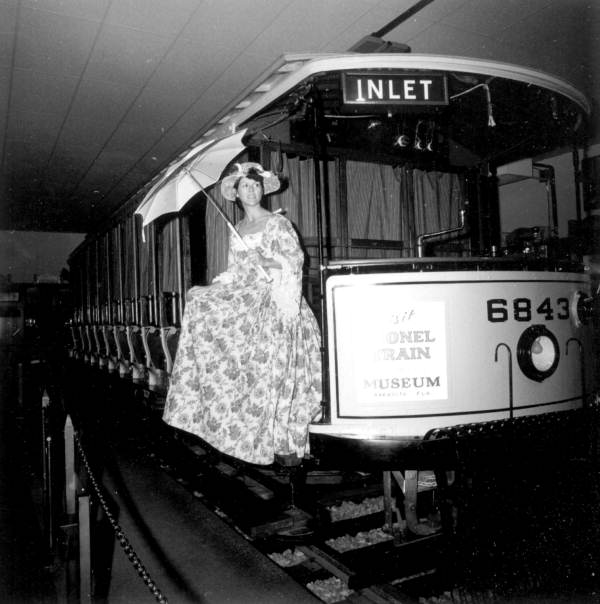
The Streetcar in the Center of our original Jacksonville Traction Emblem spent it's last years working the transit lines in Savannah. One of the lucky few to survive the fate of chicken coops, sheds and "Florida rooms".

River Streetcar: November at earliest
LAUREN NARDELLA

Saturday, August 23, 2008 at 12:30 am

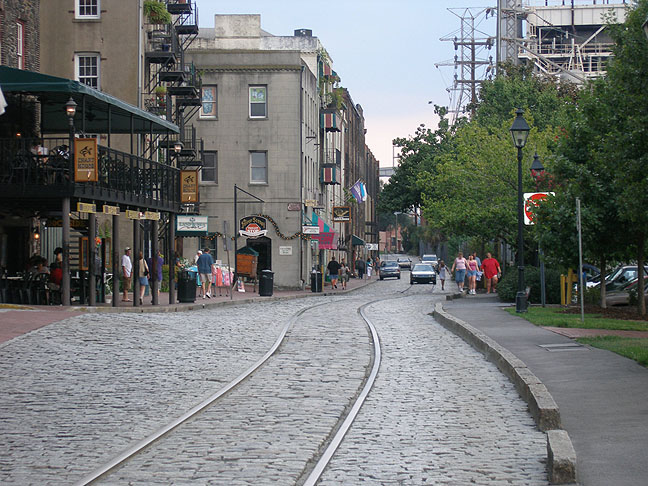
The rails along River Street won't be put to good use for another few months.
The highly anticipated River Streetcar is presently in Altoona, Pa., for electrical and mechanical gear to be put in place.

It's expected to be delivered to Savannah in six to eight weeks, said Sean Brandon, the city's mobility and parking director.

After it undergoes testing, it could be operational as early as November.

"It's been a journey," Brandon said at a streetcar information session Friday. "This is ... one of the most difficult projects we've had to undertake."

The streetcar is from the 1930s and has been completely refurbished as a modern, hybrid vehicle.

"It's a Prius on steroids," said Gary Landrio, assistant vice president of Tran Systems, a transportation consulting company in Warren, Pa.

"(The River Streetcar) is one of the most cutting-edge things from a green standpoint that's being done anywhere in North America," he said. "There's no vehicle like this."

When the streetcar is operational, it will run from noon to 8 p.m. to allow for extra space on River Street for business deliveries in the mornings.

It will hold 50 to 80 people, and round-trip fares will be 50 cents. The free dot shuttle will connect to a streetcar stop at City Hall.

Disability access
Part of the delay in the streetcar's completion stemmed from the addition of two wheelchair lifts.

The technology for the lifts needed to be hidden in order for the streetcar to still look like it's from 1935 - which took up a lot of time, Landrio said.

A significant amount of people with disabilities visit Savannah, according to Brandon. The streetcars will be fully ADA accessible.

"Now somebody with mobility challenges can ride the length of River Street and can get on and off to visit what they want to," Brandon said.

Cynthia Egan, owner of Arts & Crafts Emporium on River Street, is pleased the streetcar will be able to accommodate wheelchairs.

"I think it will bring a lot more tourists that normally couldn't come down here," she said. "It really fills a void."

Moving the rails
The streetcar will use the existing rails along River Street.

But there's a possibility the rails might need to be moved along the stretch from Spanky's restaurant to the Olde Harbour Inn, Brandon said.

The rails shift in that spot, and moving them two to two-and-a-half feet north may make it easier for motor vehicle traffic to move along River Street at the same time as the streetcar.

While a decision won't be made on moving the rails until the streetcar is tested, the city plans to move forward with the assumption that the work will need to be done.

"The goal is to get this in as soon as possible," Brandon said.

The general consensus is that it would be best to move the rails in December (excluding the week of Christmas), January or February to cause the least amount of disruption to businesses.

If everything else works out on schedule for the streetcar, it would operate from the west end of the route up to the construction area.

More delays possible
Another possible hurdle on the way to the streetcar becoming fully operational is the Federal Transit Administration.

The city submitted a safety plan to the administration in July and received a 40-page response Thursday.

The FTA works with a local office in Atlanta, which works with the state Department of Transportation, according to Brandon.

He said they don't have much experience with passenger rail, except for the Metropolitan Atlanta Rapid Transit Authority.

"I hope they don't try to treat us like MARTA," he said, adding that the safety standards should be different and should take into consideration the routes and speeds of the vehicles.

The FTA would need to approve the safety plan before the streetcar could run in Savannah.

The streetcar may eventually have a counterpart on River Street.

Another has been purchased by the city, but it won't be refurbished until the first car and the rails are complete and fully operational.
BLOGGER QUESTION: So Jacksonville, the city that would have been FIRST with a heritage streetcar system. But for Jake Godbold and unfounded fears that it would chase away the UMTA gift of a "free Skyway". Are we now going to drag ourselves last in line?

Could Jacksonville Contessa?


Another contestant in the coming struggle for a equipment supplier of new Commuter Rail in Jacksonville will likely be the fantastic and futuristic Contessa Trains. As our Commuter Rail system would be as long or longer then South Florida's, these trains are ideally suited for short or medium distance luxury and comfort. Bombardier Transportation has received an order from the Danish State Railways (DSB) for the delivery of 10 three-car Contessa trains, valued at approximately $118 million, with a foreseeable option of 30 additional trains.

The trains, which can reach a maximum speed of 111 mph, are capable of crossing the bridge between Denmark and Sweden, despite the different rail infrastructures used in both countries. A sophisticated dual system integrated into the vehicles enables the trains to automatically shift signaling and power systems when crossing the border. Other features of the inter-regional train include a middle-car design with low floors, and entrances giving access to disabled passengers and passengers carrying heavy luggage.

Another feature besides speed is found in safety, being railroad compliant and already in service by Amtrak in test corridors. The large black square around the ends is all a part of the high tech sell of these trains. They have the ability to split and rejoin while running at high speed! So a train coming into a junction does not have to waste time switching in the traditional sense. Now it is doubtful that ANY US railroad or the FRA would ever permit such operation in our country, the fact remains that a train that enters Jacksonville Terminal, could stop, unload - load, split up and leave for two destinations as two trains without anyone having to go outside or between cars.

If we decided to order the commuter configuration of these trains for our own system, they could be assembled in this country, perhaps in this city. The propulsion options are endless, with both diesel and electric options. Thus they can rightly be called either DMU's or EMU's depending on the power ordered. The trains will be leased by the National Rail Authority, which will make them available for DSBFirst, when the company takes over the Öresund services as of 11 January 2009.
The vehicles in this order and propulsion equipment will be designed by Bombardier in Sweden, with the propulsion equipment being manufactured at Bombardier’s production site in VästerÃ¥s. The cars will be produced in Germany at Bombardier’s Hennigsdorf and Görlitz production sites, while the bogies will be produced in Siegen.

09 September, 2008

JAXPORT CRANES FALL

Jaxport lost two of it's Blount Island Terminal Container Cranes, during the heavy weather from the tropical storms. It is believed that wind sheer took down the cranes which twisted as they fell. These massive cranes tower 200' feet above the docks and are another indication of the power of the weather. Jacksonville and Florida in general need to do a better job of alerting our citizens and business community of the dangers of extreme weather. A system of Tornado sirens would greatly compliment our excellent emergency management services. For your blogger it is a deja vu, having worked with Red Cross in the infamous May 3 tornado swarm in Oklahoma a few years ago. When I tell people in Florida that I saw huge, compact auto size tombstones, solid marble, tossed across a highway like foam toys, they just give me a polite smile. "Sure you did Bob...sure you did..." If Nothing else comes of this but an awareness that it CAN HAPPEN HERE, then we are better for the experience. Let's hope JAXPORT gets the replacements up and running as we roar toward World Port Status.

THE ORANGUTAN GANG STRIKES BACK - Embrace You Asphalt!


From "The Overhead Wire"

Monday, September 8, 2008
Opposition Pundits on Parade

Ron Utt of the Heritage Foundation is worried. So are all the other anti-transit pundits out there. The newly minted interest in transit is encroaching on their road loving ways. A recent AP article on rising transit ridership captures Utt's opinion, proving that balanced transportation and oil independence means nothing to the conservative crowd.

Ron Utt, of the conservative Heritage Foundation, said transit is "inconsequential in terms of reducing congestion or greenhouse gases" and that people who want to use transit should simply pay more. Citing the example of a Washington-area commuter rail, Utt said: "If more people want to use that and more people have to stand, I don't know why that should place a financial burden on people in Iowa."
Sure Ron, that's why almost a million people per day take Metro in DC. I have a really great idea, how about people pay the true cost of gasoline or roads or airlines. Let's also make people pay directly for air traffic controllers and the highway patrol. And why should I pay for a rural road in Iowa? All transportation is subsidized, let's stop the favoritism towards one mode and pretending that cars pay for themselves.

Typewriter Typewriter Typewriter!

Then there is our favorite cipher, Randal O'Toole. His most recent call is to cancel the Denver Fastracks program claiming it's bad for the environment and social engineering. You know, the usual junk.

Environmentally, light rail is a disaster for the region. For every passenger mile carried, light rail consumes four times as much land as Denver-area freeways. It also uses more energy and emits more greenhouse gases, per passenger mile, than the average SUV.
I don't know where he gets this one. But as Mr. Setty at PublicTransit.us reminds us, transit actually reduces passenger miles overall. Randal's twisted logic lumps in the construction of the line when he never talks about the construction losses of highways and the vehicles that drive on them. What about the construction of all those parking garages?

O'Toole, many academics and other anti-transit activists understandably do not wish to discuss the wider, systematic impacts of transit on transportation patterns and land use. One key study estimates that for every passenger mile on transit, slightly more than two urban vehicle miles traveled (VMT) is suppressed or foregone. This study documents the connection between transit and lower vehicle usage that has also been documented in dozens of other studies. This effect is particularly significant when less than 40% of U.S. residents have easy access to transit at the present time.
But what annoys me the most is that stupid no one rides transit argument. Well no one has the option to take it! New York City has transit, people take it. Washington DC has a rather good subway system, people take it. But when the green argument for him fails, he can always fall back on social engineering. You know, the kind that took place from 1950 to the present when cities built roads only and subsidies were funneled to development related to roads.

The other support for FasTracks comes from those who want to socially engineer Colorado lifestyles. They use light rail as an excuse to build tax-subsidized high-density housing projects on properties taken from their owners by eminent domain near planned rail stations. Yet few Americans aspire to live in such dense housing, and such compact development makes little sense in a state that is 97 percent rural open space.
Hmm. No one in Colorado wants open space, just build on it. I'm sure John Denver wouldn't mind. And no one wants to live in high-density housing projects, that's why TOD commands such a low price premium with buyers. No one ever wanted to live in LoDo right? What about all those road, pipe subsidies.

Cars Cars Cars. Sprawl Sprawl Sprawl. Sounds like Drill Drill Drill.

STREETCARS COMING - PCT BITES THE DUST


Another POTATO-CHIP-TRUCK-THINKS-ITS-A-TROLLEY bites the dust, this time in Sarasota! Why? Did the Museum Do It? This open streetcar sat for years in a Sarasota Museum before it's journey to find a home and go back into service. Did the memory of this display help? Could Jacksonville build such a display? Was it the success with TECO Transit Oriented Development? Whatever it was that lit the fire under Sarasota, they are now in position to leap ahead of us.


City of Sarasota Believes
Streetcars May be the
Ticket


By Dale WhiteSarasota Herald-TribuneWhile Sarasota County considers express buses, the city of Sarasota is thinking about downtown streetcars.

"We're a long way out on planning this," city transportation Susan L. Montgomery stressed.

Even so, the city has taken some preliminary steps.

Developers of The Proscenium -- a proposed hotel, retail, office and condo project at U.S. 41 and Boulevard of the Arts -- are willing to commit $8.2 million to startup costs. That may qualify as matching dollars for a federal grant. If both sources come through, the city may have enough money to build the system and operate it for at least five years.

A few years ago, Sarasota County Area Transit tried a downtown trolley service, on a loop using Main Street and Ringling Boulevard, but it failed. It was essentially a bus (potato chip truck AKA: PCT-Trolley) designed to look like an old-fashioned trolley.

The streetcars would actually run on a rail and have more appeal, Montgomery said.

Yet providing a route for a streetcar could be challenging. Main Street, for example, would most likely lose much of its street parking. "That's a major issue in this town," Montgomery said.

IF FLORIDA WOULD JUST COMMIT


Amazing news keeps coming out of California. Remember a few years back when the world was saying the LAST STAND of the automobile would be in the "Golden State". The Los Angeles freeway system that attempted to replace a 1,200 mile electric interurban railway and failed. The growing frustration with smog, and endless pavement expansion, the greenhouse created by the sea breeze and the mountains that held a thick grey soup over the cities, burned the eyes and into the minds of the citizens. Rail advocates kept preaching the gospel of bring back the trains, mostly to deaf ears. On the positive side, California hadn't yet, removed any of its mainline railroad track (as Florida has) nor had they completely abandoned their largest passenger terminal Los Angeles, (as Jacksonville has).

But the situation would be confrontational from the start, even if California tried rail it would be with a minimal approach, no station infrastructure and used, begged or borrowed equipment. After all who in their right mind would think the only cities on the globe more sprawled then Jacksonville - Orlando - Tampa - Miami - Sarasota, would willingly abandon 12 and 16 lane freeways for a train ride.

Enter the Loma Preita Earthquake, which typical of most temblors crashed down everything above the ground level. The giant multi-level interchanges of the worlds finest freeway system lay in dusty heaps, countless bodies crushed beneath them. There was only one bright spot in this otherwise dismal history. The deep subterranean railroad tunnels under the San Gabriel Mountains were not touched. Suddenly thousands, if not millions of people desperate to keep working and living, were forced to take to the rail tunnels in quickly gathered equipment from around the Americas. It was to be a short lived experiment, only something strange started to happen. The worlds most auto-centric society rebelled when the political powers suggested removal of the trains and a return to "normal". Nobody it seemed wanted normal to ever come back again.

Now far be it from me to wish a similar natural disaster on my home state of Florida. Rather I would hope someone in Tallahassee or Jacksonville or one of the other major metropolitan areas would look at what has happened not just in Los Angeles but throughout California. In fact, here is the latest on their railway success story:

By Gene Skoropowski, Managing Director, Capitol Corridor JPB
California Intercity Passenger Rail ridership and revenue records continue to be “smashed” by these August statistics. Major ridership growth continues all across California, with the Pacific Surfliners growing at +9.5%, the Capitol Corridor at +21.2% and the San Joaquins at +27.5%. These three California intercity rail services carried 568,132 passengers in August, and the Pacific Surfliner (313,570) route has carried more passengers than Amtrak’s premier Northeast Corridor “Acela Express” (250,440) for the fourth consecutive month.

The Capitol Corridor was again rated by the riders across the country as Amtrak’s #1 route for customer satisfaction for the 7th consecutive month, and Capitol Corridor sustained its “best on-time performance” (at 91.6% on-time) of all but 2 intercity corridors offering multiple frequency services.

Capitol Corridor (August 2008):
158,309 passengers +21.2% vs. 2007 this is a new August record, and second-highest month ever and the Capitol Corridor is still the third busiest route in the country, by a wide margin.Passengers for 11 months YTD: 1,548,783 (11 months YTD: +16.1%)(total riders for the latest 12 months: 1,664,871, +15.7% above prior 12months)
$2,272,935 revenue +27.9% vs. 2007 (11 months YTD: +21.6%)
The farebox recovery revenue-to-cost ratio for July is 62.5% , andthe year-to-date revenue-to-cost ratio holding at 54.3%.


On-time performance for July: 91.6% (a record high for service reliability)The year-to-date on-time performance delivered to the customers after 11 months is 85.3%, among the best in the country. Only the Keystone Corridor and the Hiawatha Corridor have better on-time stats. The premier Acela Express service on the Northeast Corridor is 83.8% on-time for the same 11 month period, while Northeast Regional service is at 75.5%.

The Capitol Corridor (Sacramento - Oakland - San Jose with connections to San Francisco)
A Florida equal to this corridor, while missing the capitol maintains the distances and shape, and would run from Tampa - Miami / Orlando - Miami / Orlando - Tampa, the Florida triangle.

August on-time reliability numbers are exceptionally good, and most encouraging. Again, like last month, not since we went from 6 trains each way to 9 trains each way (back in 2000-01) have we seen ridership growth like we have seen in July and August. Union Pacific Railroad continues to deliver for us. UPRR performance in August was again 95%, and UPRR performance year to date is between 94% and 95%, the best of any Amtrak-operated intercity passenger rail service in the country, whether Amtrak-dispatched or freight railroad dispatched.__________________________________________________


Pacific Surfliners (August 2008): (From Santa Barbara - Los Angeles - San Diego)
One might say this route is roughly the California equal of the Florida East Coast Ry, From Jacksonville to Miami.

313,570 passengers +9.5% vs. 2007, still the second busiest route in the nation, by a wide marginPassengers for 11 months YTD: 2,683,362 (11 months YTD: +7.5%)As noted above, the Pacific Surfliners carried more monthly passengers than the Acela Express on the Northeast Corridor, for the 4th consecutive month
$6,173,776 revenue +14.8% vs. 2007 (11 months YTD: +9.8%)
On-time performance for August: 69.3%YTD on-time: 75.9%__________________________________________________


San Joaquins (August 2008): (From Oakland / Sacramento - Fresno - Bakersfield)
This is a long corridor through a farm belt that started with a tiny 2 car train. If Florida had such a service it would closely resemble our Jacksonville - Tallahassee - Pensacola line.

96,253 passengers +27.5% vs. 2007, keeping its slot as fifth busiest in the nation for the second consecutive month (outpacing New York State’s Empire Corridor Service)Passengers for 11 months YTD: 873,767 (11 months YTD: +18.2%)
$3,093,399 revenue +31.1% vs. 2007 (11 months YTD: +19.6%)
On-time performance for August: 66.4%YTD on-time: 82.4%__________________________________________________________


Total California Intercity Corridor Ridership for August 2008: 568,132
Total Northeast Corridor ‘Spine’ ridership for August 2008: 877,849For August 2008, the California Corridors are 64.7% of Northeast Corridor ‘Spine’ Boston-Washington ridership
Total Northeast Corridor ridership for August 2008with branches to Springfield, MA; Albany, NY and Harrisburg, PA: 1,104,113For August 2008, the California Corridors are 51.5% of the total NortheastCorridor ridership

TAKE A FREE TOUR OF THE JACKSONVILLE SKYWAY

The arguments rage to this date, "Should have never been built," "waste of taxpayer money," "Doesn't go anywhere," "Nobody rides it..." etc. Bottom line is we have it, and it is finally showing signs of life. Simple extensions to the Stadium, San Marco, and the area of Blue Cross in North Riverside would turn this little train around. Addition of Park and Ride garages and multimodal transit terminals at the end points would bring on the crowds. The video must have been shot on a Sunday Morning, as downtown is certainly as packed with life as any other major City on weekdays. Jacksonville is a city of Bikes, joggers, walkers, buses and cars, one almost wonders how the photographer managed to find this quiet moment.


Support the Skyway? Join the Monorail Society Today!

Subscribe to monorailsociety
Powered by groups.yahoo.com

WELCOME ABOARD

Sign by Danasoft - For Backgrounds and Layouts