If Nothing else comes of this but an awareness that it CAN HAPPEN HERE, then we are better for the experience. Let's hope JAXPORT gets the replacements up and running as we roar toward World Port Status.
09 September, 2008
JAXPORT CRANES FALL
Jaxport lost two of it's Blount Island Terminal Container Cranes, during the heavy weather from the tropical storms. It is believed that wind sheer took down the cranes which twisted as they fell. These massive cranes tower 200' feet above the docks and are another indication of the power of the weather. Jacksonville and Florida in general need to do a better job of alerting our citizens and business community of the dangers of extreme weather. A system of Tornado sirens would greatly compliment our excellent emergency management services. For your blogger it is a deja vu, having worked with Red Cross in the infamous May 3 tornado swarm in Oklahoma a few years ago. When I tell people in Florida that I saw huge, compact auto size tombstones, solid marble, tossed across a highway like foam toys, they just give me a polite smile. "Sure you did Bob...sure you did..." If Nothing else comes of this but an awareness that it CAN HAPPEN HERE, then we are better for the experience. Let's hope JAXPORT gets the replacements up and running as we roar toward World Port Status.
If Nothing else comes of this but an awareness that it CAN HAPPEN HERE, then we are better for the experience. Let's hope JAXPORT gets the replacements up and running as we roar toward World Port Status.


THE ORANGUTAN GANG STRIKES BACK - Embrace You Asphalt!

From "The Overhead Wire"
Monday, September 8, 2008
Opposition Pundits on Parade
Ron Utt of the Heritage Foundation is worried. So are all the other anti-transit pundits out there. The newly minted interest in transit is encroaching on their road loving ways. A recent AP article on rising transit ridership captures Utt's opinion, proving that balanced transportation and oil independence means nothing to the conservative crowd.
Ron Utt, of the conservative Heritage Foundation, said transit is "inconsequential in terms of reducing congestion or greenhouse gases" and that people who want to use transit should simply pay more. Citing the example of a Washington-area commuter rail, Utt said: "If more people want to use that and more people have to stand, I don't know why that should place a financial burden on people in Iowa."
Sure Ron, that's why almost a million people per day take Metro in DC. I have a really great idea, how about people pay the true cost of gasoline or roads or airlines. Let's also make people pay directly for air traffic controllers and the highway patrol. And why should I pay for a rural road in Iowa? All transportation is subsidized, let's stop the favoritism towards one mode and pretending that cars pay for themselves.
Typewriter Typewriter Typewriter!
Then there is our favorite cipher, Randal O'Toole. His most recent call is to cancel the Denver Fastracks program claiming it's bad for the environment and social engineering. You know, the usual junk.
Environmentally, light rail is a disaster for the region. For every passenger mile carried, light rail consumes four times as much land as Denver-area freeways. It also uses more energy and emits more greenhouse gases, per passenger mile, than the average SUV.
I don't know where he gets this one. But as Mr. Setty at PublicTransit.us reminds us, transit actually reduces passenger miles overall. Randal's twisted logic lumps in the construction of the line when he never talks about the construction losses of highways and the vehicles that drive on them. What about the construction of all those parking garages?
O'Toole, many academics and other anti-transit activists understandably do not wish to discuss the wider, systematic impacts of transit on transportation patterns and land use. One key study estimates that for every passenger mile on transit, slightly more than two urban vehicle miles traveled (VMT) is suppressed or foregone. This study documents the connection between transit and lower vehicle usage that has also been documented in dozens of other studies. This effect is particularly significant when less than 40% of U.S. residents have easy access to transit at the present time.
But what annoys me the most is that stupid no one rides transit argument. Well no one has the option to take it! New York City has transit, people take it. Washington DC has a rather good subway system, people take it. But when the green argument for him fails, he can always fall back on social engineering. You know, the kind that took place from 1950 to the present when cities built roads only and subsidies were funneled to development related to roads.
The other support for FasTracks comes from those who want to socially engineer Colorado lifestyles. They use light rail as an excuse to build tax-subsidized high-density housing projects on properties taken from their owners by eminent domain near planned rail stations. Yet few Americans aspire to live in such dense housing, and such compact development makes little sense in a state that is 97 percent rural open space.
Hmm. No one in Colorado wants open space, just build on it. I'm sure John Denver wouldn't mind. And no one wants to live in high-density housing projects, that's why TOD commands such a low price premium with buyers. No one ever wanted to live in LoDo right? What about all those road, pipe subsidies.
Cars Cars Cars. Sprawl Sprawl Sprawl. Sounds like Drill Drill Drill.
Opposition Pundits on Parade
Ron Utt of the Heritage Foundation is worried. So are all the other anti-transit pundits out there. The newly minted interest in transit is encroaching on their road loving ways. A recent AP article on rising transit ridership captures Utt's opinion, proving that balanced transportation and oil independence means nothing to the conservative crowd.
Ron Utt, of the conservative Heritage Foundation, said transit is "inconsequential in terms of reducing congestion or greenhouse gases" and that people who want to use transit should simply pay more. Citing the example of a Washington-area commuter rail, Utt said: "If more people want to use that and more people have to stand, I don't know why that should place a financial burden on people in Iowa."
Sure Ron, that's why almost a million people per day take Metro in DC. I have a really great idea, how about people pay the true cost of gasoline or roads or airlines. Let's also make people pay directly for air traffic controllers and the highway patrol. And why should I pay for a rural road in Iowa? All transportation is subsidized, let's stop the favoritism towards one mode and pretending that cars pay for themselves.
Typewriter Typewriter Typewriter!
Then there is our favorite cipher, Randal O'Toole. His most recent call is to cancel the Denver Fastracks program claiming it's bad for the environment and social engineering. You know, the usual junk.
Environmentally, light rail is a disaster for the region. For every passenger mile carried, light rail consumes four times as much land as Denver-area freeways. It also uses more energy and emits more greenhouse gases, per passenger mile, than the average SUV.
I don't know where he gets this one. But as Mr. Setty at PublicTransit.us reminds us, transit actually reduces passenger miles overall. Randal's twisted logic lumps in the construction of the line when he never talks about the construction losses of highways and the vehicles that drive on them. What about the construction of all those parking garages?
O'Toole, many academics and other anti-transit activists understandably do not wish to discuss the wider, systematic impacts of transit on transportation patterns and land use. One key study estimates that for every passenger mile on transit, slightly more than two urban vehicle miles traveled (VMT) is suppressed or foregone. This study documents the connection between transit and lower vehicle usage that has also been documented in dozens of other studies. This effect is particularly significant when less than 40% of U.S. residents have easy access to transit at the present time.
But what annoys me the most is that stupid no one rides transit argument. Well no one has the option to take it! New York City has transit, people take it. Washington DC has a rather good subway system, people take it. But when the green argument for him fails, he can always fall back on social engineering. You know, the kind that took place from 1950 to the present when cities built roads only and subsidies were funneled to development related to roads.
The other support for FasTracks comes from those who want to socially engineer Colorado lifestyles. They use light rail as an excuse to build tax-subsidized high-density housing projects on properties taken from their owners by eminent domain near planned rail stations. Yet few Americans aspire to live in such dense housing, and such compact development makes little sense in a state that is 97 percent rural open space.
Hmm. No one in Colorado wants open space, just build on it. I'm sure John Denver wouldn't mind. And no one wants to live in high-density housing projects, that's why TOD commands such a low price premium with buyers. No one ever wanted to live in LoDo right? What about all those road, pipe subsidies.
Cars Cars Cars. Sprawl Sprawl Sprawl. Sounds like Drill Drill Drill.
STREETCARS COMING - PCT BITES THE DUST

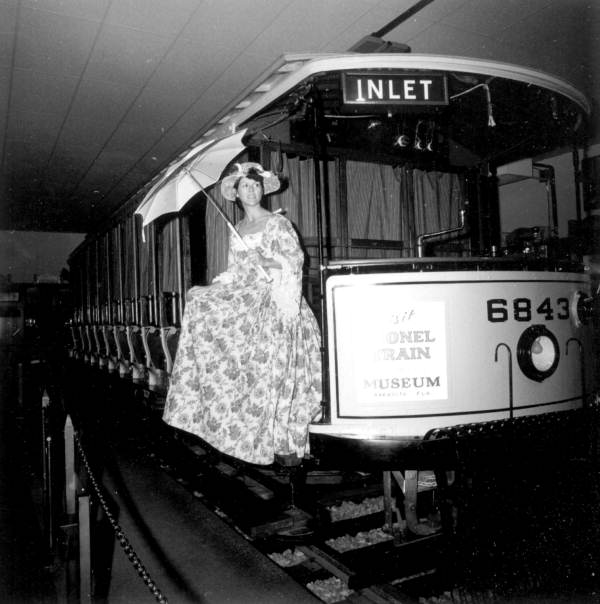
Another POTATO-CHIP-TRUCK-THINKS-ITS-A-TROLLEY bites the dust, this time in Sarasota! Why? Did the Museum Do It? This open streetcar sat for years in a Sarasota Museum before it's journey to find a home and go back into service. Did the memory of this display help? Could Jacksonville build such a display? Was it the success with TECO Transit Oriented Development? Whatever it was that lit the fire under Sarasota, they are now in position to leap ahead of us.
City of Sarasota Believes
Streetcars May be the
Ticket
By Dale WhiteSarasota Herald-TribuneWhile Sarasota County considers express buses, the city of Sarasota is thinking about downtown streetcars.
"We're a long way out on planning this," city transportation Susan L. Montgomery stressed.
Even so, the city has taken some preliminary steps.
Developers of The Proscenium -- a proposed hotel, retail, office and condo project at U.S. 41 and Boulevard of the Arts -- are willing to commit $8.2 million to startup costs. That may qualify as matching dollars for a federal grant. If both sources come through, the city may have enough money to build the system and operate it for at least five years.
A few years ago, Sarasota County Area Transit tried a downtown trolley service, on a loop using Main Street and Ringling Boulevard, but it failed. It was essentially a bus (potato chip truck AKA: PCT-Trolley) designed to look like an old-fashioned trolley.
The streetcars would actually run on a rail and have more appeal, Montgomery said.
Yet providing a route for a streetcar could be challenging. Main Street, for example, would most likely lose much of its street parking. "That's a major issue in this town," Montgomery said.
IF FLORIDA WOULD JUST COMMIT
Amazing news keeps coming out of California. Remember a few years back when the world was saying the LAST STAND of the automobile would be in the "Golden State". The Los Angeles freeway system that attempted to replace a 1,200 mile electric interurban railway and failed. The growing frustration with smog, and endless pavement expansion, the greenhouse created by the sea breeze and the mountains that held a thick grey soup over the cities, burned the eyes and into the minds of the citizens. Rail advocates kept preaching the gospel of bring back the trains, mostly to deaf ears. On the positive side, California hadn't yet, removed any of its mainline railroad track (as Florida has) nor had they completely abandoned their largest passenger terminal Los Angeles, (as Jacksonville has).
But the situation would be confrontational from the start, even if California tried rail it would be with a minimal approach, no station infrastructure and used, begged or borrowed equipment. After all who in their right mind would think the only cities on the globe more sprawled then Jacksonville - Orlando - Tampa - Miami - Sarasota, would willingly abandon 12 and 16 lane freeways for a train ride.
Enter the Loma Preita Earthquake, which typical of most temblors crashed down everything above the ground level. The giant multi-level interchanges of the worlds finest freeway system lay in dusty heaps, countless bodies crushed beneath them. There was only one bright spot in this otherwise dismal history. The deep subterranean railroad tunnels under the San Gabriel Mountains were not touched. Suddenly thousands, if not millions of people desperate to keep working and living, were forced to take to the rail tunnels in quickly gathered equipment from around the Americas. It was to be a short lived experiment, only something strange started to happen. The worlds most auto-centric society rebelled when the political powers suggested removal of the trains and a return to "normal". Nobody it seemed wanted normal to ever come back again.
Now far be it from me to wish a similar natural disaster on my home state of Florida. Rather I would hope someone in Tallahassee or Jacksonville or one of the other major metropolitan areas would look at what has happened not just in Los Angeles but throughout California. In fact, here is the latest on their railway success story:
By Gene Skoropowski, Managing Director, Capitol Corridor JPB
California Intercity Passenger Rail ridership and revenue records continue to be “smashed” by these August statistics. Major ridership growth continues all across California, with the Pacific Surfliners growing at +9.5%, the Capitol Corridor at +21.2% and the San Joaquins at +27.5%. These three California intercity rail services carried 568,132 passengers in August, and the Pacific Surfliner (313,570) route has carried more passengers than Amtrak’s premier Northeast Corridor “Acela Express” (250,440) for the fourth consecutive month.
The Capitol Corridor was again rated by the riders across the country as Amtrak’s #1 route for customer satisfaction for the 7th consecutive month, and Capitol Corridor sustained its “best on-time performance” (at 91.6% on-time) of all but 2 intercity corridors offering multiple frequency services.
Capitol Corridor (August 2008):
158,309 passengers +21.2% vs. 2007 this is a new August record, and second-highest month ever and the Capitol Corridor is still the third busiest route in the country, by a wide margin.Passengers for 11 months YTD: 1,548,783 (11 months YTD: +16.1%)(total riders for the latest 12 months: 1,664,871, +15.7% above prior 12months)
$2,272,935 revenue +27.9% vs. 2007 (11 months YTD: +21.6%)
The farebox recovery revenue-to-cost ratio for July is 62.5% , andthe year-to-date revenue-to-cost ratio holding at 54.3%.
On-time performance for July: 91.6% (a record high for service reliability)The year-to-date on-time performance delivered to the customers after 11 months is 85.3%, among the best in the country. Only the Keystone Corridor and the Hiawatha Corridor have better on-time stats. The premier Acela Express service on the Northeast Corridor is 83.8% on-time for the same 11 month period, while Northeast Regional service is at 75.5%.
The Capitol Corridor (Sacramento - Oakland - San Jose with connections to San Francisco)
A Florida equal to this corridor, while missing the capitol maintains the distances and shape, and would run from Tampa - Miami / Orlando - Miami / Orlando - Tampa, the Florida triangle.
August on-time reliability numbers are exceptionally good, and most encouraging. Again, like last month, not since we went from 6 trains each way to 9 trains each way (back in 2000-01) have we seen ridership growth like we have seen in July and August. Union Pacific Railroad continues to deliver for us. UPRR performance in August was again 95%, and UPRR performance year to date is between 94% and 95%, the best of any Amtrak-operated intercity passenger rail service in the country, whether Amtrak-dispatched or freight railroad dispatched.__________________________________________________
Pacific Surfliners (August 2008): (From Santa Barbara - Los Angeles - San Diego)
One might say this route is roughly the California equal of the Florida East Coast Ry, From Jacksonville to Miami.
313,570 passengers +9.5% vs. 2007, still the second busiest route in the nation, by a wide marginPassengers for 11 months YTD: 2,683,362 (11 months YTD: +7.5%)As noted above, the Pacific Surfliners carried more monthly passengers than the Acela Express on the Northeast Corridor, for the 4th consecutive month
$6,173,776 revenue +14.8% vs. 2007 (11 months YTD: +9.8%)
On-time performance for August: 69.3%YTD on-time: 75.9%__________________________________________________
San Joaquins (August 2008): (From Oakland / Sacramento - Fresno - Bakersfield)
This is a long corridor through a farm belt that started with a tiny 2 car train. If Florida had such a service it would closely resemble our Jacksonville - Tallahassee - Pensacola line.
96,253 passengers +27.5% vs. 2007, keeping its slot as fifth busiest in the nation for the second consecutive month (outpacing New York State’s Empire Corridor Service)Passengers for 11 months YTD: 873,767 (11 months YTD: +18.2%)
$3,093,399 revenue +31.1% vs. 2007 (11 months YTD: +19.6%)
On-time performance for August: 66.4%YTD on-time: 82.4%__________________________________________________________
Total California Intercity Corridor Ridership for August 2008: 568,132
Total Northeast Corridor ‘Spine’ ridership for August 2008: 877,849For August 2008, the California Corridors are 64.7% of Northeast Corridor ‘Spine’ Boston-Washington ridership
Total Northeast Corridor ridership for August 2008with branches to Springfield, MA; Albany, NY and Harrisburg, PA: 1,104,113For August 2008, the California Corridors are 51.5% of the total NortheastCorridor ridership
08 September, 2008
Doctors of Transportology in Jacksonville?
 An adaptation of a 1948 story by L. Beebe
Every now and then this blog ventures into a discussion of some phase of the transportation business because (a) he is a transit dependent child and has lived in nothing but shebangs, bus benches , and hobo jungles, of one degree of stateliness or another for the past quarter century; (b) because almost everyone likes to read about streetcars, buses and trains; and (c) it is probably the most fascinating single business in the world from the inside, and transportation men probably know more about human beings by the time they are junior hostlers and dispatchers than the most learned psychologists in Vienna when they are at the top of the professoring business. Everything happens in transportation, and now and then a play- wright or a novelist who recognizes them as an unrestricted hunting ground and one with no season makes a fortune out of his discovery.
There isn't, however, much that one can write about transportation that makes the State and Municipal Agency's happy unless it is unmitigated goose-grease and undiscriminating flattery. An individual passenger manager can abide reading that his own conveyance is the quintessence of lux, is patronized solely by the old nobility, or in the case of rail, that its food service make Voisin in Paris look like a hamburger joint. But remark that anyone Else's passenger system is comparable to this degree of elegance, and he is sore as a leading lady whose name has been spelled wrong in the reviews of her opening. A few months ago I remarked that I , as I am now, in favor of mandatory jail sentences by Federal statute for transit managers who charge from a dollar up, or indeed anything extra, for a single transfer, restroom, coffee or extra bag, and since that time this blogger has spent most of his time in foxholes avoiding angry missionaries from the State and City who want to sell him on the proposition that charging for restrooms or coffee or transfers or baggage, a preposterous and tactless larceny on the face of it, is practically something to be listed as an improvement in the service.
Pish and nonsense. Transit companies have gotten away with so much murder during the past few years of easy money and immigration to cities that in many cases they have come to regard the passenger or commuter as a boob or zany, who is no better than a victim type and fit only for insult and pillage. The time may be at hand when they will think differently. Certainly any reasonable intelligence hopes so.
Probably the trouble with all too many Transportation Companies or Agencies is that they are managed and staffed by young men. It should be perfectly obvious that no man is fit for an executive position in any transit operation, let alone one which requires his coming in actual contact with the passengers, until he is fifty. By that time he has possibly acquired sense and probably manners. It may have been a crazy baboon with a credit manager's intelligence or it may have been a recent graduate from the UNF College of Transportation and Logistics, but it was certainly no Transportation Manager of mature judgment or wide experience who dreamed up such an insult to his passengers as charging them for our Skyway, or transfers or baggage. It is conceivable that some Agencies, crazed beyond the ordinary with rapacity, would like to charge extra for the reclining seats and run a separate account for the use of the restrooms (if any) and fuel, but these aren't generally considered reasonable by the standard American Transportation code of ethics, although they may be at any time.
The art of running a deluxe transportation service has almost disappeared in the United States, and it is because government ownership, knowing that no outrage against decency is beyond the capacity of an ambitious young man anxious to get ahead, turned their properties and especially their front desks over to the juveniles. These shiftless, undressed, and uncourtly little juniors, to whom a named passenger train with its French menu is a mystery and who do not even own, let alone wear, proper morning clothes, have taken over responsible positions once held by experts and veterans in whose generation of manners and graciousness no carrier could dream of a manager's job at a Railroad Street bus garage until he had served behind stairs for at least forty years in the more distinguished trains of Jacksonville's old Seaboard, Atlantic Coast Line, Florida East Coast, Southern, Trailways or Greyhound lines. When he could speak six languages flawlessly, could identify a hundred different Rhine wines by reference only to the aroma of the cork, and knew every traveling person of consequence in the United States and England by sight and that instanter, he was entrusted with a probationary job as a night assistant passenger conductor. Nowadays the graduate of a school of transportation management considers himself a failure if he isn't resident managing director the week he has learned that streetcars and potato chip trucks aren't the same vehicles. The manager of one of Florida's highest ranking transit properties, while he may be an excellent purchasing agent or even a personnel manager, is still in his early thirties, and it is the opinion of most of the ridership in his august property that he should be put away out of sight for another twenty-five years.
03 September, 2008
WHEN BUSES FAIL AT BUSINESS ATTRACTION
 Scottish Electric Trolley Bus in Action
 Diesel bus at a University Station, note the dirty glass panels
A lot can be said for the idea of placing a lite-BRT (Bus Rapid Transit) system at various points on our proposed Commuter Rail, Streetcars or even our Skyway. These limited busway's would flow in from the outer suburbs and bring in passengers that would feed into the trunk system. Wherever possible, the transfers should be designed as seamless and across the platform "easy".
National numbers for large developments along BRT systems is not good. In fact international numbers are not great either though they exceed those in the USA. These developments known as TOD (Transit Oriented Developments) focus on less parking, less-auto, and pedestrian friendly atmospheres, usually centered around a transit station. Some of the "ideals" are the Live-Work-Play type developments.
Claims have been made that in Jacksonville, as-if we were a unique island, we would obtain Billions of dollars in new developments along our BRT bus system. There are many reasons beyond the numbers that say this simply isn't true. Primary is the "flexibility" of the bus itself. This was the big sell, when the streetcar lines were closed down by GM-FIRESTONE-PHILLIPS-STANDARD OIL. They'd come into a city with millions of dollars to spend, throw our some "gifts" then wine and dine the political powers, explaining the city's of the future will be built on highways and oil, endless sprawl and freeways. Bus routes could and would change with the growth tide and to try and do that with streetcars would "bankrupt society", or so they claimed. The point of sale was F-L-E-X-I-B-L-E ! Today in a fuel short world, that very concept has came back to haunt all of us. No self respecting developer wants to sink limited millions into a massive development around a "flexible" transit mode. Here today and gone tomorrow? There simply are no guarantees.
Another argument that has raised it's head locally is being addressed in Brooklyn New York today. Buses for the most part have dirty diesel engines which spew a smelly mix of carbon particles and sulfur into the air. Where the bus stands, the walls are black with carbon. Recently a rash of local Jacksonville articles questioned the wisdom of the Regency Square Shopping Mall's bus center being a 100 yard dash through traffic, and tropical weather. It is located far across the parking lots near the Arlington Expressway. So playing dodge cars, and lightning bolts, dragging the stroller and 3 bags, any self respecting shopper is turned off by the situation. In the end JTA loses and so does the mall and the city. Let's look in on Brooklyn for a fix:
Ikea’s bus fix; Superstore’s shuttle no longer an ‘idle’ threat
By Sarah Portlock
The Brooklyn Paper
By Sarah Portlock
The Brooklyn Paper
The Ikea bus-aster at Borough Hall and in Park Slope, has been resolved.
Earlier this summer, residents of Brooklyn Heights, Carroll Gardens and the Slope were enraged that Ikea shuttle buses were idling and blowing diesel exhaust into the air at their loading and unloading zones in those neighborhoods. The buses show up every 15 minutes from 10 am to 10 pm on Joralemon Street near Court Street and at the intersections of Ninth Street and Fourth Avenue and Smith Street.
Last week, officials with the big box superstore met with Community Boards 2 and 6 last week and announced that they had fixed the problem by hiring more dispatchers to regulate bus schedules.
Ikea spokesman Joseph Roth added that the mega-retailer is also doing its own monitoring.
And it’s working, community leaders said.
“It seems, for the most part, we have resolved our issue at Borough Hall,” said Community Board 2 District Manager Rob Perris, who was among the first to demand that Ikea fix the idling problem.
Residents near the Park Slope and Gowanus locations said they were concerned about traffic congestion and were confused about where exactly the buses stopped — but traffic there has also calmed, a visit revealed.
“They can’t do much better than that,” said Boerum Hill resident Bill Harris.
A public meeting will be held this fall to discuss any remaining issues with the store’s transportation offerings, said Community Board 6 District Manager Craig Hammerman.
BACK TO JACKSONVILLE'S BLOG
So what should the Jacksonville solution be to the question? Leave the TOD entirely to rail and streetcar? No. But fix the BRT in such a way that it will attract it's own share of investors along it's routes. The best assurance that the bus isn't going away, is overhead electric or trolley bus. While slightly more expensive then standard or hybrid buses due to the overhead, costs are still no where near the original estimates for the more expensive "Quickway" or exclusive bus freeways we originally proposed. The Quickway system was around 26 miles in length and would cost about 26 million a mile to build. A modern overhead trolley system could be built for about 1 million a mile, plus the price of the buses.
We also would reap the benefits of a clean electric system for the corridor bus routes. While some detractors will claim the power is generated by coal at JEA and thus isn't pollution free, there is certainly no rule to say this must remain the status quo. An example is found in Canada, where an electric transit system many times the size of ours is powered by a wind farm. Image alternatives, solar, wind, gas. Even at it's worst, with dirty coal (anthracite coal burns cleaner) the electric bus still removes the pollution from the walls of the Mall, the downtown buildings, and transit stations, to some distant power facility. I think that makes it very attractive to us all.
01 September, 2008
SHOOTING FOR THE MOON IS LIGHTER THEN AIR!
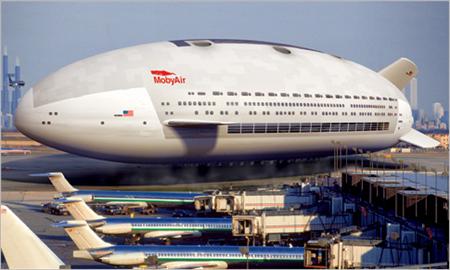
So here we are in Jacksonville, more then once the home of lost causes. First we align with Mexican Pirates and declare ourselves the independent Republic of Florida, against the will of both the new US Nation and the Spanish Landlords. Next big deal was our attack on the federal invasion fleet some 15,000 men strong by 6 citizens of the local Confederate Signal Corps. We found a "cure" for yellow fever by burning sulfur and shooting off cannons, with some success, mosquito's don't like concussions and sulfur stinks. Next big adventure was to sell out our streetcar system so we'd become the "only" big GM distribution center on earth. When the results became apparent, we formed JTA to save us. Meanwhile we bought into "Floating Off-Shore Nuclear Power Plants". Screw the tropical storms, we had the corner on the market. Leap forward and we are the master jet base of the whole US Navy - no? Too much success in that. So another great idea. We'll take our former Jet Base and turn it into a SPACE PORT just like every other abandoned military airport, in every other state, but shhhhh! We think we're the only ones here.
Meanwhile in California, the future is being pioneered by the Zeppelin Corporation with the new NT airship. A giant leap backwards? Don't bet on it. Even in the tragic Hindenburg crash of the 1930's most passengers walked away from it, try that with a Skybus or 757. Lift, LTA (lighter then air) aircraft can adopt to the new era in aviation making up for a half a century of slumber.
They don't need runways. They can use modern power. They all use the latest electronics and avionics. Their air speed is about equal to High Speed Rail on land. Best of all, they can cross the Atlantic with the same amount of fuel that a 747 burns in the taxiway from the gate to the take-off point. With fuel costs soaring, a devoted few large companies, working with international governments, including our own have quietly gone about the re-birth of the great zeppelin era. Perhaps for the first time in our history, Jacksonville has the opportunity to jump on another idea that isn't tied down too tight. Odds are, this time we win. LETS LTA JACKSONVILLE!
Meanwhile, take a look at Southern California's own government secret as it floats up and out of the box.
SAN BERNARDINO - THE SUN
Blimp could revolutionize travel
Company hangars in San Bernardino
Ben Baeder, Staff Writer
Article Launched: 08/31/2008
Company hangars in San Bernardino
Ben Baeder, Staff Writer
Article Launched: 08/31/2008
BLOGGER NOTE: The newspaper story incorrectly identifies the air-ship as a "blimp". Blimps do not have frames or ribs. A rigid airship is called a Zeppelin and either can correctly be called dirigibles (French for steerable aircraft).
Tucked in a warehouse along the Rio Hondo River in Montebello, one of the world's few blimp companies is building a bulbous-looking, super- light flying cruise ship that company officials say could revolutionize air travel.
Tucked in a warehouse along the Rio Hondo River in Montebello, one of the world's few blimp companies is building a bulbous-looking, super- light flying cruise ship that company officials say could revolutionize air travel.
Called the Aeroscraft, the ship would be capable of flying 3,000 miles at 110 mph, hovering in place, and lifting 3 to 4 tons of cargo.
"Nothing like this has been done before," said Edward Pevzner, business development manager at Worldwide Aeros Corp., the company working on the Aeroscraft.
"We're still thinking of all the different ways we could use it," he said.
Larger versions of the craft in the future could transport 60 tons and hold hundreds of people, he said.
Founded by Igor Pasternak, a flight specialist from the former Soviet Union, Worldwide Aeros claims to produce some of the world's most advanced blimps, building electronically-controlled ships that need only one pilot for operation. Blimp companies are so rare that, at any given time, there are only about 20 in the world, company officials said.
With hangars in San Bernardino and its headquarters in Montebello, Worldwide Aeros has permission from the Federal Aviation Administration to operate its "Sky Dragon" blimp and is working on getting a certificate for a new version of that blimp, according FAA spokesman Ian Gregor.
But the rigid Aeroscraft is an entirely new concept in flight.
weight would be supported by helium kept in a compartment at the top of the craft. That cuts in half the amount of power needed to keep the Aeroscraft airborne compared to a conventional jet, Pevzner said. The rest of the lift would come from the force of air moving against the Aeroscraft, like an airplane.
The ship could cruise, hover, or move straight up and down, he said.
The Aeroscraft's ability to self-adjust its buoyancy is what makes it unique, Pevzner said. Typically, blimps cannot carry much cargo, because it is too difficult to adjust the amount of helium in the craft when the payload changes. But the Aeroscraft would be able to quickly adjust its buoyancy, sucking helium in and out of containers and using air as a ballast.
The idea for the ship - which is scheduled to be in operation in about two years - is causing a stir among technology buffs. Web sites about flight and technology are buzzing with comments from fans and skeptics.
"This is not a Blimp," wrote journalist Joshua Tompkins on the Web site popsci.com. "It's a sort of flying Queen Mary 2 that could change the way you think about air travel."
Research for the craft was funded by the government, which was looking for a way to transport cargo to areas without runways, according to statements from the company.
The company is now translating that research into civilian use.
The Aeroscraft could be used by oil companies in transporting equipment to remote regions, as a flying mansion for billionaires, or for corporate travel to places without major airports.
Aeros Worldwide caught the eye of Rep. Grace Napolitano, D-Santa Fe Springs, who noticed the company had moved to her district about 10 months ago from the San Fernando Valley.
The company relocated to Montebello to be closer to suppliers and FAA offices, and because the new building had a warehouse large enough to hold 150-foot-long deflated blimps. Most of the aircraft frames are handmade at the facility.
"I'm very excited about the technology they're bringing out," Napolitano said. "The application for moving air cargo impressed me. We're always looking for things that are innovative and environmentally friendly."
IF JACKSONVILLE LIFTED IT"S SKIRT
 From the top Right to the Bottom Left of the photo - Asphalt - Brick - Cross Ties - Ballast - A Pipe - More Cross Ties - Bricks - Asphalt
Okay, every red blooded guy knows that rush when the beautiful woman exposes a bit of the under-skirt flesh. But what happens to the same guy's if they are Transit Advocates and happen to be in love with a city and it's history. What if the City lifted it's skirt to give us a small window on what is beneath her coverings? Behold, Tropical Storm Fay performed that feat in Riverside, on Oak Street. A lucky shot into the hole, reveals a pattern of beautiful pavement brick, and the abandoned streetcar tracks of the Jacksonville Traction Company. Who says we have no heritage?
JACKSONVILLE PARKS MONORAIL SYSTEM?
FOOD FOR THOUGHT - SOMETHING TO DO IN THE RIVER CITY BY THE SEA
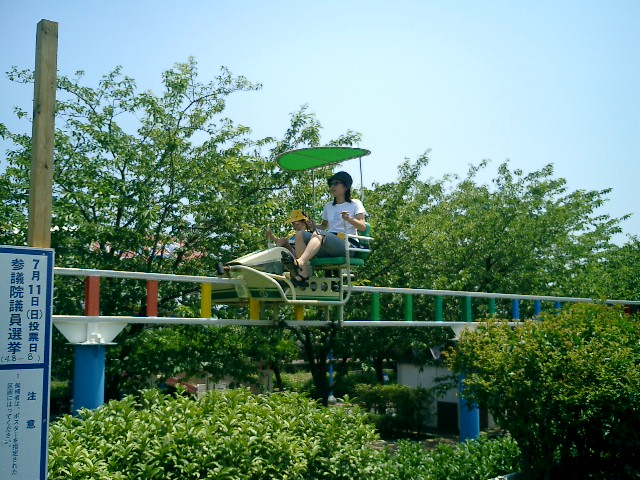 Located in Japan, yet another mini-monorail system that would hold fantastic opportunities for our parks or our "Riverwalk". Imagine being able to take the family down to this thing and tour the waterfront with more ease then a bicycle ride. In this case - steel wheel on steel rail = almost no friction. The function could be not unlike the New Zealand system, and perhaps without the glass pod, heat would not be a problem in the summer.
 We shall continue to watch for inexpensive ways to improve the quality of life in Jacksonville through advanced transit and mobility ideas, so keep watching for future posts.
37 YEARS TO KILL THE SYSTEM AND NOW IT'S AMTRAK TO THE RESCUE!
 FEMA Announcement of new Amtrak Partnership
Greyhound, Amtrak routes canceled as city takes over transit station
Saturday August 30, 2008, 11:10 AM
CHRIS GRANGER / THE TIMES-PICAYUNE
Saturday August 30, 2008, 11:10 AM
CHRIS GRANGER / THE TIMES-PICAYUNE
With Hurricane Gustav barreling toward Louisiana, Greyhound bus and Amtrak train service heading out of New Orleans from the Union Passenger Terminal this weekend has been canceled to accommodate the city's free evacuation program, leaving an unknown number of travelers holding worthless tickets out of town.
New Orleans city officials informed the transit firms all routes out of the downtown station would have to cease at 6 p.m. Friday, spokespeople for the companies said. "It's not our choice," spokeswoman Abby Wambaugh said. "It's what we had to do." Greyhound routes to and from Mobile, Houston and Baton Rouge are canceled until further notice, according to the company's Web site. An Amtrak spokesman said several train routes are suspended through early next week. The city owns the terminal, which is being used as a staging site for the city's free evacuation program. A city spokesperson could not immediately be reached for comment. City buses began shuttling around designated pickup sites in New Orleans at 8 a.m. today, ferrying residents to the Union Passenger Terminal. There, they can board state-chartered buses to shelters in north Louisiana and Tennessee. Elderly and infirm residents who arrived at the transit station can board Amtrak trains to Memphis. Similar programs were in place in Jefferson, St. Bernard and Plaquemines parishes Wambaugh said passengers holding canceled bus tickets may use redeem them for face value at any time within the next year. She did not know how many tickets were purchased for travel out of New Orleans this weekend. Amtrak officials called passengers scheduled to travel from New Orleans on Friday and notified them of the change, according to the firm's Web site. Refunds are available.
BLOGGER NOTE: As of Monday morning, Amtrak and the buses along with the highways have managed to evacuate 95% of New Orleans. While regular train and bus service was suspended, outbound trains and buses stood in lines. One Amtrak train to Memphis alone carried over 1,200 citizens. Buses were lined up 40 vehicles deep. Certainly a true case of Mass Transit at it's best.
PLAYING IN THE TROLLEY WIRE - STUPID IS AS STUPID DOES???
 August 31, 2008
 Trespasser Tries to Zap Amtrak Back with Lawsuit
An Astoria man is suing Amtrak because they "should have known that people trespassed" in the area of a Boston station where he was severely electrocuted two years ago. After a night of drinking in July 2006, 25-year-old Brian Hopkins went down to Boston's South Station at 2 a.m. after telling friends that he "wanted to get back to New York." There he tried to force his way inside an Acela and climbed on top of a parked train car when he was jolted by 27,500 volts from arcing overhead wires. He suffered third-degree burns over 85 percent of his body, and doctors have since amputated his left hand and leg. In the suit, his family claims that Amtrak should have taken more precautions to keep trespassers out of the potentially dangerous area.
BLOGGER NOTE: Jacksonville Streetcars or LRT would likely use
either 1,200 volt AC which is newer and has less moving parts (but is more
costly) or the standard 600 volt DC which lasts an eternity but will still turn
a human into a french fry in a flash. As I recall when the Kennedy Funeral Train made it's way along the electrified railroads of the Northeast, several persons were killed or seriously injured climbing on top of standing train cars to get a better view.Fact is, the view is great from HEAVEN! Railroads, Streetcars or LRT are NOT PLAYGOUNDS.
HAVE CORRINE BROWN AND FDOT BYPASSED JACKSONVILLE ON AMTRAK?
 One of the Last of the old school streamliners was the City of Miami, a often full train left out of the Amtrak System between Miami-Jax-Birmingham-Memphis-Chicago/St. Louis. Here we see her pulling away from us at speed on a cold Jacksonville morning. Symbolic? I hope not.
I Want To Know Where Jacksonville Terminal Station Fits Into This Plan!
By LINDSAY PETERSON
The Tampa Tribune
TAMPA - As passengers settle into the wide, reclining seats, the train pulls out of Union Station at the edge of downtown Tampa. After rolling through Ybor City, the silver locomotive picks up speed, whizzing past Brandon subdivisions and Plant City farms until it rolls into Lakeland 40 minutes later. The next stop is Kissimmee, 16 miles from Disney World, then downtown Orlando.
The Tampa Tribune
TAMPA - As passengers settle into the wide, reclining seats, the train pulls out of Union Station at the edge of downtown Tampa. After rolling through Ybor City, the silver locomotive picks up speed, whizzing past Brandon subdivisions and Plant City farms until it rolls into Lakeland 40 minutes later. The next stop is Kissimmee, 16 miles from Disney World, then downtown Orlando.
This isn't someone's vision of the kind of rail service they'd like to see. It happens every day on the Silver Star, an Amtrak train that stops in a dozen cities across Florida. There's one problem: You might not get back home the same day you leave, because Amtrak runs so few trains to these cities. But state and federal lawmakers want to change that. They're working with Amtrak and the state Department of Transportation to create a service that commuters can use.
The discussion began last month, when the state's plan to create a commuter rail system in Orlando stumbled in the Legislature. Lawmakers began looking for other ways to bring more passenger rail service to the state - especially after supporters of the Orlando plan said that its failure would doom efforts to bring commuter rail to Tampa.
Weeks earlier, Amtrak officials had visited Florida to talk about its efforts to run more trains on its established routes. Amtrak probably can't take the place of the multiple-stop system planned for Orlando, but it could add trains to its routes connecting Tampa, Lakeland, and several cities in the Orlando area and South Florida. It uses the same tracks that officials had planned to use for the Orlando system and would share several stations along the way.
Several lawmakers and state Department of Transportation officials met with Amtrak representatives in Tallahassee this month. Amtrak Vice President Anne Witt told the group that the agency had no interest in running commuter trains, but it could link several cities' commuter and light rail systems.
"It's all very preliminary," said state Sen. Paula Dockery, R-Lakeland, "but I think people got very excited thinking about what's possible."
With gas topping $4 per gallon, people are ready to give up their cars, said U.S. Rep. Kathy Castor, D-Tampa, who recently voted with the majority in the House to reauthorize Amtrak for the first time since 1997. The measure included $2.5 billion for improvements to its intercity routes across the country.
"I see a great potential for Amtrak to take off in Florida," she said.
Already, dozens of people take the Silver Star out of Tampa every day - retirees, college students, families traveling to Orlando, Miami and other cities along the train's East Coast route to Boston.
Michael Durham, 22, of Altamonte Springs, rode the train from Orlando to Tampa on Wednesday to meet his family vacationing in Indian Rocks Beach. The train was running three hours late because of work on the tracks north of Orlando. "Other than that, it wasn't bad. It was cheap," he said. A round trip between Orlando and Tampa costs $18. If there were more trains, "I'd probably use it to come over here to see my friend on the weekend. It'd be great for that."
The Cost Of Expansion
About 22,000 commuters leave Polk County every day to work in the Tampa or Orlando areas, according to the Central Florida Development Council, a group that promotes business in Polk County. About 7,000 travel from the Tampa area into Polk.
As things are now, they wouldn't all be able to take the train. "The trick is, how do you get from the train station to where you want to go?" marketing manager Jim DeGennaro said.
Tampa Mayor Pam Iorio and others with the new Tampa Bay Area Regional Transportation Authority are working on that part of the problem in Tampa, mapping out a light-rail system linking downtown with the West Shore area, Tampa International Airport and the University of South Florida.
"I'm very optimistic," said Dockery, who helped organize last week's meeting with Amtrak.
But expanding Amtrak service in Florida won't be easy. It means negotiating agreements with the company that owns most of the state's freight rail lines, CSX Transportation. The Jacksonville-based freight company has said it doesn't want more passenger trains on that line between Tampa and Orlando, not without financial help from the government to expand the line's capacity.
The state took a different approach in its effort to bring commuter rail to the Orlando area. About two years ago, it began negotiations with CSX to buy 61 miles of track between DeLand and Poinciana. The deal ended up with a $649 million price tag, which included the cost of helping CSX expand a parallel set of tracks into a hub it plans to build in Winter Haven.
Several state lawmakers questioned why it cost so much to buy just 61 miles of railroad tracks. Dockery also worried about the additional freight trains that would come through Lakeland on their way to and from the Winter Haven hub.
What finally killed the deal in the Legislature, at least for this year, was a CSX demand that the state take liability for any accident involving a passenger train, even an accident caused by a CSX freight train on the tracks.
As lawmakers who favored the deal began working to revive it for next year, Dockery and state Rep. Dennis Ross, R-Lakeland, began talking to Amtrak.
The Amtrak Alternative
It's not the first time state officials turned to Amtrak as an alternative. In 2000, the DOT put together an intercity rail plan using Amtrak instead of a high-priced proposal for statewide high-speed rail.
The high-speed system would have connected Tampa and Orlando first, using the state-owned right-of-way along Interstate 4. Promoted by Dockery's husband, C.C. "Doc" Dockery, the effort ultimately failed in a statewide referendum.
The state's 2000 Amtrak plan also named the Tampa-Orlando route as one of the busiest, projecting that by 2010, more than 16 million people per year would travel the 90 miles between the two cities. It estimated that more than 15 million per year would travel the 230 miles between Orlando and Miami.
"I don't know why we abandoned that plan," Paula Dockery said. DOT spokesman Dick Kane said the plan had not been abandoned but that Amtrak doesn't typically operate commuter systems like the one Florida envisions in the Orlando area. Amtrak "will definitely be part of the study parameters" as the state develops its intercity rail plan, Kane said.The advantage of working through Amtrak is that federal law gives it the right to use existing freight lines, as long as its use doesn't interfere with freight train traffic.
It might not be as expensive as buying the lines, but increasing the number of Amtrak trains connecting Tampa, Orlando, Miami and Jacksonville will still cost money, Dockery said. It may require building a set of tracks next to the existing ones, which could cost tens of millions of dollars.
A possible source of money emerged this month when Congress reauthorized Amtrak. "We'll need to fight for the money through the appropriations bill," Castor said. "But we have people who believe in rail in the appropriations committee."
The bill also includes money to study the restoration of the Sunset Limited, which used to run through Florida to New Orleans but was discontinued after Hurricane Katrina.
A Liability Study
Castor said that if the bill gets final approval, Florida will have a good shot at a grant because one of its House members from Jacksonville, Corrine Brown, a Democrat, is head of the Transportation Committee's subcommittee on railroads, pipelines and hazardous materials.
Brown wants to see more Amtrak service in Florida, she said, but her first choice of routes is the one between Miami and Orlando because of tourist travel between the two places. Also, she said, Florida stands a better chance of getting federal money if it gets commuter rail going in Orlando.
"The state needs to show its commitment," Brown said.
Castor is trying to help solve the liability hang-up, she said. She and three other House members have asked the U.S. Government Accountability Office to study the liability agreements of all passenger rail agreements between government agencies and freight rail companies. One of the three is U.S. Rep. James Oberstar, D-Minn., head of the House Transportation and Infrastructure Committee.
Another state, Massachusetts, is in a battle with CSX over its demand for liability protection in a track purchase deal similar to Florida's. Amtrak has given CSX liability protection in several of its contracts with the freight carrier and has had to pay millions to resolve liability cases.
The request asks the GAO to review court cases involving the type of liability agreement CSX wants and what the agreements cost states and other rail agencies, such as Amtrak.
It also asks that the review be completed by Dec. 9, before Florida's next legislative session.
31 August, 2008
SAY GOODBYE TO THE AUTO ERA?
 View of Cliff Street, Scranton, PA. Abandoned
August 31, 2008
For close to a century, the automobile has so boldly seized Americans’ imagination — sparking the economy, paving the continent, designing our neighborhoods — that even the thought of curbing its dominion seems unnatural.
But check what’s happening right now:
High gasoline prices are prompting millions of us to think again about how often, and how far, we drive our cars. Recent months have seen total vehicle miles driven nationally fall off sharply– a radical reversal of decades of increase.
Across the country, there’s pressure to reclaim city streets for the city’s own people. Fueling this pressure is the alarm raised over high accident and death tolls from pedestrians struck by autos and trucks.
The “Complete Streets” movement — urging city and neighborhood streets be made as welcoming and safe for pedestrians and cyclists as they are for autos — is gaining attention, now backed up by legislation pending in Congress.
Public transit use is enjoying a banner year across the country.
A vanguard of cities is banning cars from their public parks.
There’s increased effort — lead cities range from Seattle to Buffalo, Toronto to New Haven — to tear down ugly motorways that divide neighborhoods and occupy valuable space near city centers. (Demolition of a Milwaukee freeway in 2003 helped unify the city’s downtown area and sparked hundreds of millions of dollars of new development).
Bike stations — quick ways to rent a bike, cruise around a downtown — are being proposed across the country.
A new “Walk Score” website (www.walkscore.com) lets users type in their home address and discover its “walkability” score — from 0 (”must have car”) to 100 (”walker’s paradise”).
BLOGGER NOTE: Jacksonville
ranks at the rock bottom of the walk score cities. Even our downtown with it's free shuttle buses, riverwalk and landing only gets 31 out of 100 possible
points, San Marco at 71 and 5-Points at 85 rank much, higher then our norm. Bottom line? We need walkable streets and public transit options NOW.
A few cities are starting to charge true market costs for parking on public streets. Example: fees of up to $40 for four hours near the new baseball stadium in Washington, D.C. The Nation’s Capital is, in fact, emerging as an epicenter of restraint on cars. One-way streets — virtual “freeways” through cities — are a first target. Already portions of Constitution Avenue N.E. have been transformed from a reversible commuter artery back to a quiet side street. Concerned about high pedestrian injury levels, the city may soon increase penalties — from $50 to $500 — for a vehicle encroaching on a crosswalk.
Some commuters are grumbling about Washington’s moves; a spokesman for AAA calls the Distict of Columbia “the most anti-car city in the country.” But city officials say they’re just intent on reclaiming Washington city streets for the people who live there, creating a walkable, bikable, transit-oriented metropolis.
In a parallel move, Washington’s Office of Planning wants to revise post-World War II zoning regulations — similar across the country — that require new buildings to provide ample off-street parking. Such city rules are totally outmoded, says parking reform advocate Donald Shoup. They inhibit smart compact development and drive up the cost of housing.
What made America such an incredibly pro-auto nation in the first place? Our wide open spaces, love of personal freedom explain a lot. But our streets, like those of all the world, were chiefly for pedestrians before the automobile emerged.
A new book by Peter Norton — Fighting Traffic — The Dawn of the Motor Age in the American City — recounts a concerted early 20th century campaign by auto makers and their allies to redefine city streets as motor throughways, with pedestrians “safely” relegated to sidewalks.
Unsatisfied with their initial success, automakers campaigned for more street space and Herbert Hoover, an engineer and future president, to convene a 1928 conference on traffic. It obligingly demanded more “floor space” for trucks and cars.
In 1939 came General Motors’ Futurama exhibit at the World’s Fair in New York. It depicted a world literally planned around motor vehicles. Superhighways (as wide as 14 lanes) would dominate the cities they passed over. The impression on the public was profound.
So are today’s auto-curbing efforts simply wisps in the wind? Possible– but not likely. Our once world-dominating automakers are tetering economically. “Peak oil,” mounting energy scarcity, climate change are realities.
Of course autos and trucks won’t disappear; they’re a key to modern nations’ economies. But one senses a new genie out of the bottle — a demand for streets, urban and town roadways that enhance peoples’ lives, restraining motor vehicles, not eliminating them. Every agenda from health (better air, less obesity) to aesthetics, energy-saving transit to quality of life, demands it.
And just think that our population will grow by 100 million by 2040 or so. Do we have the stunning amounts of steel, asphalt, public space to accommodate them as we’ve been living? We’re dangerously behind maintaining the vast but overtaxed roadways we have. Realism says this century simply can’t be a repeat of the heavily motorized 20th.

26 August, 2008
JACKSONVILLE REGIONAL RAPID TRANSIT - THE TRUTH BEHIND THE HYPE

JACKSONVILLE TRANSIT TRUTHS
Adapted from an article in the Marin Independent Journal
By Robert W. Mann
Some bare truth about the promises and complaints made about a Jacksonville Regional Transportation System. Considering a complete system as Light Rail-Streetcars, and Commuter Rail, which for the purposes of this article I'll lump together under LRT. Also a network of limited Light-Rail-Lite-BRT lines to feed into the LRT trunk and perhaps the Skyway, all of this complimented by a network of neighborhood transit buses that would tie it all into a complete network. So is this promise of a Jacksonville Regional Rapid Transit System ( or JRRT) really a transportation Valhalla? I'll be honest and you be the judge.
Will JRRT solve the traffic jams on the freeway?
The simple answer is no. There is no realistic solution to the perpetual rush-hour traffic jam. Even widening our freeways and highways will not do the trick. Suburban highway gridlock is a nationwide phenomenon caused by a land-use model based on single-family homes sprawled over a wide area. What JRRT can do is provide an auto-free alternative.
Would JRRT only help Jacksonville or downtown Jacksonville?
Yes and no. The biggest effect of the JRRT system will be to take Clay, St. Johns, Nassau County -residing workers to their jobs in Jacksonville. As long as Jacksonville, housing and cost of living are higher, its labor force needs to live somewhere. Many logically choose more affordable surrounding Counties. It's in Jacksonville taxpayers' interest to facilitate the commute for workers essential to the county's economic health and to do so in an environmentally sensitive manner.
Are there are other less costly solutions?
The reality is the retail clerks, office staff, restaurant workers and building trades employees who live in Surrounding Counties and help form the backbone of Jacksonville's economy can't telecommute. A separate BRT quick way-busway costs almost as much as rail and will, in the end, result in more buses and more roads without a marked upsurge in ridership, bottom line? Good transit needs to "Mix your Modes", offer choices, and network. BRT alone without rail will fail. Likewise rail without BRT or quality bus feeders also fails. Futuristic dreams such as our Jetsons-style monorail, for anything but local shuttle service, will be far more expensive than rail even in the unlikely event that their technical aspects are perfected. Remember, Buck Rogers technology costs big bucks. Except for corporate sponsored systems, anyone who claims their proposal will not cost taxpayers a cent is either a charlatan or hopelessly naive.
But isn't JRRT LRT ideas 19th century technology?
Untrue. The Europeans, Japanese or Chinese are all expanding both their commuter and long-distance rail lines to 21st century standards. Modern rail systems are regarded worldwide as an environmentally sensitive way to move large numbers of travelers. It's the single-passenger petroleum-propelled auto that represents the technology of the past.
Will anyone ride JRRT once its in operation?
That is a fair question with no definite answer. Will the trains run empty or will long-term spikes in gas prices boost patronage past JRRT's projections? Proponents of new rail systems tout ridership successes and opponents emphasize failures. If the numbers are substantial, the naysayers will disappear. If they tank, the Jacksonville will never hear the end of it. Of course, when the Matthews Bridge was proposed, some claimed that few would ever pay a toll to cross a highway bridge to no where.
Will JRRT solve the traffic jams on the freeway?
The simple answer is no. There is no realistic solution to the perpetual rush-hour traffic jam. Even widening our freeways and highways will not do the trick. Suburban highway gridlock is a nationwide phenomenon caused by a land-use model based on single-family homes sprawled over a wide area. What JRRT can do is provide an auto-free alternative.
Would JRRT only help Jacksonville or downtown Jacksonville?
Yes and no. The biggest effect of the JRRT system will be to take Clay, St. Johns, Nassau County -residing workers to their jobs in Jacksonville. As long as Jacksonville, housing and cost of living are higher, its labor force needs to live somewhere. Many logically choose more affordable surrounding Counties. It's in Jacksonville taxpayers' interest to facilitate the commute for workers essential to the county's economic health and to do so in an environmentally sensitive manner.
Are there are other less costly solutions?
The reality is the retail clerks, office staff, restaurant workers and building trades employees who live in Surrounding Counties and help form the backbone of Jacksonville's economy can't telecommute. A separate BRT quick way-busway costs almost as much as rail and will, in the end, result in more buses and more roads without a marked upsurge in ridership, bottom line? Good transit needs to "Mix your Modes", offer choices, and network. BRT alone without rail will fail. Likewise rail without BRT or quality bus feeders also fails. Futuristic dreams such as our Jetsons-style monorail, for anything but local shuttle service, will be far more expensive than rail even in the unlikely event that their technical aspects are perfected. Remember, Buck Rogers technology costs big bucks. Except for corporate sponsored systems, anyone who claims their proposal will not cost taxpayers a cent is either a charlatan or hopelessly naive.
But isn't JRRT LRT ideas 19th century technology?
Untrue. The Europeans, Japanese or Chinese are all expanding both their commuter and long-distance rail lines to 21st century standards. Modern rail systems are regarded worldwide as an environmentally sensitive way to move large numbers of travelers. It's the single-passenger petroleum-propelled auto that represents the technology of the past.
Will anyone ride JRRT once its in operation?
That is a fair question with no definite answer. Will the trains run empty or will long-term spikes in gas prices boost patronage past JRRT's projections? Proponents of new rail systems tout ridership successes and opponents emphasize failures. If the numbers are substantial, the naysayers will disappear. If they tank, the Jacksonville will never hear the end of it. Of course, when the Matthews Bridge was proposed, some claimed that few would ever pay a toll to cross a highway bridge to no where.
A PROPHETIC ARTICLE FROM 1972
From the Washington DC, Gazette, Sam Smith, nailed the future of transit in this country. Freeways were the future, or so it seemed, and air travel would replace all others in longer markets. In fact railroads might be gone altogether in 20 years. Progressive cities would marry themselves to modern city buses, and more asphalt and concrete. Old buildings were to be torn down for sparkling new cities of the future. Suburban sprawl and urban exit was at it's zenith. Washington D.C. not unlike Jacksonville, was busy destroying it's history and creating auto-centric sprawl that would eventually cover large parts of two states. Here in the deep south, Consolidation and urban renewal were the war cries that destroyed historic Brooklyn, LaVilla and Fairfield, any "undesirables" that couldn't be contained with outright destruction were cut off by freeway grades, fences or fly-overs. Such were the times just 10 years after the last Washington D.C. streetcar was abandoned, in fact Jacksonville was 36 years "Ahead" of D.C. in this line of thinking.
Out of this smog choked murky dusk, came a spark of light. Perhaps Saint Elmo's Fire moving down some unseen trolley wire in the minds of a very few people. Bring back the Trolley's was only whispered, a lapel button here and there, maybe a hushed talk, then Toronto said no to abandonment. Following on their heals came Boston and San Francisco, who decided not only to keep the streetcars but expand them. Suddenly their was the light of a new dawn. Into this Sam Wrote the following incredible article with the foresight of an Old Testament prophet, he nailed it.
Out of this smog choked murky dusk, came a spark of light. Perhaps Saint Elmo's Fire moving down some unseen trolley wire in the minds of a very few people. Bring back the Trolley's was only whispered, a lapel button here and there, maybe a hushed talk, then Toronto said no to abandonment. Following on their heals came Boston and San Francisco, who decided not only to keep the streetcars but expand them. Suddenly their was the light of a new dawn. Into this Sam Wrote the following incredible article with the foresight of an Old Testament prophet, he nailed it.
THE NEWS BEFORE IT HAPPENS:
A 1972 LOOK AT STREET CARS
Sam Smith, DC Gazette, March 1972 - The end of January marked the tenth anniversary of the last streetcar run in the District. Curiously, only Jack Eisen of the Post, the local freeway lobby's favorite journalist, bothered to note the event. The City Council might have commemorated the occasion were it not engrossed in hearings on how to get DC Transit's O. Roy Chalk to remove an estimated 86 miles of streetcar track remaining in the city. Mayor Walter Washington might have joined also, but he was too busy trying to get congressional approval of a bond guarantee for the Metro subway system.While generally sympathetic to the streetcar as a historical phenomenon, Eisen offered this ex cathedra assurance: "Streetcars as we knew them will never again run in Washington." Why not? Certainly logic does not rule out their return. Streetcars are efficient. Trolleys operating on surface streets can carry nearly ten times as many people per hour as automobiles and fifty percent more people than buses. Streetcars , while not non-polluting (since they require electrical power), at least remove the pollution from where it has its deadliest effect - high density center city areas. Further, streetcars are a pleasure to ride, are devoid of the noxious fumes created by buses and are aesthetically pleasing.One of the major reasons streetcars went out - and will have a hard time returning - is that they compete directly with the automobile. At the time of their demise, anything that competed with the car was considered unpatriotic, anti-Christian and perhaps even a bit perverted. A decade later, as we wheeze our way through the atmospheric swamp that covers our major cities, we are beginning to view the car with a bit more skepticism. Not enough, to be sure, to do anything serious about restricting its use, but the first glimmers of comprehension are there. A generation that built its foreign policy on faith in Chiang Kai Shek and its domestic policy on faith in General Motors is beginning to doubt its wisdom. Now that Mr. Nixon has gone to China, perhaps his next major journey can be a ride on a trolley.It is hard to write of streetcars without succumbing to nostalgia and laying oneself open to charges of infantile romanticism. But the reason one feels nostalgia is, after all, because one misses something one thinks was good. And since the choice of transportation modes is in part determined by psychological factors, as any Freudian analysis of the automobile in American society will point out, a system that engenders a certain amount of romantic attachment may also guarantee itself ridership as well.Recently the city of Toronto reversed itself and decided not to end streetcar servi^ there. Said Ralph Day, chairman of the local transit commission, the streetcars are "liked by all users and detested by all motorists." Day has given us here a capsule criterion for the ideal urban transportation system. If we are to be-serious about building mass transit we must confront the automobile directly.It is not enough just to provide alternatives to the car; we must put obstacles in its path.One of the many fraudulent aspects of the Metro subway is that it is really designed not to compete with the automobile. One need look no further, than the freeway plans. The highway lobby hasn't whittled its ambitions one inch because of the prospect of Metro. Every freeway that was planned before Metro is still being pushed by highway builders. . . .Metro has plenty of other problems as a mass transit system. It costs too much, for one thing. . . As the largest single public works project in the world's history, Metro hardly qualifies as an economy. There is no doubt that DC could get more mass transit for its money by not building a subway and turning instead to a mixture of surface mass transit including rail commuter lines, streetcars, buses and jitneys.Secondly, Metro has already disrupted many communities in the city and will disrupt many more. Businesses and homes are being lost as Metro reveals its true nature as not merely an underground transportation system, but an aboveground land development scheme. Metro joined urban renewal as a major element in the city's reverse land reform program, which takes land out of the hands of the many and puts it in the hands of a. few. A surface transit system would not have been as amenable to such cynical and deceitful expropriation of land.Thirdly, Metro is primarily another means of providing safe, fast entrance and egress to DC for non-taxpaying suburban parasites. A streetcar system, along with other surface transit facilities, would be much more orientated to the needs of the local citizenry, as it was when it existed.Fourthly, Metro is inflexible. Where Metro goes, it will stay. The cost of adding new lines, or abandoning them, would be astronomical. Since a city is always in a state of flux, there is a need for a transit system that can bend to meet changing situations. A surface system is much more adaptable. . .Let us not forget that we live in the city that, more than any other, has surrendered itself to the automobile. Of course, it began a long time ago. The original L1Enfant Plan of 1791 proposed that 59% of the area of the federal city be set aside for highways. Thanks to George Washington, Thomas Jefferson and the Congress, the first highway lobby was restrained somewhat, but L'Enfant's successors have more than made up for the loss.Other cities have shown considerably more wisdom, and today some of these transit-oriented towns are taking another look at streetcars. Eisen reports that "Boston and San Francisco, aided by the U.S. Department of Transportation, have agreed upon the specifications for a new generation of trolleys to equip their remaining lines. . . San Francisco even has plans - and the promise of federal money - to expand its electric streetcar system as well as to renovate its cable car lines." And one of the least nostalgic men around, DC Transit's O. Roy Chalk himself recently wrote Eisen: "Maybe the reason passenger losses developed (in the transit industry) was not higher fares but elimination of trolleys. It is an interesting concept.How about a new trolley system, instead of a subway, with automatic (i.e. reserved) trolley lanes?"If a streetcar system were built here, there is no reason that it should be a replica of the former one. The reserved lanes suggested by Chalk would be one improvement. Use of cars in tandem, as is done in Boston, is another. The streetcar could be just one element of a rational, flexible, urban-focused, economical transit system. . . The unused commuter rail lines that lead into the District could be turned into mass transit systems. And a range of bus types, from small jitneys (like airport limousines) to double-deckers, could supplement the rail systems, replacing the single-size buses that DC Transit uses on nearly all its routes. It is not likely that the government or business interests will press for these improvements.It must come from the riders. The whole history of mass transit in this country is one of politics first, riders last. When jitneys started competing with streetcars in the early part of the century, the trolley companies got the courts and state legislatures to drive them out of business.Later, as Eisen points out, "A national transit holding company allied with bus-manufacturing interests. . . embarked upon a deliberate program of replying trolleys with buses in dozens of cities from Baltimore to Oakland." And, of course, the bus companies got their come-uppance not long after as the auto craze was fostered by a combination of highway builders, car companies, and cooperative public officials.The other day I saw an official of the Department of Transportation wearing a button that proclaimed: "Mix Your Modes." It's a nice sentiment, but one that has yet to gain credance in local transportation planning. Yesterday's fad was the freeway; today it's Metro. But monomania won't solve our transit problems. We have lots of different places to go and we need a variety of ways to get there. Streetcars should be one of them. Then getting there will no longer be half a pain
Subscribe to:
Posts (Atom)


WELCOME ABOARD

Sign by Danasoft - For Backgrounds and Layouts

 Posts
Posts